TS
Tectonics and Structural Geology

Field work

Using drones for geological mapping

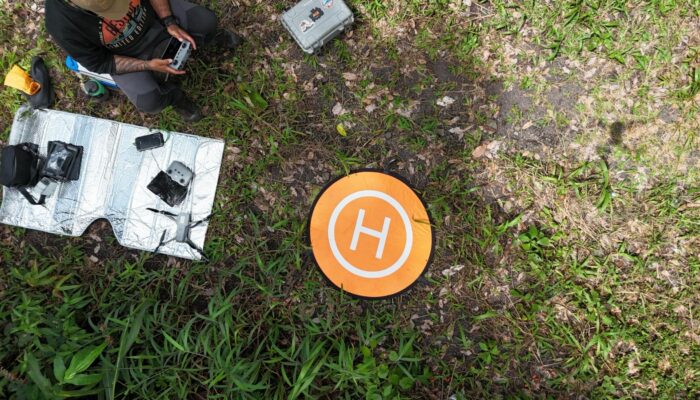
This image shows a drone operator guiding a drone to its landing spot.

Geological teaching and education is fast-changing in the 21st century. While fieldwork has long been considered to be the bedrock of geological instruction, over time an increased acceptance has developed for the need to make geological education and training more accessible, especially with regard to fieldwork as this can often involve days and weeks of arduous treks over inhospitable terrain, t ...[Read More]

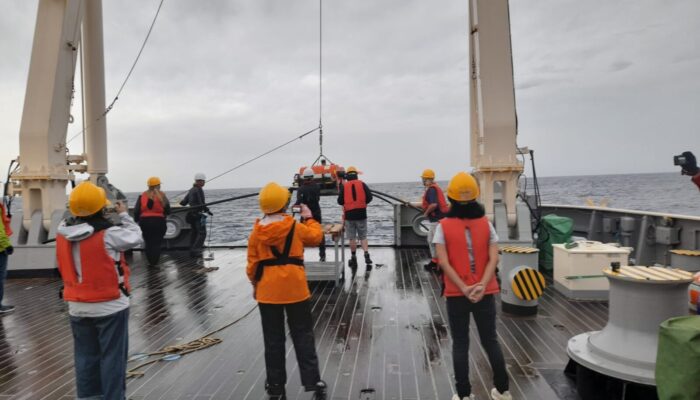
Our epic battle with ever-changing weather forecasts while deploying ocean bottom instruments

Our epic battle with ever-changing weather forecasts while deploying ocean bottom instruments

The question what drives tectonic plates has been around since plate tectonics was first developed. In principle, the fluid dynamics is well-known but what is not well known are the material properties, especially mantle viscosity structure which determines how much force is needed to pull a plate with a certain speed, but also how fast mantle convection, which may act as a driving force can occur ...[Read More]

Faults vs. Fractures — How to Tell Them Apart ?

A futuristic Black geologist wearing AR glasses stands in a glowing cave surrounded by four holographic screens labeled Geological Aspect, Geometry, Topology, and Kinematics & Mechanism, each displaying geological diagrams and fracture models, symbolizing modern geoscience visualization.

Faults and fractures can sometimes be confusing, especially for students taking their first geology courses. When they go hiking in the mountains and see a crack in the rock, they often wonder — is this a fracture or a fault? Even scientists sometimes mix the two terms, so it’s good to understand the difference. Since faults and fractures are important in many fields such as tunnel engineering, hy ...[Read More]

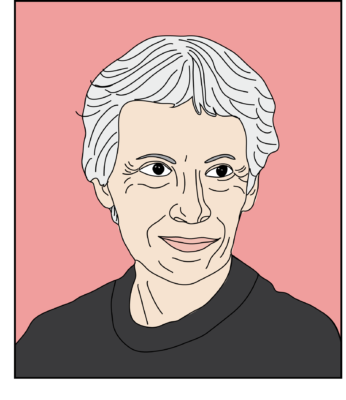
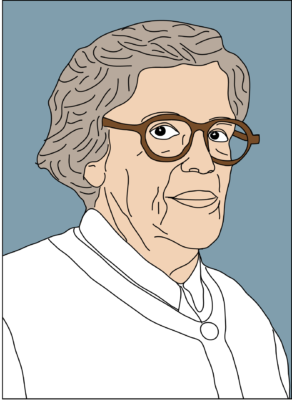
Janet Vida Watson (1 September 1923 – 29 March 1985): The woman who could translate the story of Precambrian rocks into a crystal-clear message

Janet Vida Watson (1 September 1923 – 29 March 1985): The woman who could translate the story of Precambrian rocks into a crystal-clear message

On a late summer day in September 1923, Janet Vida Watson was born. With a father working in palaeontology and a mother who did research in embryology until her marriage, Janet grew up with science all around her. She went to South Hampstead High School, known for its science teaching and continued her education in General Science at Reading University. She graduated in biology and geology in 1943 ...[Read More]

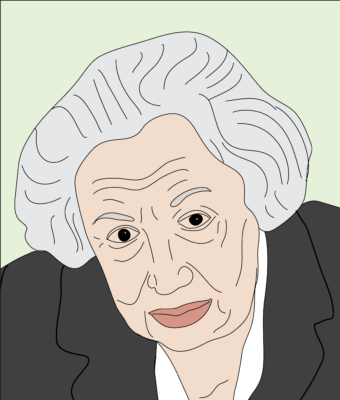
Maria Vasilyevna Klenova (12 August 1898 – 6 August 1976): The polar scientist who was known as the mother of marine geology.

Maria Vasilyevna Klenova (12 August 1898 – 6 August 1976): The polar scientist who was known as the mother of marine geology.

  On the 12th of August 1898, Maria Vasilyevna Klenova was born to a working-class family in Irkutsk1. This city started as a military outpost in 1652, but had become a bustling city around the turn of the 20th century with around half a million inhabitants. In the year Maria was born, Irkutsk became connected to Europe by the infamous Trans-Siberian Railway. Maria did not stay in Irkutsk ver ...[Read More]

Beyond Tectonics: Fishing for Continents in the Furious Fifties and Roaring Forties

Beyond Tectonics: Fishing for Continents in the Furious Fifties and Roaring Forties

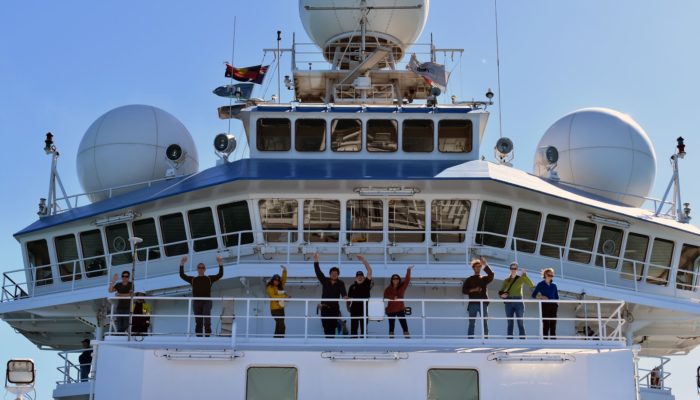
This edition of “Beyond Tectonics” is brought to you by Dr. Derya Gürer and Luca Magri. Derya is a Lecturer in Earth Sciences at The University of Queensland in Brisbane, and Adjunct Lecturer at the University of Tasmania, and Luca is a PhD student at the University of Tasmania in Hobart, Australia. In early 2020, they participated in a research voyage to one of the most remote places on the plane ...[Read More]

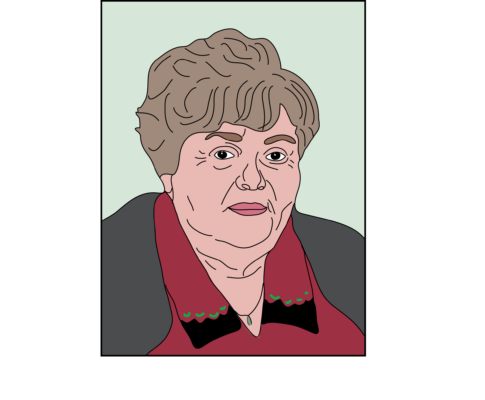
Franciszka Szymakowska (05/02/1927 – 2007): the woman whose drawings unraveled the geological history of the Carpathians

Franciszka Szymakowska (05/02/1927 – 2007): the woman whose drawings unraveled the geological history of the Carpathians

  Franciszka Szymakowska was born on the 5th of February in 1927 in Krakow. She was lovingly known as “Niusia” (Antoni 2007). About her early life, not much is known. Franciszka did her studies at the Faculty of Mathematics and Natural Sciences of the Jagiellonian University and graduated in 1952. During her studies, she started to work at the Polish Geological Institute. She remained affilia ...[Read More]

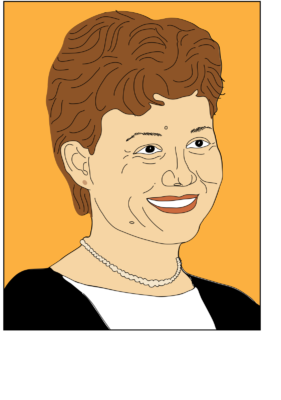
Ana Margarida Neiva – A woman as hard as granite

Ana Margarida Neiva – A woman as hard as granite

  Ana Neiva was born on May 7 1941 in Cedofeita, Porto, northwest Portugal – a city carved in granite. Her childhood and youth were spent in Coimbra, where her father worked. João Cotelo Neiva was an eminent geologist and professor at the University of Coimbra, one of Europe’s oldest universities. His influence was decisive for her interest in geology and her scientific career.     ...[Read More]

Patience Anne Cowie (1964 – 2020): A Geology Superhero

Patience Anne Cowie (1964 – 2020): A Geology Superhero

Welcome to the first post in a new series being hosted on the TS blog! This series “Influential women of Tectonics and Structural Geology” is aimed at highlighting women who have had a key contribution to the field of tectonics and/or structural geology. Patience’s contribution to the field of faults changed the way geologists looked at faults. Her work continues to be used to an ...[Read More]