SSP
Stratigraphy, Sedimentology and Palaeontology

Stratigraphy, Sedimentology and Palaeontology

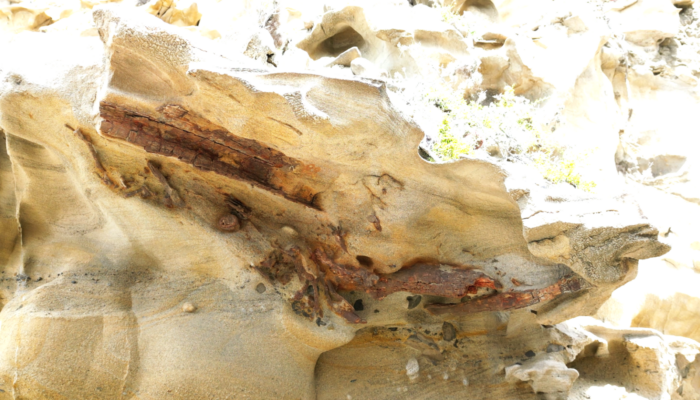
Fossilized Tree Trunks: Preservation in Continental and Marine Ancient Outcrops of Baja California

Fossilized Tree Trunks: Preservation in Continental and Marine Ancient Outcrops of Baja California
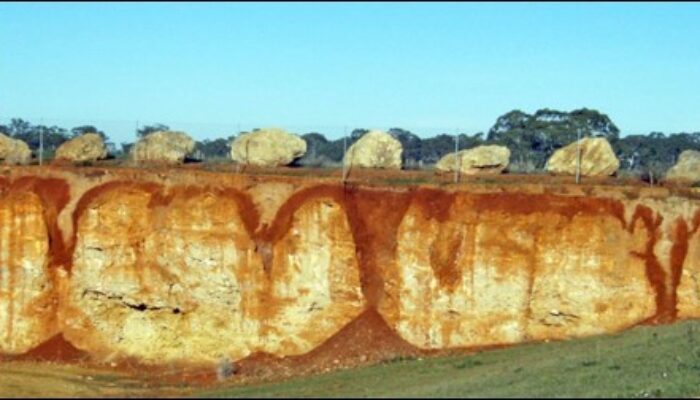
While working on the exceptional, but remote outcrops of Baja California, I have encountered an extraordinary quantity of fossilized tree fragments in Cretaceous deposits. These fossils were preserved in both subaerial, fluvial, and marine environments. Does this mean that preservation of tree trunks is easy? How can wood be preserved for more than 70 million years? What kind of information can we ...[Read More]

A Story of Fertilizer and the Colour Purple

A Story of Fertilizer and the Colour Purple

Introduction It is sometimes difficult to admit that you are (officially) a nerd, but I have a confession to make. I have collected dinosaurs on stamps for the last thirty years. Over 10,000 of these stamps have been issued across the world, and the vast majority of these issues are in my collection. One question that I am often asked is when the first dinosaur stamp was issued, which turns out to ...[Read More]

The Geology of Wine

The Geology of Wine

I am sure that there are many geologists who take a keen interest in wine, and not just in drinking it. Explaining the vast diversity of quality, flavours and aromas is no simple task, and what fascinates me is the relative role of the geology, and the associated soils, in determining which vineyards are winners and losers. Many factors will influence the character of the wine, generally summarize ...[Read More]

Offshore Gaza: gas in deep-water sedimentary reservoir rocks as another element in the conflict

The conflict between the Israeli state and the Palestinian people revolves not only around the control of land but also extends to the ocean, particularly the sedimentary rocks beneath the seafloor (see oil and natural gas fields in the region in Figure 1). This article aims to analyse the geological aspect, specifically sedimentary rocks with hydrocarbon reservoir potential offshore the Gaza Stri ...[Read More]

Survivors! Resilience and adaptations of freshwater ostracodes in ancient Lakes Petén Itzá (northern Guatemala) and Chalco (central Mexico) to climate and environmental changes over the last 80,000 years

Survivors! Resilience and adaptations of freshwater ostracodes in ancient Lakes Petén Itzá (northern Guatemala) and Chalco (central Mexico) to climate and environmental changes over the last 80,000 years

  The North American Tropics hosts lakes of diverse origins and limnological characteristics, which are located along a broad altitudinal gradient, from 0 to 5675 masl. The region possesses several ancient lakes that have accumulated sediments continuously, in some cases for >400,000 years. Study of those lake deposits has enabled scientists to infer past climate and environmental conditio ...[Read More]

Fiascos in the Field

Fiascos in the Field

Introduction There are always new things to learn about geology. Only today I discovered a stromatolite bed in a completely terrestrial setting. But behind any new discovery lies the logistic challenge in getting out into the field and, most importantly, staying safe. Over the years I have led many field trips and spent months in the field, mostly successful but with numerous hiccups along the way ...[Read More]

The effects of water pollution on tiny algae

With an increase in the Earth’s population, development and industrialization are taking place rapidly and these get the major source of water contamination. Heavy metals are one of the most toxic contaminants of the aquatic ecosystems. Increasing industrialization and anthropogenic activities are causing an increasing pollution in soils and water. More than 100,000 chemicals are used commercially ...[Read More]

The unique exposures of El Gordo Diapir, one of the best places on Earth to improve our understanding of salt tectonics, will be destroyed by mining extraction. Would this be a geological site to protect because of its scientific interest?

The unique exposures of El Gordo Diapir, one of the best places on Earth to improve our understanding of salt tectonics, will be destroyed by mining extraction. Would this be a geological site to protect because of its scientific interest?

This article aims to gather support from public or private organizations and individuals so we can convince the Secretariat of Environment and Natural Resources and the National Commission of Natural Protected Areas of Mexico to protect the area that covers El Gordo Diapir in Nuevo Leon, Mexico (https://www.gob.mx/conanp/). There is no intention to damage the image of any company that might have a ...[Read More]

Hacker attack led to spams on our SSP blog page

Dear Readers of the SSP Blog, Today, we detected suspicious and non-approved blog entries that were published in the name of one of our authors on the SSP blog webpage. We start from the premise that the release of  these entries was a result of a hacking attack on the author’s computer/email post-box and immediately deleted the associated content from our webpage. Please apologise for any  ...[Read More]

The Geology of the Galápagos and Its Impact on the Wildlife

The iconic view of volcanic terrain at Bartholomé Island Introduction The Galápagos Islands, located around 1000 km off the Ecuadorian coast, are justifiably known as one of the world’s premier wildlife viewing destinations. The isolated terrain hosts some extraordinary animals and plants, many endemic to the islands. It was here that Charles Darwin was inspired to develop his theory of evolution. ...[Read More]