Combining thousands of years’ worth of seismology is a difficult task, but the EGU seismology ECS team have made their best effort (don’t come for us please!) to give an overview and highlight the important events through seismological history. The study of these seismic events, known as seismology, has a rich and intriguing prehistory that stretches back thousands of years. Delving into ancient civilizations and their understanding of seismic activity unveils a fascinating narrative of observation, interpretation, and the gradual evolution of scientific inquiry. The original contribution of this part comes from Laura Reilly, seismologist and Community Seismology Officer at the Dublin Institute for Advanced Studies (DIAS). Significantly modified by the new ECS team-member, Laura Bogner – a PhD candidate in the Seismic Interferometry and Imaging group at the Swiss Seismological Service in Zürich. Post finally edited by Adam Ciesielski prior to publication.
Early Perceptions and Mythology
Seismologist Ari Ben-Menhem traces the history of our research field back about 4,000 years, to when people first started trying to make sense of earthquakes and volcanoes behaviour. Long before the emergence of modern scientific methodologies, ancient civilizations grappled with the mysterious tremors that shook the earth beneath their feet. In cultures across the globe, earthquakes often held deep religious and mythological significance.
In Greek mythology, earthquakes were attributed to the god Poseidon. Today we mostly know him as god of the sea, but Homer calls him “The Earth-shaker” (Ennosigaios). This title is even older than Homer, appearing already on Bronze age tablets. The earth trembled when Poseidon struck the ground with his trident.
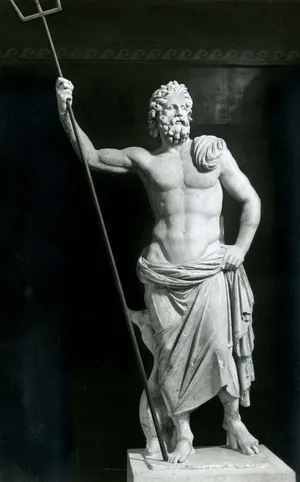
Figure 1. Poseidon, god of the sea and “Earth-shaker”, marble statue from Melos, 2nd century BCE; in the National Archaeological Museum, Athens. He was known for causing major catastrophic events, such as floods, earthquakes and sea storms, and even unleashed his sea monsters when he wanted to get even.
From myth to philosophy
Greek and Roman philosophers such as Thales, Anaximenes, Aristotle, and Seneca were amongst the first to look for natural causes of earthquakes.
Thales of Miletus (6th century BCE), one of the Seven Sages of Greece, speculated that the Earth was floating on water like a ship. When the water beneath the Earth’s surface was rocked by waves, the ground shook.
Anaximenes, another pre-Socratic philosopher, believed that air was the stuff everything is made of. However, his theory was surprisingly down to earth: the ground cracks and breaks apart when it dries out or gets soaked, and earthquakes are the shock of these masses colliding.
Aristotle, often regarded as the father of natural philosophy, rejected all of these ideas and offered more systematic explanations, suggesting that earthquakes were caused by subterranean winds: the sun warms the moist earth, the resulting vapors rush into the ground and shake it as they struggle to escape. Water bursting out from the ground during an earthquake, he insisted, was a consequence, not the cause. His version became the most lasting version of the ancient theories and was only seriously challenged in the 17th century.
Seneca, a Roman philosopher, echoed these ideas, emphasising the natural causes of earthquakes rather than attributing them solely to divine intervention. By showing that earthquakes were natural events, he hoped to free his readers from their fear. These early philosophical insights laid the groundwork for subsequent scientific inquiry into seismic phenomena.
The serpent of Puget Sound
On the other side of the world, the Lushootseed-speaking peoples of Puget Sound, around todays Seattle told stories of a‘yahos, a shapeshifter who took the form of a giant serpent, sometimes with two heads, blazing eyes and horns.. At other times it took form of a creature with the head of a deer and the tail of a snake (Mohling, 1957, in Ludwin et al., 2005). Where a’yahos appeared, the ground shook, the water churned and hillsides slid away.
In 2005 Ludwin and colleagues noticed something interesting: five of the places named in a’yahos stories lie right along the Seattle Fault. In the early 1990’s, geologists had found evidence that this fault ruptured in an approximately magnitude 7 earthquake around 900 CE. This large earthquake lifted the shoreline, caused a tsunami and pushed huge blocks of land into Lake Washington. One of the a’yahos sites lies close to landslides dated to that specific earthquake, and two more sit next to large, inactive landslides that are visible when investigated with modern laser scans (LiDAR). The geology dates the earthquake but the stories may preserve eyewitness memories of it that are over a thousand years old.
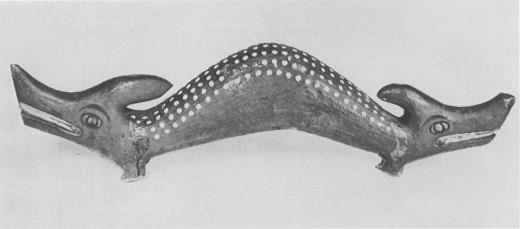
Figure 2. Ceremonial representation of the a’yahos two headed, horned serpent with legs, who was believed to be associated with earthquakes, landsliding and rushes of turbid water by Native Americans in the area of modern Seattle. Source: Ludwin, R. S., Thrush, C. P., James, K., Buerge, D., Jonientz-Trisler, C., Rasmussen, J., Troost, K., & de los Angeles, A. (2005). Serpent spirit-power stories along the Seattle Fault. Seismological Research Letters, 76(4), 426–431. doi:10.1785/gssrl.76.4.426
Zhang Heng’s seismoscope
Zhang Heng (78–139 ADCE), a remarkable Chinese polymath from the Eastern Han Dynasty, made significant contributions to various fields, including astronomy, mathematics, and engineering. In 132 ADCE he built what is often called the world’s first seismoscope: designed to detect and indicate the direction of distant earthquakes.
The instrument consisted of a bronze vessel with eight dragon heads arranged around its perimeter. Each dragon head held a ball in its mouth. Beneath the dragons were eight bronze toads, each positioned to catch one of the falling balls. When an earthquake occurred, vibrations would trigger the release of one of the balls from a dragon’s mouth, indicating the direction of the seismic activity.
In 138 ADCE a ball dropped, pointing west, yet nobody in the capital Luoyang had felt a thing, and the court officials were sceptical. However, a few days later a messenger arrived with news of an earthquake and landslides in Longxi, several hundred kilometers to the west. (Some historians argue that the event actually happened in 134 ADCE.)
The original device is lost, and we only know about its existence from a short description in the Book of the Later Han. While the exact mechanics of Zhang Heng’s seismoscope are not entirely clear, historical accounts and later descriptions suggest a sophisticated understanding of the principles of pendulums and inertia, using the same principle as modern seismometers (Hsiao & Yan, 2009). Today we know that a single instrument like this could not reliably point to an epicenter, but still: nearly 2,000 years ago Zhang Heng’s seismoscope laid the foundation for later advancements in seismological studies. Although the original device no longer exists, the concept and design have left an enduring impact on the history of science and earthquake detection.
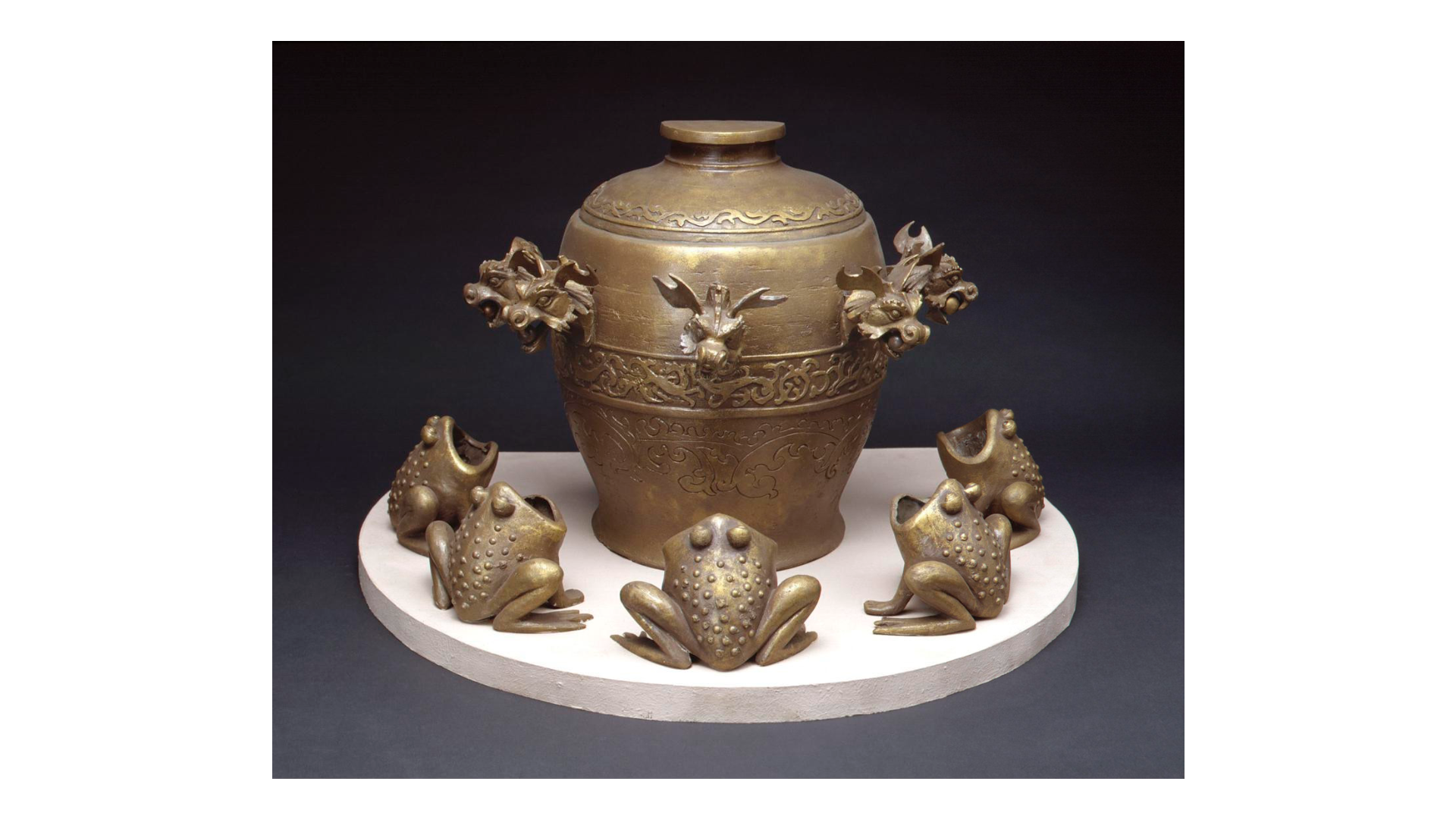
Figure 3. A model interpretation of Science Museum Group Collection © The Board of Trustees of the Science Museum Source https://collection.sciencemuseumgroup.org.uk/objects/co54055/model-of-the-zhang-heng-seismoscope-seismoscope
Ancient seismology at a glance
- c. 14th–13th century BC: Poseidon appears as the “Earth-shaker” on Bronze Age tablets; later also in Homer
- 6th century BC: Thales blames water beneath a floating Earth; Anaximenes blames the earth cracking as it dries or gets soaked
- c. 340 BC: Aristotle’s Meteorologica makes trapped underground wind the cause of earthquakes
- 62/63 AD: an earthquake strikes Pompeii and Campania; Seneca writes Book 6 of his Naturales quaestiones
- 132 AD: Zhang Heng builds his seismoscope; in 138 ADCE it signals the Longxi earthquake
- c. 900 AD: an Earthquake of magnitude about ~7 earthquake on the Seattle Fault, possibly remembered in a’yahos stories
References
- Aristotle. Meteorologica, Book II, chapters 7–8. English translation
- Ben-Menahem, A. (1995). A concise history of mainstream seismology: Origins, legacy, and perspectives. Bulletin of the Seismological Society of America, 85(4), 1202–1225.
- Hsiao, K.-H., & Yan, H.-S. (2009). The review of reconstruction designs of Zhang Heng’s seismoscope. Journal of Japan Association for Earthquake Engineering, 9(4), 4_1–4_10. Link
- Ludwin, R. S., Thrush, C. P., James, K., Buerge, D., Jonientz-Trisler, C., Rasmussen, J., Troost, K., & de los Angeles, A. (2005). Serpent spirit-power stories along the Seattle Fault. Seismological Research Letters, 76(4), 426–431. doi:10.1785/gssrl.76.4.426
- Mohling, V. G. (1957). Twana Spirit Power Songs. Master’s thesis, University of Washington (cited in Ludwin et al., 2005).
- Seneca. Naturales quaestiones, Book 6 (De terrae motu).