
EGU Blogs

Division blogs

GD
Geodynamics

Help us shape the GD programme for EGU General Assembly 2027

Help us shape the GD programme for EGU General Assembly 2027

The Geodynamics programme  of the General Assembly starts with your ideas. With the call for session proposals for the 2027 EGU General Assembly approaching, the Geodynamics Division President Laetitia Le Pourhiet shares her thoughts on what makes a successful session proposal, and how to help shape next year’s scientific programme. Dear GD community, It is already time to start thinking abo ...[Read More]

G
Geodesy

EGU Campfire Geodesy – Share Your Research – 20th Edition

EGU Campfire Geodesy – Share Your Research – 20th Edition

We are excited to announce the 20th edition of Geodesy Campfire – Share Your Research in July. The Geodesy EGU Campfire Events “Share Your Research” give (early career) researchers the chance to talk about their work. We have two exciting talks by our guest speakers, Pierre Sakic and Iwona Kudłacik. Below, you can find the details of the topics awaiting us. We will have time to network after the p ...[Read More]

ST
Solar-Terrestrial Sciences

Meet Samuel Badman, the 2026 Outstanding Early Career Scientist Awardee of the Solar-Terrestrial Division!

Meet Samuel Badman, the 2026 Outstanding Early Career Scientist Awardee of the Solar-Terrestrial Division!

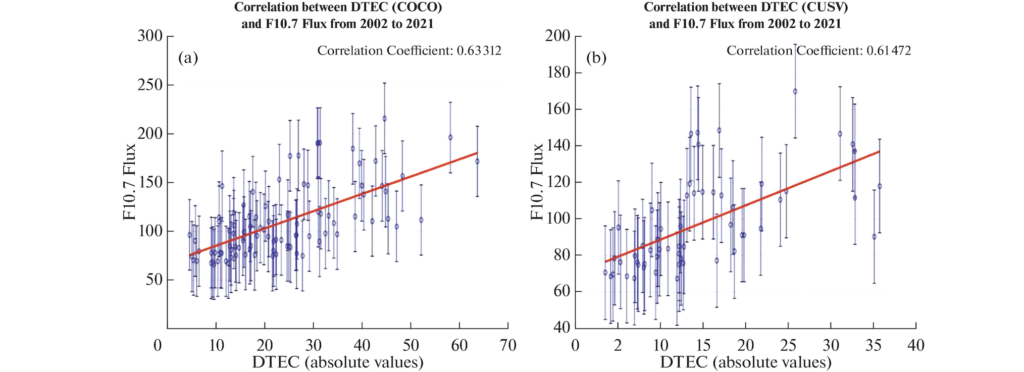
Congratulations on receiving the EGU 2026 ST Division Outstanding Early Career Scientist Award for your outstanding contributions to our understanding of solar wind physics through observations from the Parker Solar Probe and Solar Orbiter. What does this recognition mean to you personally, and how does it impact your work in this fascinating field? It is an incredible recognition which I am extre ...[Read More]

BG
Biogeosciences

Five ways to improve your interdisciplinary communication skills

Five ways to improve your interdisciplinary communication skills

Oh, but you should know that… It is a short sentence, often spoken with good intentions. Yet in interdisciplinary conversations, it can bring a discussion to a complete halt. The moment someone says, “Oh, but you should know that,” they assume that what is obvious in their  discipline must be obvious to everyone else. Hearing this phrase repeatedly in scientific discussions made me realise how muc ...[Read More]

CR
Cryospheric Sciences

Melting ice shelves in ocean models: an idealised model intercomparison project

Melting ice shelves in ocean models: an idealised model intercomparison project

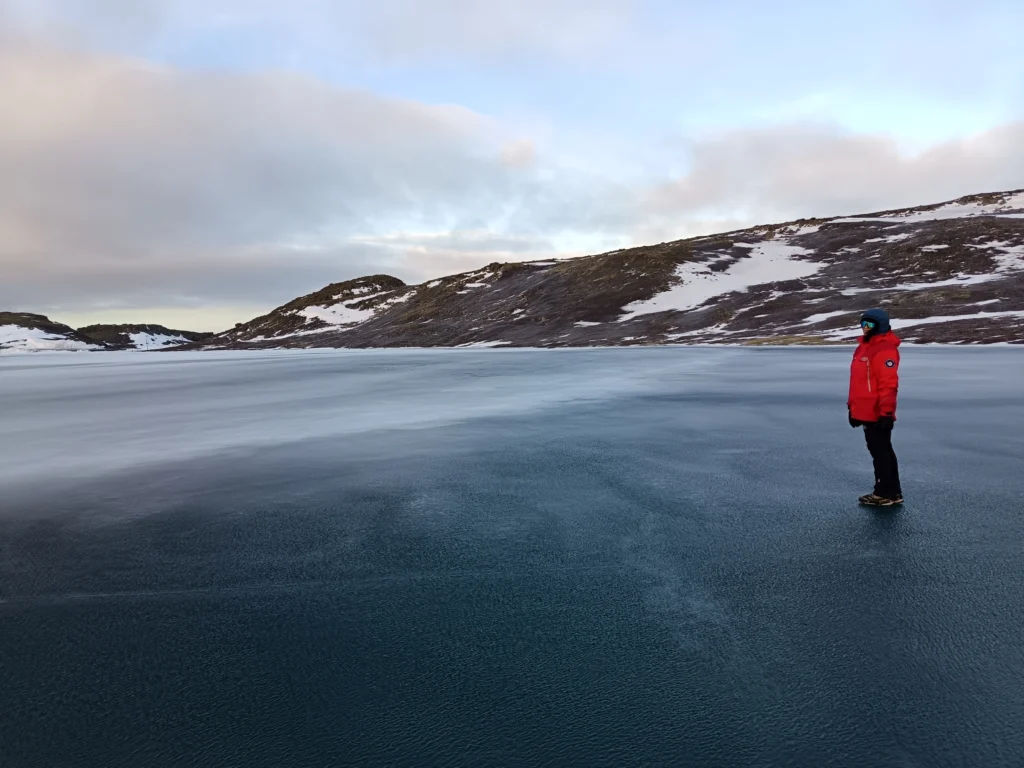
Antarctic ice shelves melt from beneath where they contact the ocean, but how well do ocean models simulate this process? Building on several decades of model development, a recent model intercomparison study compared ice shelf-ocean models from modelling groups around the world with the same, idealised benchmark configuration. From this effort, we can learn how current models perform, and how we ...[Read More]

G
Geodesy

From Quasars to Coordinates: How VLBI Measures Earth’s Shape and Motion

From Quasars to Coordinates: How VLBI Measures Earth’s Shape and Motion

Imagine determining the position of a point on Earth with millimeter precision using radio signals from celestial objects billions of light-years away. This may sound like science fiction, but it is exactly what Very Long Baseline Interferometry (VLBI) allows scientists to do. What is VLBI? Long before satellites and digital maps, people looked to the sky and used celestial objects—most commonly t ...[Read More]

GD
Geodynamics

Introducing the new blog team!

Introducing the new blog team!

Hello blog readers! It’s Jean-Baptiste and Alexis. With EGU26 now behind us and summer approaching fast, we wanted to announce the start of the 9th blogging season for the Geodynamics division and introduce the team for the 2026–2027 year. We both have the privilege and the daunting challenge of succeeding Constanza and Michael as Editors-in-Chief of the Geodynamics Blog. Over the past three years ...[Read More]

HS
Hydrological Sciences

Meet your ECS Rep – Archita Bhattacharyya

Meet your ECS Rep – Archita Bhattacharyya

Archita Bhattacharyya is an Environmental Scientist and a research and development fellow at the Department of Environment, Food and Rural affairs, England. For 2026, she is the Early Career Scientist Representative for the Hydrological Sciences division. Can you tell us about the focus of your research? In my PhD, I focused on groundwater microbiology, especially how microbial communities change ...[Read More]

HS
Hydrological Sciences

Dialogue is essential for advancing hydrological science

Dialogue is essential for advancing hydrological science

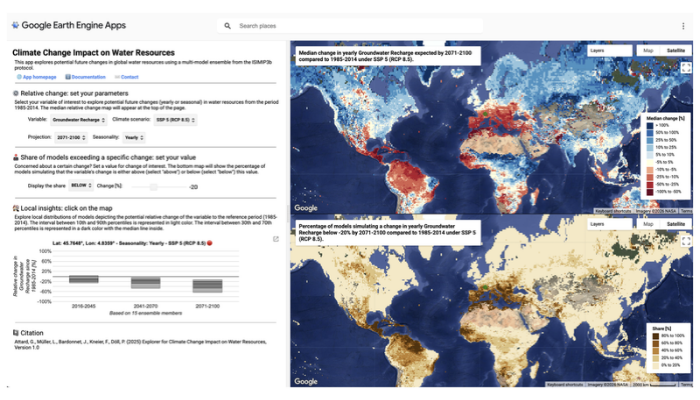
A little over a decade ago, a group of us argued that “it takes a village to raise a hydrologist”. The skills and knowledge any hydrologist should be exposed to during their training goes far beyond what a single person can do and know. Even more, the experience of how water shapes and interacts with diverse landscapes all around the world cannot be obtained by a single person. This is true especi ...[Read More]

GD
Geodynamics

Modeling the full spectrum of observed seismicity: Insights from friction laws, fault instability, and fault-zone mechanics

Modeling the full spectrum of observed seismicity: Insights from friction laws, fault instability, and fault-zone mechanics

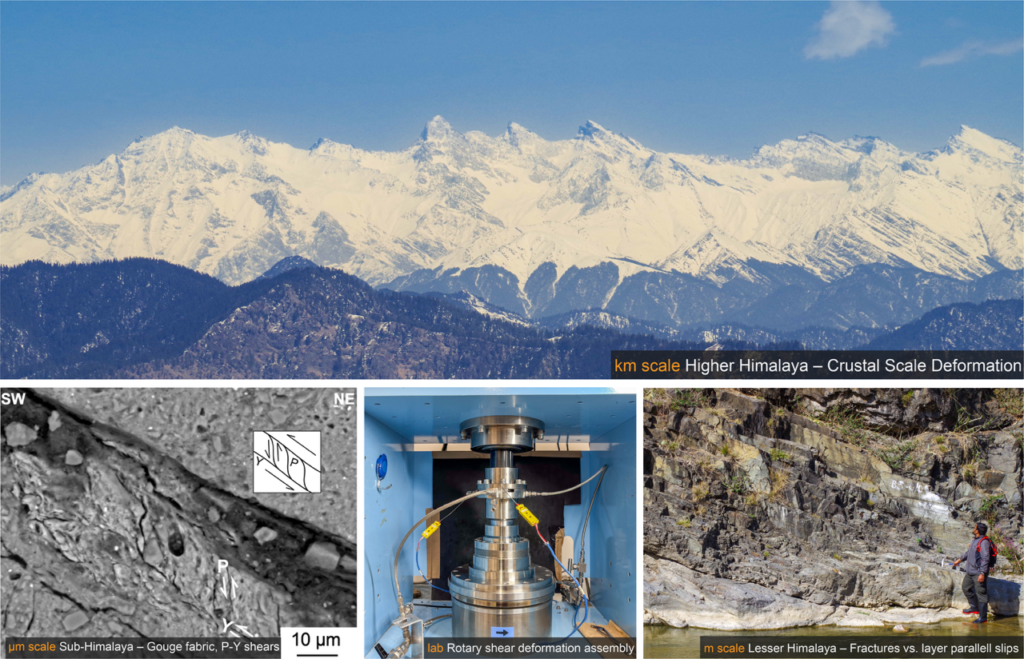
Introduction Despite advances in our understanding of rock mechanics, the frictional behavior of rocks, and the physics of instability in geological materials, the coexistence of slow and fast earthquakes, as well as various types of fault-zone seismic radiation such as tremor, remains enigmatic. Can fault mechanics and friction laws reproduce the full spectrum of observed seismicity? In this week ...[Read More]