It’s the end of 2021! For our HS Blog, it is time to recap what we have published during the year (in case you want to go further back in time, you can also check the 2019 and the 2020 recaps). In 2021, we published 23 posts, covering a large range of topics, as you …[Read More]
Division blogs
Geodynamics
The Sassy Scientist – A PhD Carol
It’s Christmas! Time for celebration! Time to write your EGU abstract! Time to unwrap your presents! And for some, time to start writing yor PhD dissertation! Rudoplh is one of the lucky ones! But he has a question: How should I start on my PhD dissertation? Dear Rudy, What better time to get started on …[Read More]
Geodesy
Geodesy Division Year In Review 2021
With 2021 coming to an end, we wanted to wrap up the year with a blog post summarizing all the things that happened within the Geodesy division. And, although we are still in the middle of a pandemic, there are a number of things to look forward to in 2022! Looking back on 2021 New …[Read More]
Geodynamics
Additional teaching tips
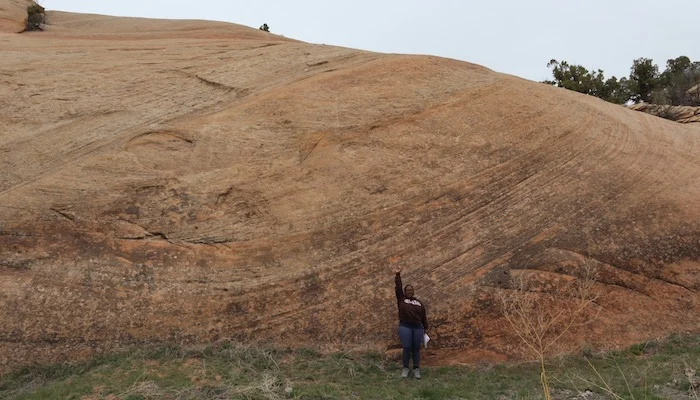
In June 2020 I made (my first!) blog post for the EGU blog on the topic of teaching, describing what I learned by for the first time teaching a full class on my own. It was at the time when teaching suddenly had to shift from in person to online teaching. Last quarter I was …[Read More]
Hydrological Sciences
Goodbye 2021: looking forward to the challenges ahead
When I started as Division president, at the General Assembly in 2019, I thought: “Well, my predecessors were very nice; people did not complain (at least not too much), so I guess I can do exactly as they did.” I was not expecting a virus pandemic that would change so many things, including moving, with …[Read More]
Nonlinear Processes in Geosciences
NP Campfire: “Scaling and multifractals : from historical perspectives to recent developments”
Scaling law behaviours are ubiquitous in geosciences both from a theoretical and practical point of view. They are required to better understand, analyse and simulate the underlying processes, which yields the observed variability of geophysical fields over wide ranges of spatio-temporal scales. A group of scientists within the Nonlinear Processes in Geosciences (NP) Division of …[Read More]
Natural Hazards
Geoscience communication series: a blogging survival kit
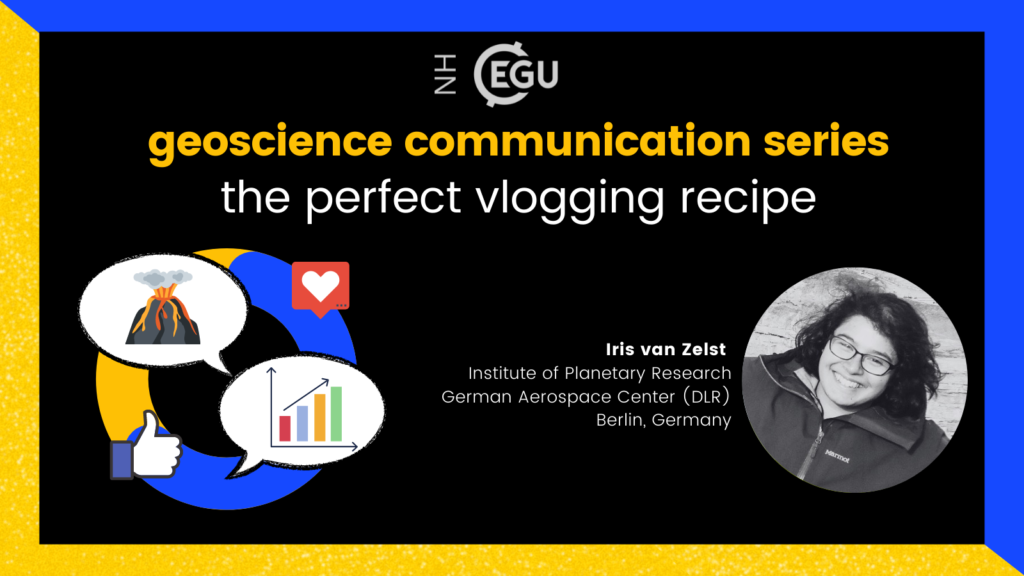
Science communication is the practice of informing and inspiring the public about scientific knowledge. It comes in different forms, from documentaries, books, academic publishing, mass media journalism, to public talks. These days, digital communication, including blogging, vlogging, podcasting, and social media, has become an increasingly popular form of science communication, reaching a wide audience. But …[Read More]
Geodynamics
The Sassy Scientist – Research Reticence
Iiris is a bit indecisive. On the one hand, she wants to get as much science as she can into her thesis. On the other, she wants to actually finish her thesis in time, before unemployment inevitably comes knocking. She sighs: Should I do that one extra research project for my PhD, or just start …[Read More]
Cryospheric Sciences
The Polar Amplifier
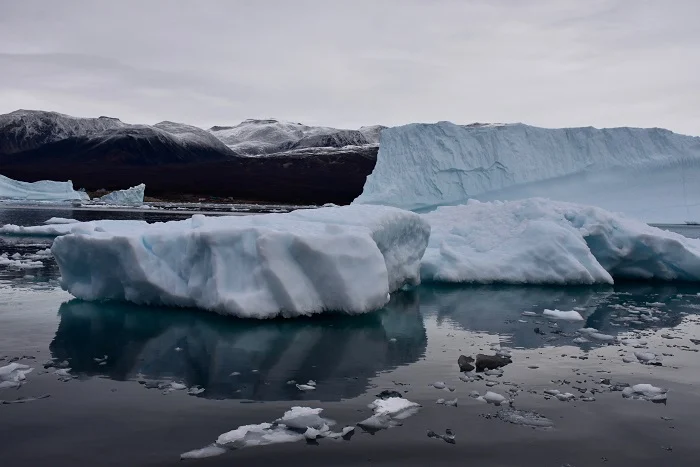
It’s no secret that the Arctic is warming faster than the rest of the planet, but why? Polar Amplification (often called Arctic Amplification) is the mechanism at play. In this week’s blog, we find out about its origins and why it happens. Early Discoveries In 1969, Russian scientist Mikhail Budyko and US scientist William Sellers …[Read More]
Geodynamics
AGU times
The first hybrid AGU meeting has everything one expects from the AGU – a long line to the registration desk and, a mile walk between the two ends of the conference hall, a large exhibit hall with NASA and their most-desirable calendars at the nexus, and our favorite poster hall to “network” with others – …[Read More]