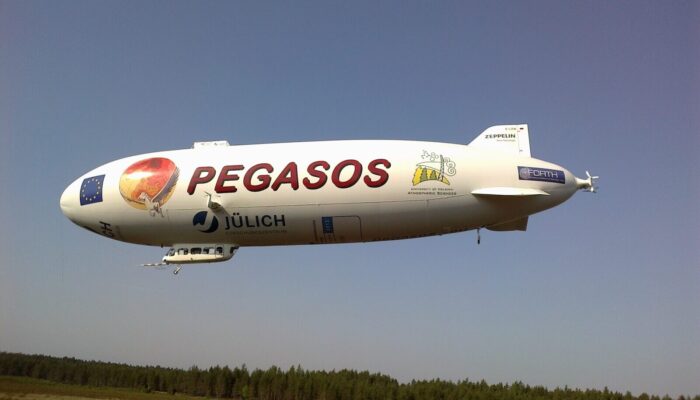
There is a slow-moving silver shape drifting over the forests and cities of North Rhine-Westphalia. From the ground, it looks almost ceremonial — a Zeppelin NT gliding through the air as though time had reversed by a century. Inside, sensors are humming. And Eva Pfannerstill is watching the data appear. She is not there to admire the view, though the Rhine-Ruhr region from the air is something. Sh ...[Read More]
Hydrological Sciences
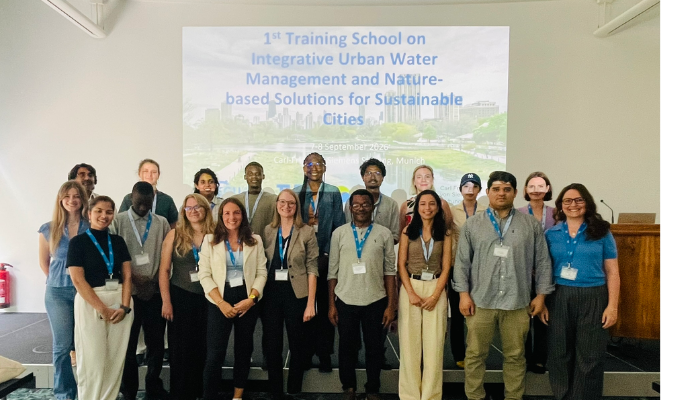
1st International Training School on Urban Water Management and Nature-based Solutions for Sustainable Cities
From 7-8 September 2026, the 1st International Training School on Urban Water Management and Nature-based Solutions for Sustainable Cities was held in Munich, Germany. Organised by researchers from the Technical University of Munich, the Leibniz Institute of Freshwater Ecology and Inland Fisheries (IGB), Berlin, and the University of Cagliari in collaboration with the International Association of ...[Read More]
Geodynamics
Beyond ‘black and white’: rethinking continental drift and land bridges through plate tectonics and orogenic bridges
In this essay, Jean-Baptiste Koehl reflects on the origin of a 100-year-old divide within the geoscience community and explores how tectonics and paleontology may be brought closer together through the concept of orogenic bridges. Disclaimer: The reflections presented here reflect my perspective grounded in my own research and experience. One of the most iconic interdisciplinary achievement ...[Read More]
Planetary and Solar System Sciences
Shaping the PS Division: Call for Community Engagement
Credit: Anna Kotova (distributed via imaggeo.egu.eu) [Imaggeo – Geoscience]. Dear EGU Planetary & Solar System Sciences (PS) Division, The Planetary & Solar System Sciences blog is back! In this post, we will examine how to participate in defining the PS Division, activities, procedures, and deadlines. We dedicate our comeback post to our readers, who sit at the heart of this ...[Read More]
Climate: Past, Present & Future
When ozone enters a leaf: why the details matter for Earth system models
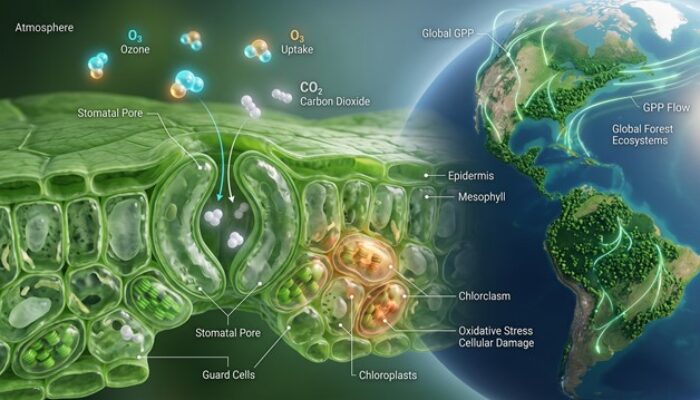
(Schematic cross-section showing leaf stomatal O_3 uptake, chloroplast oxidative stress, and the resulting downregulation of Earth’s global photosynthetic carbon uptake (GPP)) We usually think of ozone as a shield high in the atmosphere or as an air pollutant that harms human lungs near the ground. But plants also “breathe” ozone. Through microscopic pores called stomata, leaves take in carb ...[Read More]
Ocean Sciences
Looks can be deceiving: Why high coral cover does not always mean high reef productivity
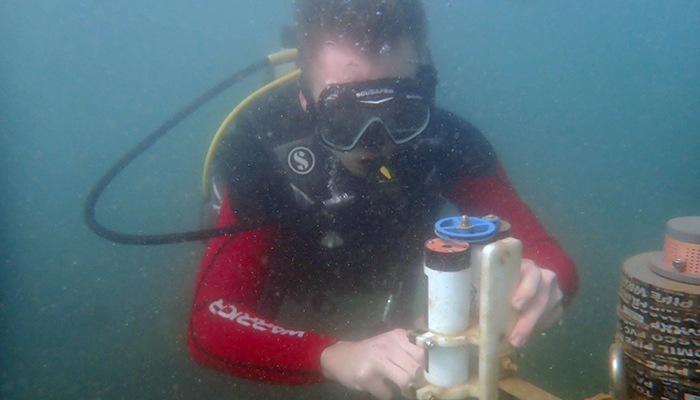
When most people imagine a coral reef, they picture clear, warm, sunny tropical waters. However, the coral communities of Hong Kong live in a vastly different setting. In the shadows of one of the most densely populated coastlines in the world, these corals persist under highly turbid conditions, receiving relatively little light over the year. Water conditions are also highly seasonal, with large ...[Read More]
Geochemistry, Mineralogy, Petrology & Volcanology
Hydrothermal alteration in volcanic settings: Remaining research challenges
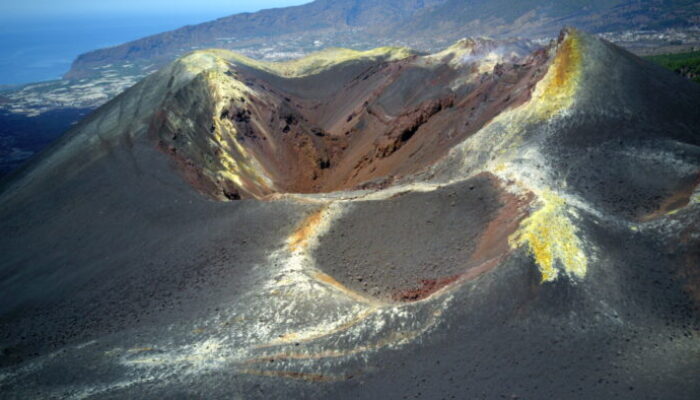
Why should you care about hydrothermal alteration in volcanic systems? When people think of volcanoes, they imagine large, devastating eruptions and lava streams gushing from the summit of an edifice. However, even when volcanoes are not visibly ‘active’, there can be more lurking below the surface. Hydrothermal alteration is one of the important and often less-talked-about culprits t ...[Read More]
Geodynamics
Bridging the Gap: How Virtual Reality is Helping the Next Generation of Geoscientists
Deciphering Earth’s geological history is no easy feat. For undergraduate students beginning their journey in geology, identifying a rock and drawing connections with relevant geodynamic processes occurring over millions of years can be a challenge. In this week’s blog post, Phillip Ruscia explains how virtual reality (VR) and the High Immersion Virtual Experiences (HIVE) research lab at the Unive ...[Read More]
Geomorphology
Great Names in Geomorphology A–Z: Ralph Bagnold
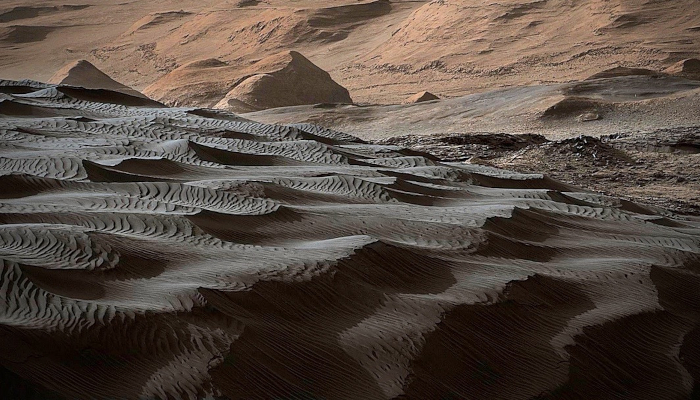
Ralph Alger Bagnold (3 April 1896 – 28 May 1990) was a British engineer, geomorphologist, desert explorer, and soldier. His work fundamentally changed our understanding of sediment transport. His pioneering studies of wind-blown sand and desert dunes established a quantitative, physics-based approach to aeolian geomorphology. Bagnold’s scientific career was closely connected with his fascination w ...[Read More]
Natural Hazards
El Niño shouldn’t stay in the classroom: Why everyone should understand one of Earth’s most influential climate patterns
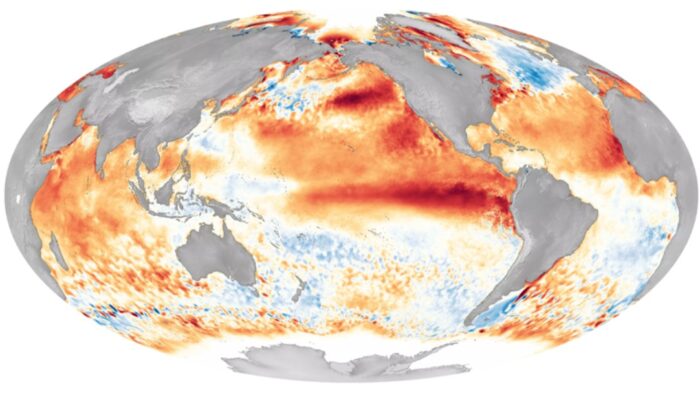
Floods in one region. Droughts in another. Wildfires intensifying across already dry landscapes, while elsewhere intense rainfall triggers landslides and infrastructure disruption. At first glance, these hazard events may seem entirely unrelated. After all, what could a flood on one side of the world possibly have to do with a drought on the other? Yet many of these seemingly disconnected events c ...[Read More]