OS
Ocean Sciences

Behind the Research

An archipelago as a natural laboratory: Pioneering ocean monitoring network in the Canary Islands
An archipelago as a natural laboratory: Pioneering ocean monitoring network in the Canary Islands
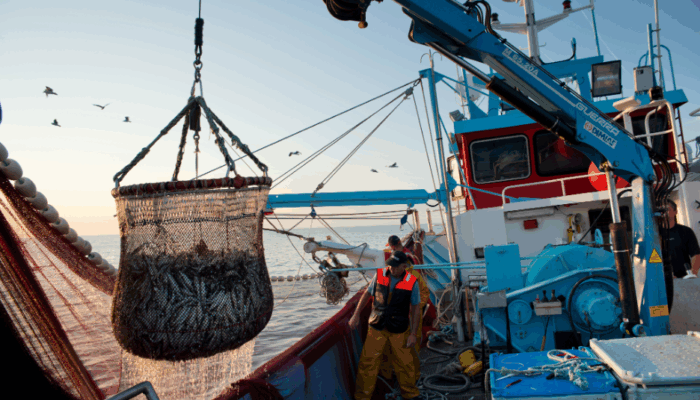
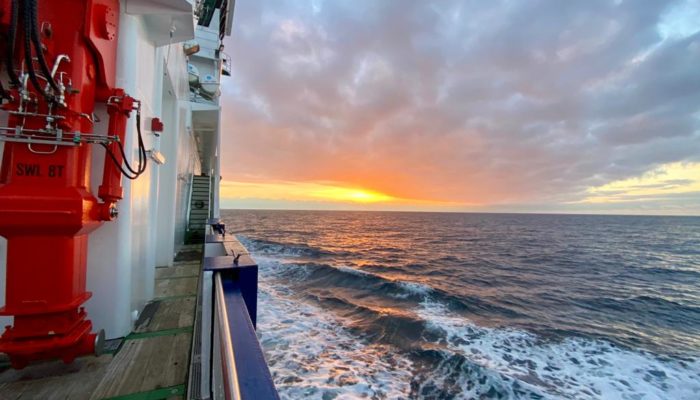
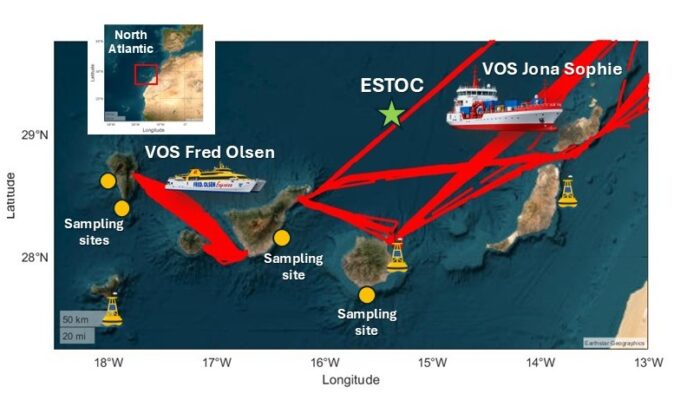
The Canary Islands are often shown as a group of small dots in the vast Atlantic Ocean. However, across only a few tens of kilometres, their surrounding waters can shift from sheltered coastal bays and energetic inter-island channels to the open subtropical ocean. This strong environmental contrast makes the archipelago an ideal natural laboratory for observing how the ocean varies and responds to ...[Read More]

From Signals to the Sea: Building an AI Sound Library for the Ocean

From Signals to the Sea: Building an AI Sound Library for the Ocean

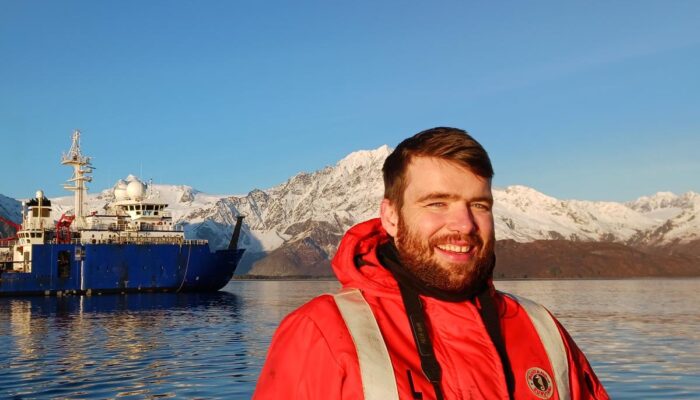
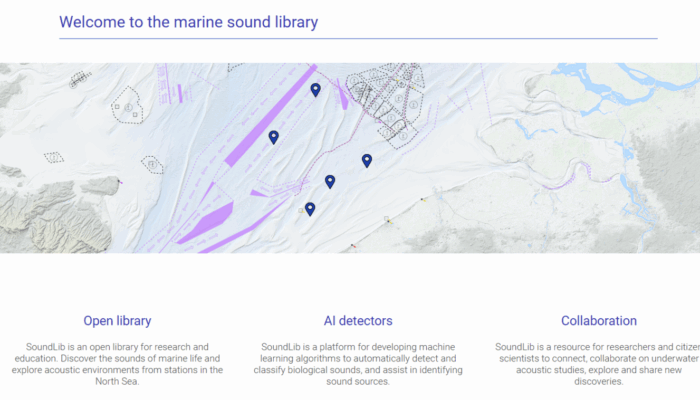
We chatted with Bram Cuyx, an underwater acoustics AI research engineer at the Flanders Marine Institute (VLIZ) in Belgium, about his unique path from engineering into marine science. In this interview, he shares how he made the leap from signal processing in electronics to listening to the soundscape of the North Sea, what it’s like to build a sound library for AI, and why acoustics might b ...[Read More]

A model to trace methane from the seafloor to the atmosphere

When people picture gas leaking from the seafloor, they often imagine plumes of bubbles that make up a direct path from the seabed to the sky. The reality, however, is far more complex and far more interesting. Between the seafloor and the atmosphere lies an entire ocean of physics, chemistry, and biology that controls the fate of the released gas. In fact, typically, most methane is dissolved int ...[Read More]

Call for input: A Fisherman’s Guide to Marine Carbon Dioxide Removal

Call for input: A Fisherman’s Guide to Marine Carbon Dioxide Removal

As climate change continues to reshape our oceans, science communication remains vital to the research and development of mitigation strategies. For scientists and engineers working on climate solutions, much of the conversation happens through technical papers, conference presentations, and policy memos. But invested communities outside these circles may have little access and limited time to con ...[Read More]

Where Freshwater Meets the Fjord: Researching Carbon in a Changing Arctic

Where Freshwater Meets the Fjord: Researching Carbon in a Changing Arctic

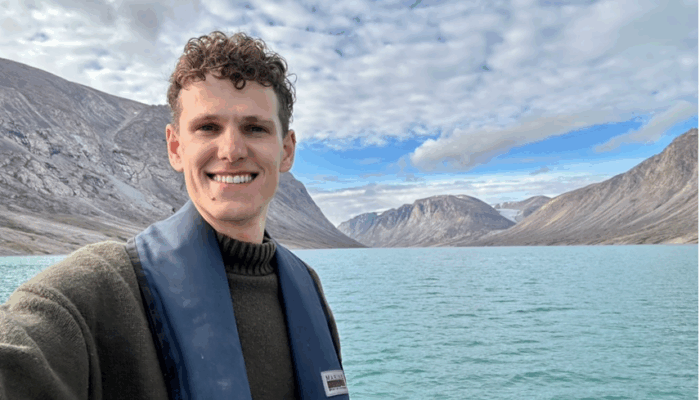
We sat down with Henry Henson, a PhD student at Aarhus University, whose path led from an early love of nature to studying the frontlines of climate change in the Arctic. Henry works with both Aarhus University’s Arctic Research Centre and the Greenland Climate Research Centre in Nuuk, exploring how Greenland’s coastal oceans absorb CO2 and how a warming, freshening Arctic is transforming these fr ...[Read More]

Jens Terhaar Receives the Division Outstanding Early Career Scientist Award – About His Career and Work

Jens Terhaar Receives the Division Outstanding Early Career Scientist Award – About His Career and Work

Jens Terhaar received the 2025 Division Outstanding Early Career Scientist Award for his research on the ocean carbon cycle and its effects on climate. We spoke with him about his career path and the work that led to this award. Since completing his PhD in 2019, Jens has made a name for himself with many publications and outreach efforts. His work is about the ocean carbon sink, ocean biogeochemic ...[Read More]

Tatiana Ilyina Receives the Fridtjof Nansen Medal – About Her Career and Work

Tatiana Ilyina Receives the Fridtjof Nansen Medal – About Her Career and Work

Tatiana Ilyina received the Fridtjof Nansen Medal from the European Geosciences Union (EGU) for her outstanding research in oceanography. We spoke with her about her career path and the work that led to this award. Here’s what you should know about her. Tatiana Ilyina studied Meteorology/Oceanography during her PhD at the University of Hamburg, continued as a postdoc at the University of Haw ...[Read More]

A modern take on the 19th-century scientific expeditions: cruise MSM104/1

A modern take on the 19th-century scientific expeditions: cruise MSM104/1

“Every ship that navigates the high seas, with these charts and blank abstract logs on board, may henceforth be regarded as a floating observatory, a temple of science.” Matthew Fontaine Maury This is a joint post, published together with the climate sciences division blog and the ocean sciences division blog. The ocean has always been important for humanity, with trade and war being just two exam ...[Read More]

Life as a “dry” oceanographer – studying Earth’s oceans from your laptop

Life as a “dry” oceanographer – studying Earth’s oceans from your laptop

I didn’t always know that I would become an oceanographer when I grew up, but I knew I would be doing ‘Science’. I was born and raised in Paris, France. While growing up, I was always interested in Science, from watching documentaries about the universe or nature, to attending science events at museums. While Science is very wide and encompasses many fields of research, I wasn’t too cl ...[Read More]

Career Progression – from Academia to Industry

Photo credit: Maria Tsekhmistrenko, Imaggeo

During the summer Liam Brannigan contributed to an EGU careers workshop. Liam has had a diverse career, following his masters in maths at Edinburgh University he worked for several years as an investment consultant. In 2010 however, he fancied a change and embarked on a career in physical oceanography, completing his MSc at Bangor University and his PhD at the University of Oxford. A few post-docs ...[Read More]