Tinted detail of a photo: Fast-flowing white water rushing over mossy boulders in a rocky stream through a tall green conifer forest.
HS
Hydrological Sciences
A single green tree grows from the clear blue water of a lake. In the background, blue mountains sit under a clear sky with a layer of white clouds.

Farhana Sweeta Fitriana

Farhana Sweeta Fitriana is a PhD researcher at the Institute of Statistics, BOKU University, Vienna, and a member of the Doctoral School Human River Systems in the 21st Century. With a background in water resources management and statistics, her research explores hydrological extremes, from floods to droughts. She uses statistical approaches to better understand hydrological processes and support informed water resources management. Outside of research, she enjoys travelling, exploring new places, and discovering good food.

Beyond traditional low-flow frequency analysis: why our modelling assumptions matter
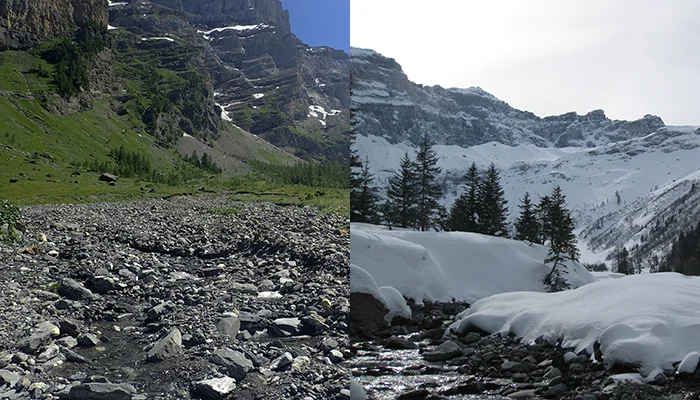
Split screen showing a rocky mountain valley in summer and winter. The left side is green with grey cliffs, while the right side is covered in white snow with dark evergreen trees.

The 2026 drought has shown the dramatic consequences of river low-flow for freshwater ecosystems, drinking water supplies, agriculture, energy production or logistics. Understanding how often extreme low-flows might occur is therefore important for managing water resources and preparing for droughts. Hydrologists traditionally analyse historical streamflow records to estimate the probability and magnitude of extreme low-flows. …[Read More]