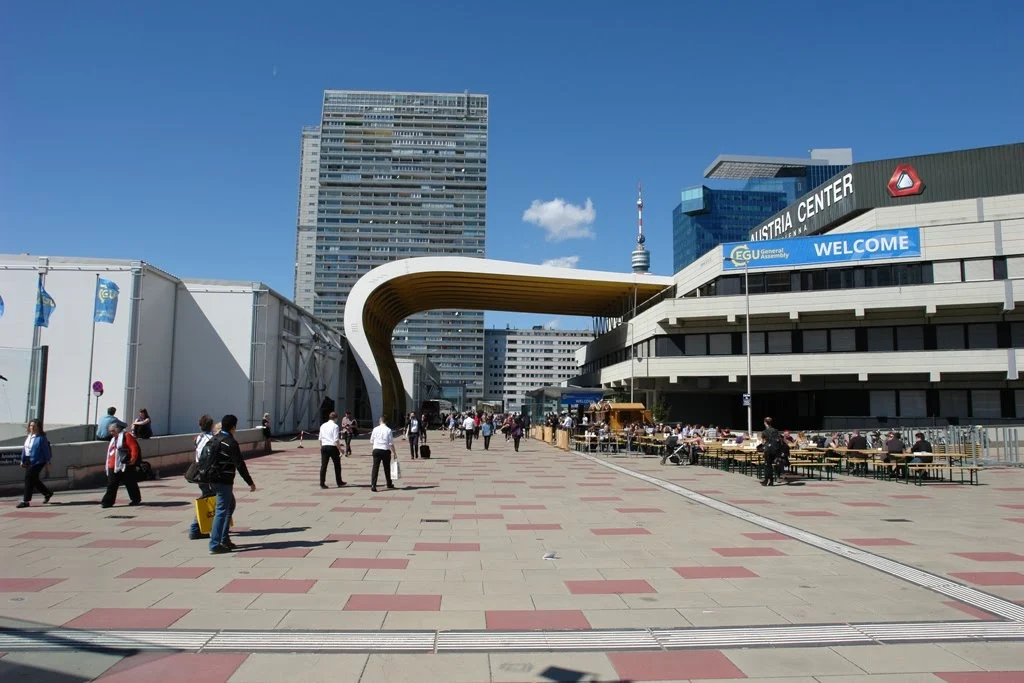
It’s this time of the year again where we all try to meet up in Vienna and talk about our latest scientific results and more importantly network with old and new colleagues. The EGU General Assembly (GA) will be a hybrid meeting this year: EGU22. There will be scientific sessions with short oral presentations, networking opportunities and short courses. All scientific sessions and most short courses will be accessible online as well. Several networking opportunities are planned for in-person attendees and virtual attendees. The GA provides ample chances of informal exchange, especially for early career scientists (ECS).
With only a few days left before the start of EGU22, we want to give you a brief overview of Geodesy division related events during the upcoming two weeks as a starting point for your personal programme. This list is far from exhaustive, so watch out and spread the word on any interesting sessions you might find.
Geodesy Division Business Meeting
When: Tuesday, May17th, 12 – 1 pm (CEST)
What to expect: The Geodesy Division Team will present the newest information about the Geodesy Division: What has happened since the last EGU GA? How many abstracts have been received within Geodesy? Who is part of the Geodesy Division Board? What is happening in the coming year?
How: Online
Where: Zoom
Don’t forget: The division business meeting is happening in the week before EGU22.
Geodesy Division Early Career Scientists (ECSs) Networking Event
When: Monday, May 23rd, 9:50 – 10:30 am (CEST)
What to expect: Join us for the first coffee break at EGU22. We are looking forward meeting you and hearing from you about your expectations for EGU22 and/or the ECS Representatives. Interested to find out more about ECS activities within the EGU, then have a look at our presentation: https://drive.google.com/file/d/10E35HK_s8QTs0t59n40SnY20OzlwFIF0/view
How: In-person only
Where: EGU Networking zone at terrace G
Geodesy Dinner
When: Wednesday, May25th, starts at 7 pm (CEST)
What to expect: This year’s Geodesy reception will be a dinner in a restaurant in Vienna. More information will be released soon.
https://forms.gle/EbAaRQCNPMDX95Ko6
How: In-person only
Meet the Geodesy Division Team
When: Thursday, May26th, 4:30 – 5:10 pm (CEST)
What to expect: Do you have any questions for the Geodesy Division Team? Do you want to know who is part of the team? Then come and join us for a coffee: meet the division team and ask questions. This is an informal, drop-in style meeting; simply turn-up at anytime during the 40-minute time-slot if you want to engage!
How: In-person only
Where: EGU Networking zone at terrace G
How to navigate the EGU: tips and tricks
When: Monday, May 23rd, 10:20 – 11:50 am (CEST)
What to expect: During this course, you will get to know tips and tricks on how to handle this large conference and how to make the most out of your week at this year’s General Assembly. The EGU structure and the difference between EGU and the General Assembly will be explained, and you get to know the program groups and some key persons that help the Union function.
How: Hybrid
Where: Room -2.61/62 and via Zoom
ECS Forum
When: Thursday, May 26th, 5:00 – 6:30 pm (CEST)
What to expect: Here you can share your thoughts/suggestions/remarks/wishes on both EGU22 and on EGU as an organization. We are looking forward to hearing from you and getting your input.
How: In-person only
Where: Room F1
ECS networking reception
When: Tuesday, May 24th, 7:00 – 8:30 pm (CEST)
What to expect: The ECS Union-wide networking reception is the opportunity to get to know your peers across all disciplines. As we all know, your network goes beyond your peers and therefore senior scientists, medallists and awardees, EGU volunteers, committee members and ECS Representatives will also be around. Make sure you catch them for career advice, interesting stories, or just a low-key chat.
How: In-person only
Where: Hall A
Registration: https://www.egu.eu/forms/GA22-ECS-Networking/
Last but not least – The medal lectures within the Geodesy division
Vening Meinesz Medal Lecture:
Peter J. G. Teunissen (“Geodetic inference: a selection of some challenging topics”) – Thursday, May 26th, 7 – 8 pm (CEST), Room K2 and via Zoom
Outstanding ECS Award Lecture:
Kristel Chanard (“Geodesy: a sensor for hydrology”) – Friday, May 27th, 10:20 – 10:30 am (CEST), Room -2.16 and via Zoom
There are even more ECS events. Some divisions will host an ECS networking event. Also join one of the many short courses: e.g., on mental well-being, on the needs of scientific posters, tips and hints for proposal writing, outreach, ….
Now that we have pointed out a lot of networking and skillset-building highlights, don’t forget to check the programme for all the scientific sessions as they will take place in the second week.
You are welcome to join the discussion by using the hashtag #EGU22_G and tag @EGU_Geodesy in your tweet.
We are looking forward to seeing you!
The Geodesy ECS Representative Team
Rebekka Steffen and Andreas Kvas