CR
Cryospheric Sciences

Everest

Image of the Week – Looking to the past for answers
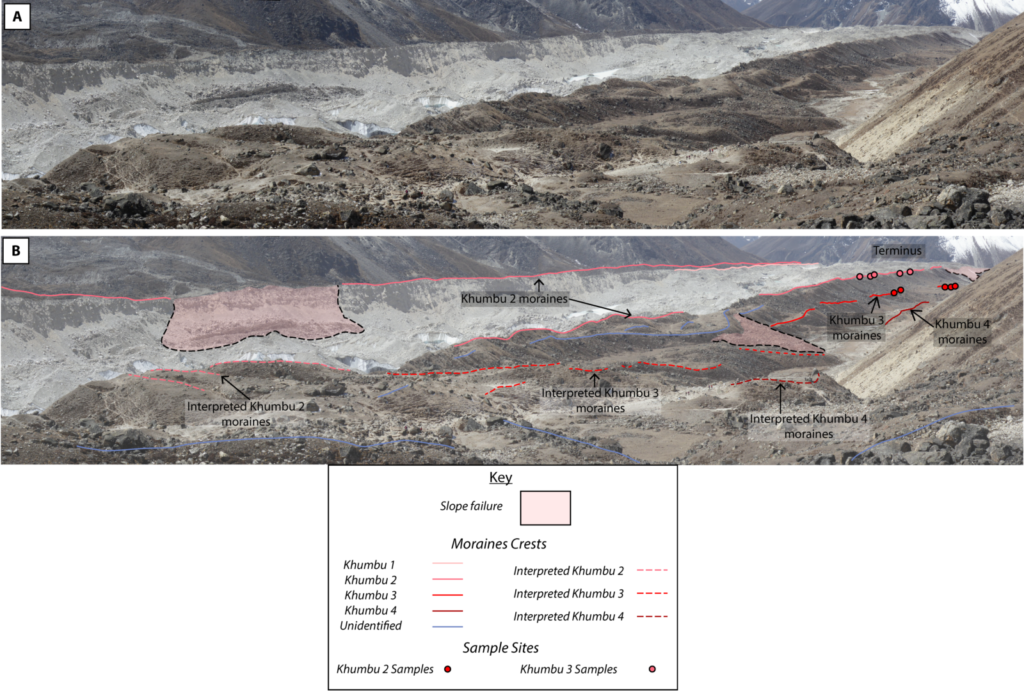
Image of the Week – Looking to the past for answers
We’re only just really starting to comprehend the state and fate of Himalayan glaciers due to a scarcity of research along the monumental mountain range. Climbers and scientists have been observing these lofty glaciers since the 1900s. However, is that looking back far enough? Glacier moraines, featuring in this Image of the Week, can reveal …[Read More]

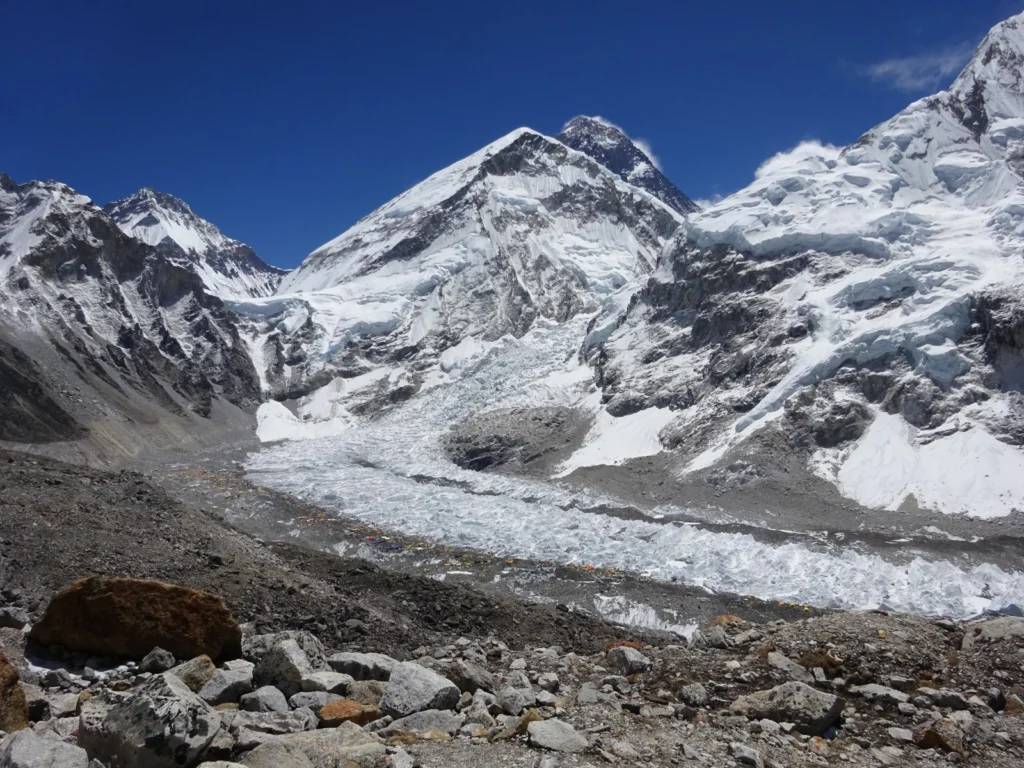
Image of the Week – We walked the Talk to Everest

Image of the Week – We walked the Talk to Everest

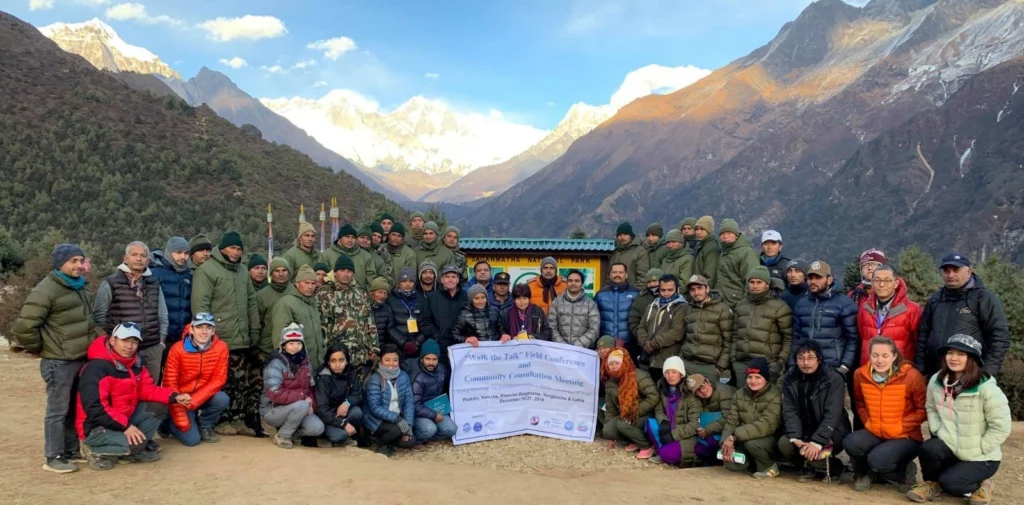
The 12 day “Walk the Talk” Field Conference and Community Consultation through Sagarmatha National Park, Nepal, discussed a wide range of research outputs with local communities, tourists, and officials. Topics covered glaciers, mountains, environmental and landscape change, Sherpa livelihoods, tourism, and natural hazards. The conference, organised by Himalayan Research Expeditions, was the first of its …[Read More]

Image of the Week – Climbing Everest and highlighting science in the mountains

Image of the Week – Climbing Everest and highlighting science in the mountains

Dr Melanie Windridge, a physicist and mountaineer, successfully summited Mount Everest earlier this year and has been working on an outreach programme to encourage young people’s interest in science and technology. Read about her summit climb, extreme temperatures, and the science supporting high-altitude mountaineering in our Image of the Week. It’s bigger than it looks! …[Read More]

Image of the Week – Making waves: assessing supraglacial water storage for debris-covered glaciers

Image of the Week – Making waves: assessing supraglacial water storage for debris-covered glaciers

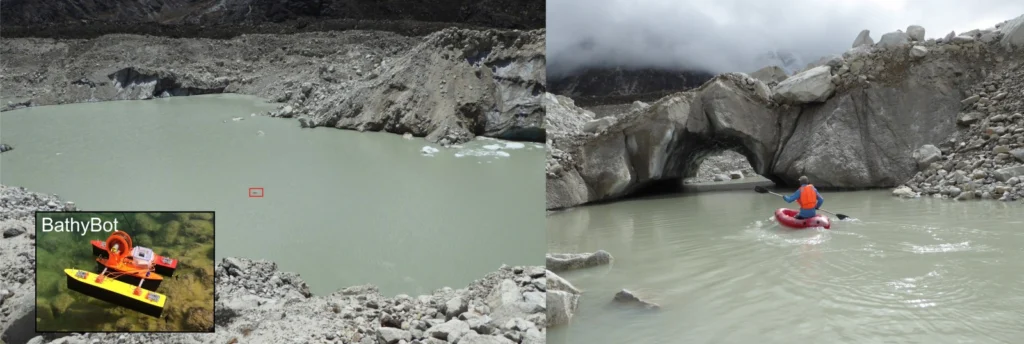
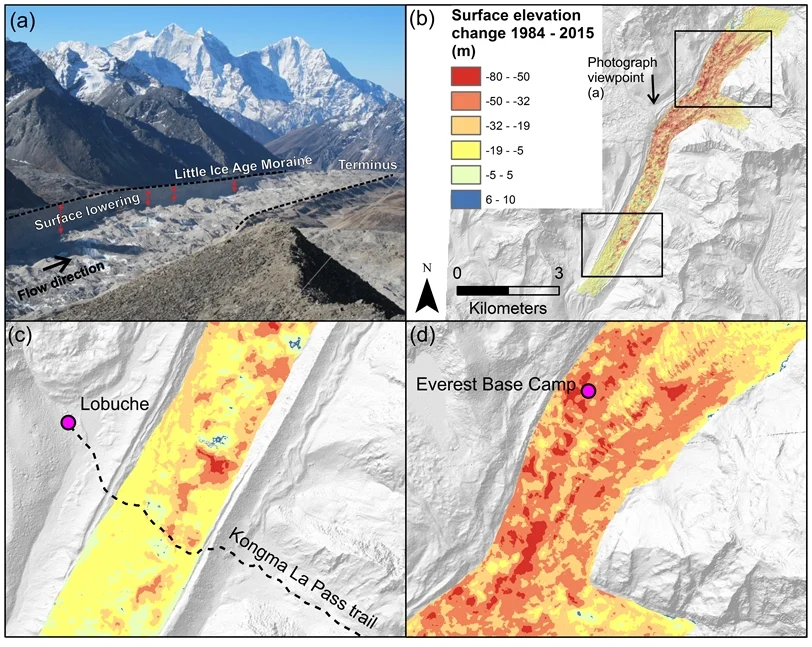
A creeping flux of ice descends Everest, creating the dynamic environment of Khumbu Glacier. Ice and snow tumble, debris slumps, ice cliffs melt, englacial cavities collapse, ponds form and drain, all responding to a variable energy balance. Indeed, Khumbu Glacier is a debris-covered glacier, meaning it features a layer of sediment, rocks and house-sized boulders …[Read More]