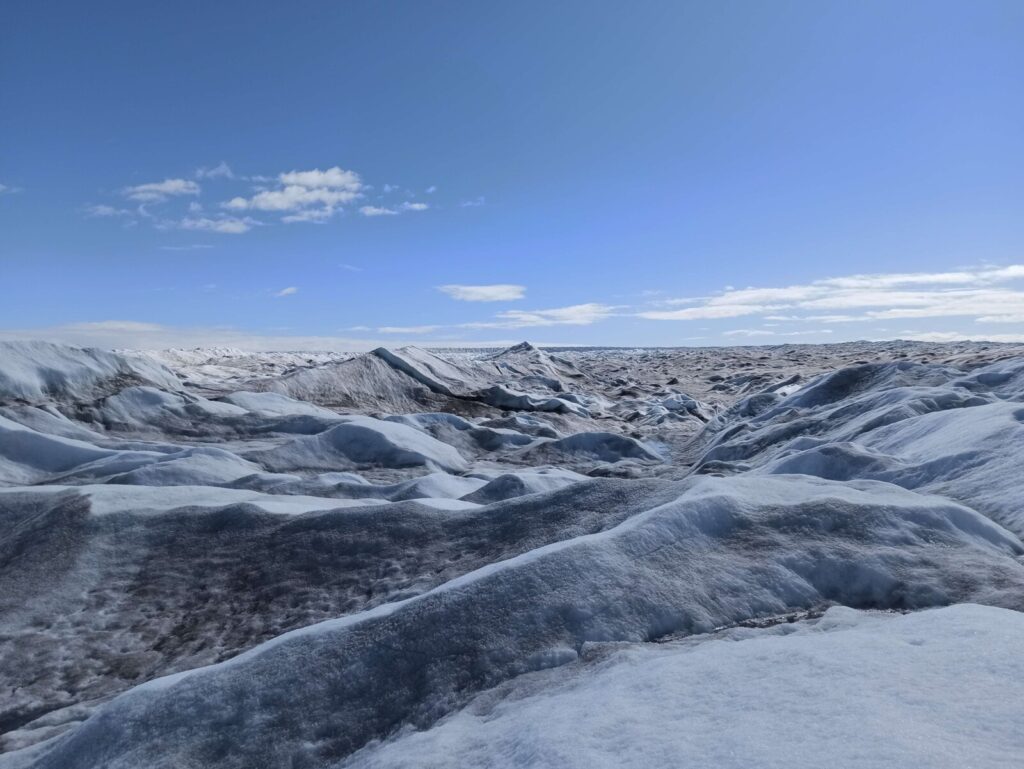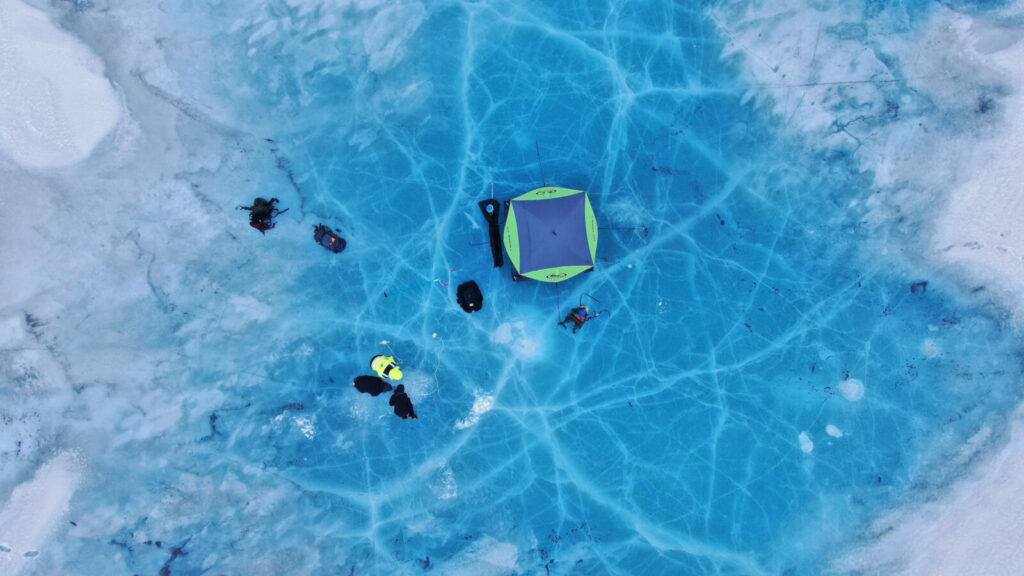
I remember the day very well. It was the first time we drove up to the glacial ice from our base station in Kangerlussuaq (Western Greenland), where we had patiently been waiting for two days for the weather to clear. I took this photo during a three-week fieldwork campaign in July of 2025 as part of the Deep Purple project. As part of the project, we were in the field to collect glacial ice-alg ...[Read More]
When August Brought Snow: Unseasonal Snowfall Disrupts Life in Ladakh’s High Valley Village
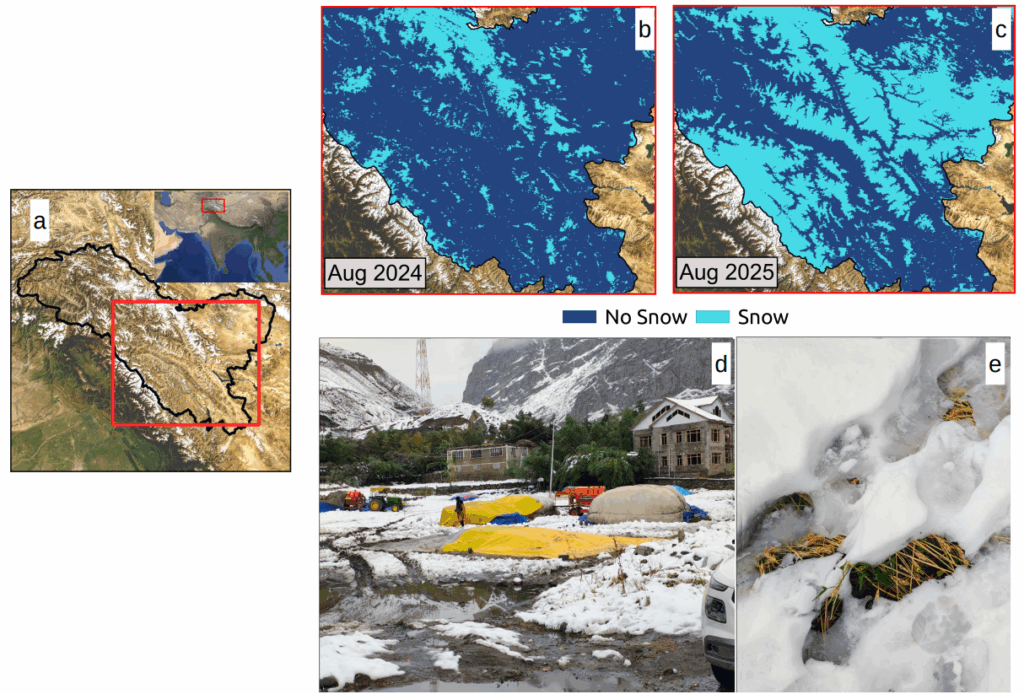
August in Ladakh is a time of golden fields and harvest songs, not snowstorms. Yet in 2025, this rhythm broke. Panikhar village in Ladakh woke beneath fifteen centimetres of snow, an unseasonal blanket that changed the functioning of the valley and stunned its people. What began as a glaciological field trip turned into a firsthand encounter with climate uncertainty. This blog captures those extra ...[Read More]
The Proglacial Puzzle: Sampling of Glacier-fed Lakes in Greenland
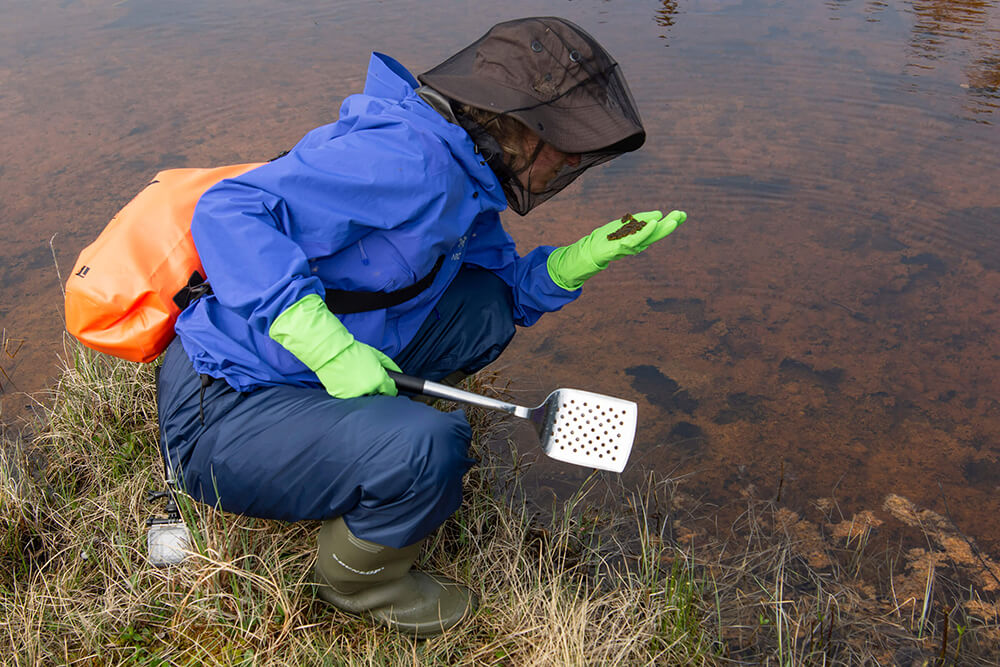
Would you like to follow the endeavours of a small team working in the ice-marginal terrain in South-West Greenland? They set out to investigate proglacial lakes using sediment coring, water sampling and gas collections (figure 1), aiming to better understand methane dynamics, proglacial terrain development and the environmental drivers behind methane production in glacially influenced lake system ...[Read More]
Dreaming & reading about fieldwork – summer blog break 2024
As we are starting into our annual blog summer break, we reflect on what summer can mean for polar researchers (including some fieldwork saudades). As an Arctic or Alpine cryo-scientist, chances are that you are somewhere in between vacation, fieldwork or trying to work through data while everyone else is free. If you, like us, did not have your vacation yet or do not have any fieldwork com ...[Read More]
Women of Cryo VII: Making Fieldwork More Inclusive
Women make up 50.8% of the world’s population, yet fewer than 30% of the world’s researchers are women. Of this percentage, women of colour comprise around 5%, with less than 1% represented in geoscience faculty positions. Women are published less, paid less, and do not progress as far in their careers as men. Even within our EGU community, women account for only one third of all members, and make ...[Read More]
Did you know? We can see what’s going on inside an ice shelf using geophysics!
Understanding what is going on inside an ice shelf is important for many reasons. But mostly, it allows us to better understand their contribution to sea level rise, and to understand how they are changing and evolve over time, with our changing climate. Geophysical methods offer a means to be able to see inside an ice shelf, and get an idea of their properties. Read on to find out a bit more abou ...[Read More]