CR
Cryospheric Sciences

Archives / 2020 / January

Water plumes are tickling the Greenland Ice Sheet
Water plumes are tickling the Greenland Ice Sheet

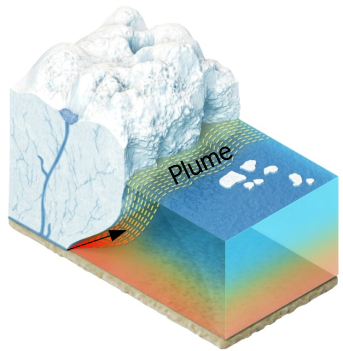
7 meters of sea-level rise – what you would get if the whole Greenland Ice Sheet melted. But the tricky question is: how much of this ice will be melted in the next decades, and how fast will it occur? This piece of information is critical in order to plan for present and future populations living in coastline areas, all around the world. How much and how fast can the Greenland Ice Sheet melt ? In ...[Read More]

Climate Change & Cryosphere – The fate of Georgian Glaciers

Display "The fate of Georgian Glaciers" from YouTube Click here to display content from YouTube. Learn more in YouTube’s privacy policy. Always display content from YouTube Open "The fate of Georgian Glaciers" directly Last week, we learned about the dramatic fate of the Hochjochferner, which has strongly retreated in the past years due to climate change. It represented just on ...[Read More]

Education in glaciology: Witnessing the death of a glacier

Education in glaciology: Witnessing the death of a glacier

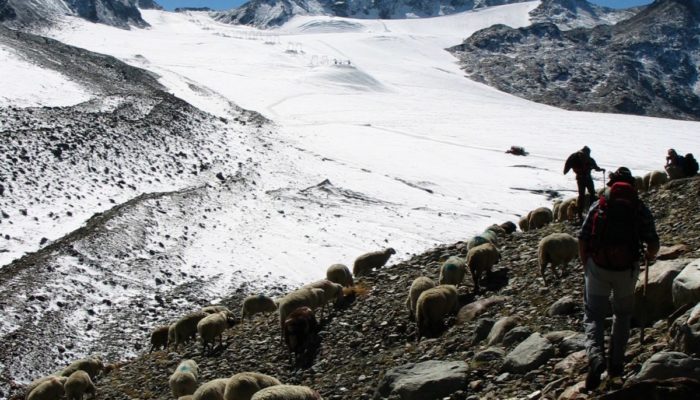
The Karthaus summer school on Glaciers and Ice Sheets in the Climate System has a long history of training many generations of PhD students, thus forming professional networks that have lasted throughout their careers. The Karthaus summer school has been described in detail in a previous Cryoblog post. Here we want to focus on the story of a glacier… Hochjochferner, a retreating glacier One ...[Read More]

Did you know? – Ocean bathymetry can control Antarctic mass loss!

Ice shelves (the floating parts of the Antarctic ice sheet) play a fundamental role in the stability of the Antarctic ice sheet (see this post) and, therefore, its contribution to global sea-level rise. They lose mass primarily through melting at their bases, which are in contact with the ocean. This thins them and makes them more vulnerable, reducing their stabilising potential and causing more i ...[Read More]