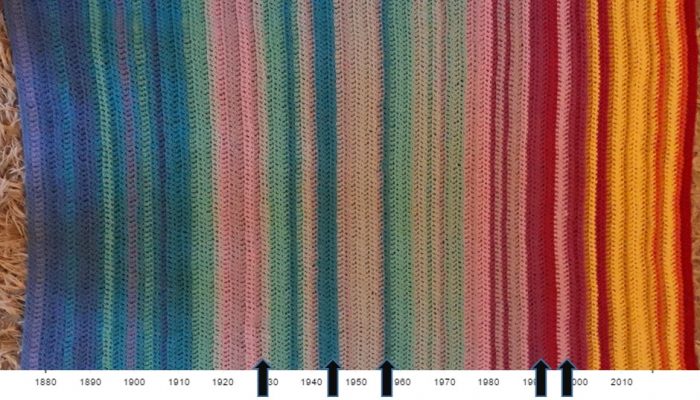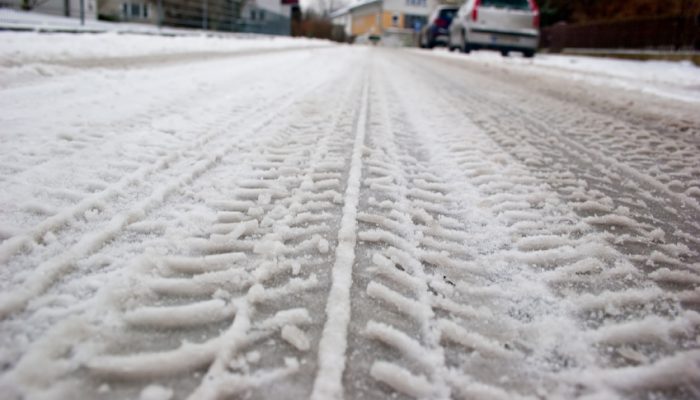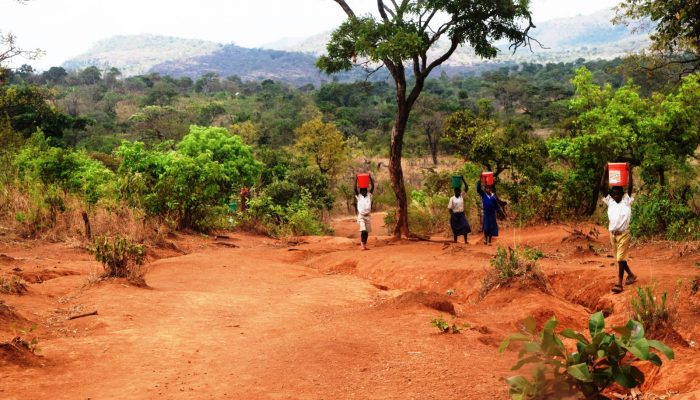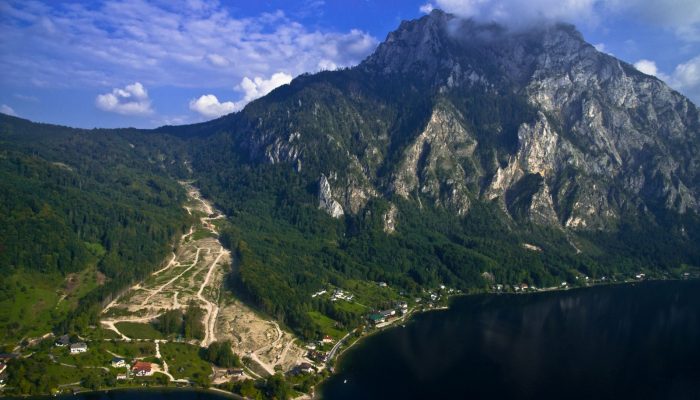
Figuring out what the climate was like, and how it changed, throughout Earth’s history is like trying to complete a 1000 piece puzzle. Except that scientists usually don’t have all the nuggets and building a comprehensive picture relies on a multidisciplinary approach in order to fill in the blanks. This is particularly true during the Holocene, which spans the last 11,700 years of the Earth’ ...[Read More]
If you didn't find what you was looking for try searching again.
Biogeosciences
Coffee break biogeosciences–The oldest known fossilized active root meristem
Meristems are groups of undifferentiated cells found in growth zones of plants. Active meristem zones have a different cellular organization than inactive zones, and up until recently no fossilized active root meristem had been found. A team of scientists recently found and described the fossilized remains of an actively growing root meristem dating from the Carboniferous. The fossil, named Radix ...[Read More]
Seismology
MyShake – your phone as a seismic station
Are you on Facebook or Twitter? Do you use Whatsapp regularly to communicate with friends and loved ones scattered across the globe or even just across the city? I’d be surprised if you answer ‘no’ to all of these questions. In fact, why not admit that you are just as addicted to that smartphone of yours as I am to mine? Being a seismologist, you might have played with one of the ...[Read More]
Cryospheric Sciences
Image of The Week – A Game of Drones (Part 1: A Debris-Covered Glacier)
What are debris-covered glaciers? Many alpine glaciers are covered with a layer of surface debris (rock and sediment), which is sourced primarily from glacier headwalls and valley flanks. So-called ‘debris-covered glaciers’ are found in most glacierized regions, with concentrations in the European Alps, the Caucasus, Hindu-Kush-Himalaya, Karakoram and Tien Shan, the Andes, and Alaska and the weste ...[Read More]
GeoLog
Imaggeo on Mondays: Heavy machinery
How do you get heavy machinery, such as a drill spool onto an ice sheet? This week’s imaggeo on Mondays’ photography captures the freighting of components of a hot water drill to directly access and observe the physical and geothermal properties at the ice-bed interface. In the image, SAFIRE principal investigator Bryn Hubbard and post-doc Sam Doyle help fly in the drill spool at the start o ...[Read More]
GeoLog
Gender equality in the geosciences: is it a numbers game?
Here’s a tricky question for you. Try and name a woman in geoscience who has won an award for their studies in the last 5 years? How about a man? Chances are it is much easier to think of a male geoscientist who has won an award than a female one, but is that because more men win awards in geoscience than women (compared to the number of male and female geoscientists)? This was the question that w ...[Read More]
Seismology
A tale about MERMAIDs
Once upon a time there was a little mermaid, with the upper body of a human and a tail of a fish, happily diving within the seven seas. Wait … I’m sorry, that is the wrong story. I will tell you today something about a different generation of MERMAIDs, that are pretty useful for seismologists. It is a very exciting story indeed. Over the last decades seismic station coverage dra ...[Read More]
Cryospheric Sciences
Image of the Week – Canyons Under The Greenland Ice Sheet!
The Greenland Ice Sheet contains enough water to raise sea level by 7.36 meters (Bamber, et. al. 2013) and much of this moves from the interior of the continent into the oceans via Jakobshavn Isbræ – Greenland’s fastest flowing outlet glacier. An ancient river basin hidden beneath the Greenland Ice Sheet, discovered by researchers at the University of Bristol, may help explain the loca ...[Read More]
GeoLog
Finding Funding: a how to guide to applying for research grants
Drafting your first grant proposal can be daunting. Grant writing improves with experience, so how do early career scientists compete on an equal footing with those who are more established? At this year’s General Assembly we tackled this very question at the Finding Funding (SC46) short course. Grant Allen, an atmospheric scientist, who has plenty of experience in applying for funding spoke abo ...[Read More]
Cryospheric Sciences
Marine Ice Sheet Instability “For Dummies”
MISI is a term that is often thrown into dicussions and papers which talk about the contribution of Antarctica to sea-level rise but what does it actually mean and why do we care about it? MISI stands for Marine Ice Sheet Instability. In this article, we are going to attempt to explain this term to you and also show you why it is so important. Background The Antarctic Ice Sheet represents the larg ...[Read More]