EGU Blogs

5687 search results for "6"

CL
Climate: Past, Present & Future

Meet the new ECS-Team of the Climate Division

Meet the new ECS-Team of the Climate Division

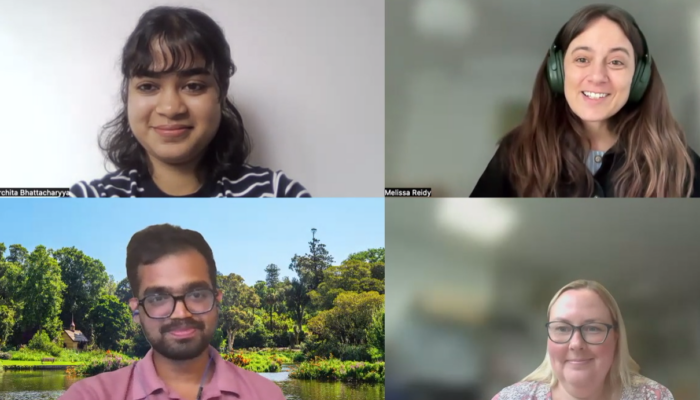
Dear Climate ECS Community, Welcome to the Climate ECS community! We’re a team of early career scientists who love connecting with fellow researchers, organizing events, and building a strong and supportive network. Let’s grow, share, and create impact together! Early career scientists (ECSs) make up a significant part of the EGU membership. We are committed to ensuring that your voice is heard, y ...[Read More]

GeoLog

GeoRoundup: the highlights of EGU Journals published during July!

GeoRoundup: the highlights of EGU Journals published during July!

Each month we feature specific Divisions of EGU and during the monthly GeoRoundup we put the journals that publish science from those Divisions at the top of the Highlights section. During this month, we are featuring Earth Magnetism & Rock Physics (EMRP), Geodesy (G), and Geomorphology (GM). They are represented by the journals Geoscientific Model Development (GMD), Solid Earth (SE), and Eart ...[Read More]

GD
Geodynamics

Reflecting on the 2025 Gordon Research Seminar (GRS) – Interior of the Earth

Reflecting on the 2025 Gordon Research Seminar (GRS) – Interior of the Earth

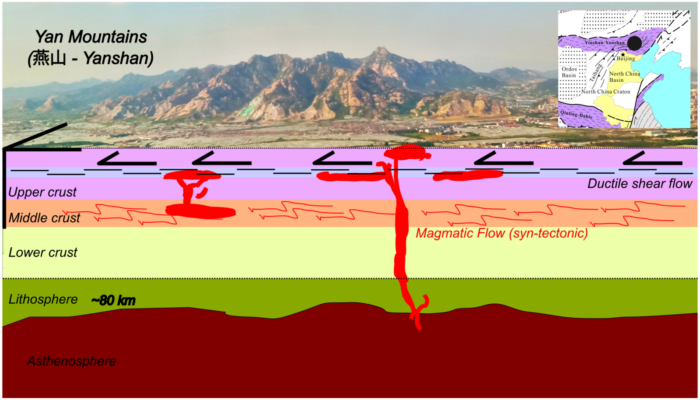
This week in News & Views, Heidi Krauss, a PhD student at Michigan State University, shares her experience co-chairing the 2025 Interior of the Earth Gordon Research Seminar, held at Mount Holyoke College in South Hadley, Massachusetts. Earlier this year, I had the opportunity to help co-chair the Gordon Research Seminar (GRS) on the Interior of the Earth, held just before the main Gordon Rese ...[Read More]

GeoLog

Mangroves: Our coastal guardians of soil, biodiversity, and climate

Mangroves: Our coastal guardians of soil, biodiversity, and climate

Mangrove forests, rare tidal woodlands at the interface of land and sea, are extraordinary ecosystems that bridge freshwater and marine environments. These forests support rich biodiversity and invaluable nursery habitat for fish and crustaceans, while also providing food, shelter, and cultural resources to millions of coastal communities. Think of mangroves as sea walls: their dense, prop-root ne ...[Read More]

G
Geodesy

Bits and Bites of Geodesy – Trilateration on Vacation: How GNSS Locates You

Bits and Bites of Geodesy – Trilateration on Vacation: How GNSS Locates You

Summer vacations are finally here! Like every year, many of us are ready to travel and explore new and exciting destinations. And of course, the GPS on our phones will be an indispensable travel companion! Did you know that GPS (or GNSS) positioning is one of the traditional geodetic techniques? Come along to discover how this technique can find your location in the world and the various applicati ...[Read More]

CR
Cryospheric Sciences

Did you know: Soot is a melting agent for glaciers in Peru and China

Collecting snow samples from the Puruogangri Ice Cap on the Tibetan Plateau, China.

Mountain glaciers are melting rapidly due to global warming. This process is being intensified by increasingly extreme natural events, such as forest fires and air pollution from human activities. One of the main culprits is a tiny but powerful pollutant called black carbon (commonly known as soot) which darkens the surface of the snow and makes it met faster under the sun. But how much of this po ...[Read More]

GeoLog

The importance of building early warning systems from the ground up

The importance of building early warning systems from the ground up

As the Early Warnings for All (EW4ALL) initiative gathers pace with its 1st Multi-Stakeholder Forum last month in Geneva, we have welcomed a recognition by experts of the importance of tailoring early warning systems to local needs. The ambition to ensure everyone on Earth is protected by a multi-hazard early warning system by 2027 is bold and demands an urgent setup of systems around the world. D ...[Read More]

GD
Geodynamics

Simulating the Deep Earth with MAGEMin: A Toolkit for Thermodynamic Modeling in Geodynamics

Simulating the Deep Earth with MAGEMin: A Toolkit for Thermodynamic Modeling in Geodynamics

Understanding how rocks melt, deform, and evolve within Earth’s interior is a central challenge in geoscience. These processes span a wide range of spatial and temporal scales and are governed by complex interactions between temperature, pressure, composition, and phase stability. Capturing this complexity in numerical models requires integrating mineral thermodynamics directly into geodynamic mod ...[Read More]

BG
Biogeosciences

My EGU25 highlights: Inspiring inland water greenhouse gas emission science

field measurements of greenhouse gas emissions using floating chambers on a agricultural drainage ditch.

The notion that inland waters are passive participants in biogeochemical cycling, with lakes as recipients and rivers as pipes, has long been overturned. More and more research suggests the global importance of inland waters in biogeochemical cycles, particularly in greenhouse gas (GHG) exchange. EGU25 had a remarkable line-up of talks and posters on inland water GHG emissions. I’ll revisit some o ...[Read More]

ST
Solar-Terrestrial Sciences

Chasing Auroras 41 Millennia Ago with Agnit Mukhopadhyay and Sanja Panovska

Chasing Auroras 41 Millennia Ago with Agnit Mukhopadhyay and Sanja Panovska

Approximately 41,000 years ago, during the Laschamps geomagnetic excursion, Earth’s magnetic field experienced a significant disturbance. The strength of the magnetic field decreased to only 10% of what it is today, the magnetic poles shifted considerably from the geographic poles, and the magnetosphere—the protective layer surrounding our planet—became smaller and distorted in previously unvisual ...[Read More]