Each month we feature specific Divisions of EGU and during the monthly GeoRoundup we put the journals that publish science from those Divisions at the top of the Highlights roundup. For September, however, all the EGU Divisions are in the spotlight as we celebrate EGU’s 20 year anniversary. So read on to discover the papers published this month, and while you’re at it – join us i ...[Read More]
If you didn't find what you was looking for try searching again.
Biogeosciences
The hidden importance of Amazon forests
Figure 1. Minirhizotron image acquisition in the field near Manaus, Brazil (photo credit Caroline Miron From different parts of continental Brazil, now working in different areas of Germany, we, three women scientists, share one more thing in common: our interest in making the hidden importance of the Amazon forest visible. In other words, we are root-nerds! Studying something that cannot i ...[Read More]
Geodesy
Want to really understand sea-level rise? Bring in the geodesists!
A remarkably large number of papers and proposals have sentences like “this study is critical to better project future sea-level rise” in their introduction. Most times this is just marketing to trick reviewers and program managers into believing the work is important. On the other hand, geodetic papers and proposals have some compelling reasons to use this statement: a lot of geodetic tech ...[Read More]
GeoLog
GeoPolicy: Top 10 science for policy resources recommended by the EGU’s Science for Policy Working Group
EGU’s Science for Policy Working Group aims to promote greater collaboration between the geoscientific community and policymakers, highlight policy-relevant outputs from EGU scientists, and support evidence-based policy. Not only does the Working Group support EGU’s policy activities but it also provides individual members with relevant information and opportunities through the EGUR ...[Read More]
Geodynamics
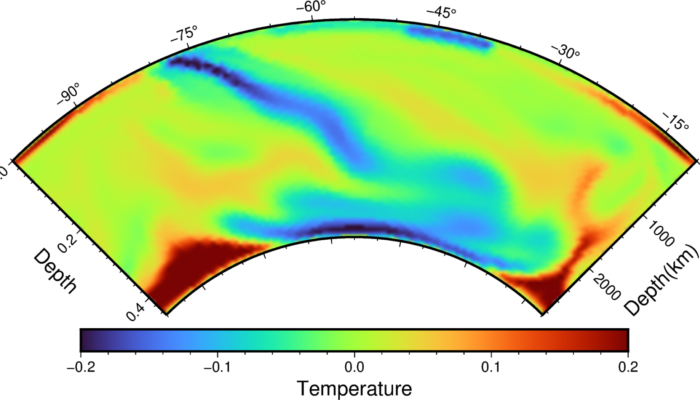
The invisible shield from the centre of the Earth
The Earth’s magnetic field plays a prominent role in our everyday life. From birds and bees to many modern-day technologies rely on the magnetic field, and yet, our understanding on its long- and short-term behavior is far from complete. In this week’s post, Annique van der Boon shows how geology and paleomagnetic studies can help us in understanding the long-term activity of EarthR ...[Read More]
WaterUnderground
Urban Groundwater II: Heading for the coast
by Margaret Shanafield (Flinders University), Ana Manero (Australian National University), Sally Thompson (University of Western Australia), and Greg Claydon Few urban home buyers are picking their dream home based on depth to groundwater. Yet that water level can play an important role in the quality of life in their new home. Typically, it is only after moving in that residents realise problems ...[Read More]
Seismology
Seismic Field Work at the Equator
Benedikt Braszus – PhD student at Karlsruhe Institute of Technology, Germany – takes us on a seismic field trip to tropcial Ecuador. Scientists from Géoazur (CNRS/IRD/Observatoire de la Côte d’Azur/Université de la Côte d’Azur), Karlsruhe Institute of Technology, Instituto Geofísico / Escuela Politécnica Nacional (IG-EPN, Quito), Instituto Oceanográfico de la Armada del Ecuador ...[Read More]
GeoLog
To accept or not accept: what makes a good scientific editor
Researchers and those in academia sooner or later come across the scientific editor: the gatekeeper of scientific journals. The editor plays a key role in the publishing process, working closely with authors and reviewers to implement an unbiased peer-review process that upholds rigorous standards. They are often experienced scientists and experts in their field who ensure that the published resea ...[Read More]
Geodynamics
The Sassy Scientist – Perhaps Communication Isn’t Key
Lots of people think that the challenging things in academia all relate to the actual science, the nitty gritty coding, the paper writing, developing methodologies etc. However, I’m sure that you’ll be reassured by the fact that many of us are stuck with even the simplest of things. Thats why Alice has come to us asking: How can I stay in touch with my supervisor? Dear Alice, It sounds ...[Read More]
Cryospheric Sciences
Winds and Antarctic sea-ice cover: what is the role of human activities?
We may not often think about it, but climate in Antarctica can be very different depending on where we are exactly (do not expect palm trees though!). Winds play a big role in shaping these differences, which are reflected – among other things! – on sea ice. But how are these winds related to the large-scale atmospheric circulation, and are we having an impact on them? Dear readers, pl ...[Read More]