EGU Blogs

2055 search results for "researcher"

OS
Ocean Sciences

OceanTalk with Frédéric Le Moigne

OceanTalk with Frédéric Le Moigne

Frédéric Le Moigne has been awarded the 2020 Outstanding Early Career Scientist Award for the Division of Ocean Sciences and he agreed to be interviewed for our first blog post on the new Ocean Sciences blog. Frédéric can you tell us about your background and education? I was born and raised on the Atlantic coast, near the bay of Brest in Brittany, western France. In Brittany the ocean is an impor ...[Read More]

SM
Seismology

Seismology Job Portal

Seismology Job Portal

On this page, we regularly update open positions in Seismology for early career scientists. Do you have a job on offer? Contact us at ecs-sm@egu.eu Please, note that other available research positions are displayed on the EGU Jobs Portal.  

Geochemistry, Mineralogy, Petrology & Volcanology

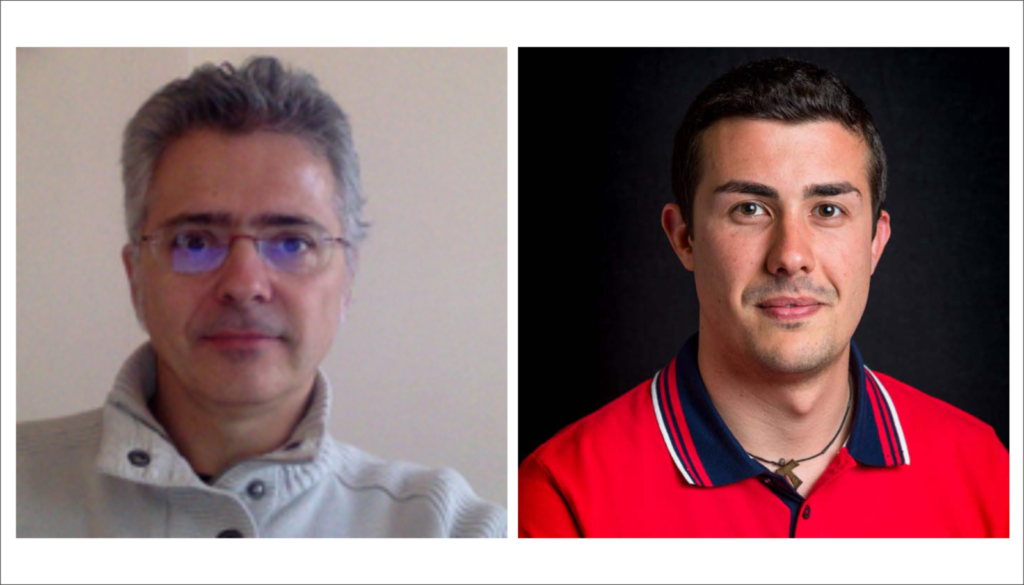
That’s us! – The new GMPV ECS Team 2020/2021

That’s us! – The new GMPV ECS Team 2020/2021

Usually our blog posts are about fancy minerals and cool science, but today we want to use this platform to introduce you to our new GMPV ECS team for the term 2020/2021! First of all, what exactly are we doing here in the GMPV ECS team and why are we even existing?! – Well, the GMPV ECS team is a group of young researchers (themselves being ECS), who want to support young scientists at the beginn ...[Read More]

GeoLog

Imaggeo On Monday: Sunset in the Arabian basin

Imaggeo On Monday: Sunset in the Arabian basin

We know the topography of the moon better than the Earth’s seafloor, so we need to keep studying the ocean, and, for me, going to sea is the best way.   Only twenty percent of the seafloor is already mapped (see the Seabed 2030 Project), leaving eighty percent of our ocean unmapped, unobserved, and unexplored. This is why ocean going research is fundamental, not only for seabed mapping, ...[Read More]

GD
Geodynamics

The Sassy Scientist – Of Codes And Cares

The Sassy Scientist – Of Codes And Cares

On the matter of code choices, Alexa could have asked Siri, but instead chose an old-fashioned medium of enquiry compatible across all operating systems and wrote in to ask: Should I perform my research with an in-house code, an open source code or a commercial code? Dear Alexa, As a famous novel does not quite begin, it is a truth universally acknowledged that a geodynamicist in possession of a g ...[Read More]

GD
Geodynamics

What is FAIR for Geodynamics?

What is FAIR for Geodynamics?

A very important part of science, which is getting more and more attention, is how to share and manage our data. This week, Adina E. Pusok, Postdoctoral Researcher at the Department of Earth Sciences, University of Oxford, shares thoughts and tips on how to make our science fairer. So, what is FAIR for Geodynamics? This is a big question! I would say that what is fair for geodynamics is fair for a ...[Read More]

NP
Nonlinear Processes in Geosciences

NPG Paper of the Month: “Correcting for model changes in statistical postprocessing – an approach based on response theory”

NPG Paper of the Month: “Correcting for model changes in statistical postprocessing – an approach based on response theory”

This month the NPG Paper of the Month award is achieved by Jonathan Deameyer and Stéphane Vannitsem for their paper “Correcting for model changes in statistical postprocessing – an approach based on response theory” (https://doi.org/10.5194/npg-27-307-2020). Jonathan did his PhD in statistical mechanics at the Université Libre de Bruxelles under the supervision of Pierre Gaspard and he is currentl ...[Read More]

NH
Natural Hazards

In between Natural Hazards and Heritage, interview to Maria Bostenaru

In between Natural Hazards and Heritage, interview to Maria Bostenaru

In today’s interview, we talk with Dr Maria Bostenaru. Maria is an architecture engineer interested in the complex relationship between urban areas, natural hazards, and heritage. She tells us how she thinks that involving more humanities, which include, for example, the study of languages, literature, archaeology, together with information technology solutions, may result in new important a ...[Read More]

CR
Cryospheric Sciences

Exploring the hidden plumbing of glaciers with Cryoegg

Exploring the hidden plumbing of glaciers with Cryoegg

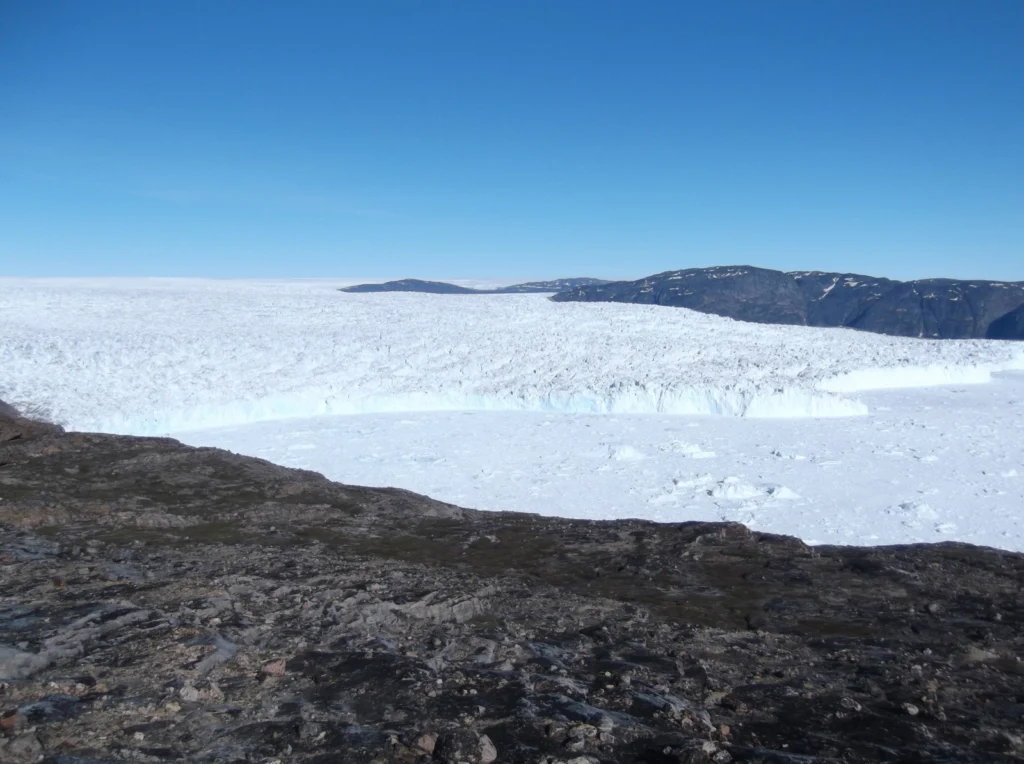
Plumbing is something we take for granted: the pipes that bring us water to wash and drink, and the pipes that take the waste water away again. We see the taps and basins in our kitchen and bathroom – but the pipes are hidden away under the floor or inside the walls – and we mostly ignore them until there’s a leak or a blockage! It turns out that glaciers have plumbing too – and ...[Read More]

GeoLog

Imaggeo On Monday: Under the sea, in the deep, where fire meets water and life emerges III

Imaggeo On Monday: Under the sea, in the deep, where fire meets water and life emerges III

650 metres below the chilly waves of the North Atlantic Arctic Ocean, equidistant between Norway, Iceland and Greenland, are the Jan Mayen Vent Fields. Home to a series of hydrothermal vents strung along a set of normal faults and fissures that run parallel to the seafloor ridge, this is a strange and fascinating place. Hydrothermal vents are places where tectonic activity provides a way for the h ...[Read More]