

An Atom's-Eye View of the Planet
Avatar photo

Simon Redfern

Simon Redfern is a mineral physicist at the University of Cambridge. He studies the properties of materials in Earth, from biominerals in seas shells to the nature of Earth's inner core. He uses neutron and synchrotron light sources to study these properties at the atomic scale, and links the results to phenomena at the global scale. Tweets as @Sim0nRedfern.

Meteorite impact turns silica into stishovite in a billionth of a second
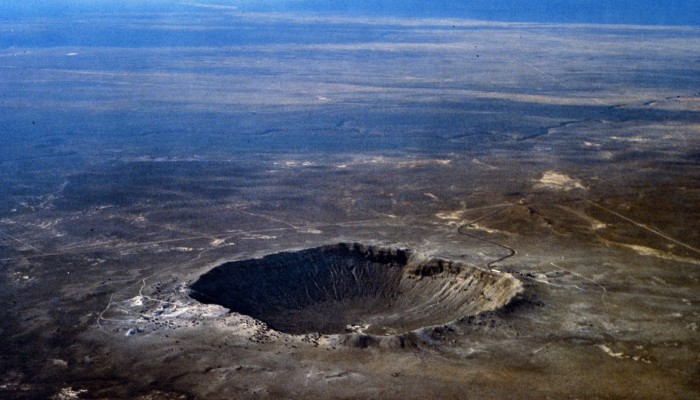
Meteorite impact turns silica into stishovite in a billionth of a second

The Barringer meteor crater is an iconic Arizona landmark, more than 1km wide and 170 metres deep, left behind by a massive 300,000 tonne meteorite that hit Earth 50,000 years ago with a force equivalent to a ten megaton nuclear bomb. The forces unleashed by such an impact are hard to comprehend, but a team of Stanford scientists has recreated the conditions experienced during the first billionths ...[Read More]

Why Kathmandu was so vulnerable

The magnitude 7.9 earthquake that hit Nepal this morning is shocking news. For some time scientists have realised that the Kathmandu valley is one of the most dangerous places in the world, in terms of earthquake risk. A combination of high seismic activity at the front of the Tibetan plateau, poor building standards, and haphazard urbanisation have come together today with fatal consequences. The ...[Read More]

How the air we breathe was created by Earth’s tectonic plates

How is it that Earth developed an atmosphere that made the development of life possible? A study published in the journal Nature Geoscience links the origins of Earth’s nitrogen-rich atmosphere to the same tectonic forces that drive mountain-building and volcanism on our planet. It goes some way to explaining why, compared to our nearest neighbours, Venus and Mars, Earth’s air is richer in nitroge ...[Read More]

Global warming increases risk of winter flooding

Britain’s warm, wet winter brought floods and misery to many living across southern England, with large parts of Somerset lying underwater for months. When in January rainfall was double the expected average over wide areas, many people made cautious links between such extreme weather and global climate change. There were nay-sayers at the time but it now seems that there is evidence for those lin ...[Read More]

Submarine eruptions create huge floating islands

Floating pumice. Jeff Butterworth A team of scientists from the UK, the US, Australia and New Zealand have modelled the fate of a huge floating raft of volcanic rocks that formed in 2012 during a submarine eruption of a Pacific volcano. Described in this month’s edition of Nature Communications, they show how satellite images of the floating-rock raft’s passage across the Pacific can be used to te ...[Read More]

From synchrotron to super-volcano – buoyed up by magma

Devastating supervolcanoes can erupt simply due to changes that happen in their giant magma chambers as they slowly cool, according to a new study. This finding marks the first time researchers have been able to explain the mechanism behind the eruptions of the largest volcanoes on Earth. Geologists have identified the roots of a number of ancient and possible future supervolcanoes across the glob ...[Read More]

Titanic lakes revealed in Cassini’s extraterrestrial bathymetry

The joint NASA-ESA Cassini space probe, exploring Saturn and her moons, has revealed extraordinary lakes and seas of liquid methane around the north pole of Titan. Scientists associated with the Cassini mission described a strange rectangular area of large seas, picked out by imaging instruments aboard the probe. I heard all about it at the recent American Geophysical Union Fall Meeting last month ...[Read More]

Cool and hot eruptions, worlds apart

Rings over Etna. copyright Tom Pfeiffer – volcanodiscovery.com Volcanic Mount Sinbung in Sumatra, Indonesia, has sprung to life in a series of massive eruptions over the last few days. The volcano had lain dormant for more than 400 years before a few minor eruptions three years ago. But this week more than 5,000 people have been evacuated from nearby towns and villages as Sinbung makes her presenc ...[Read More]

Chelyabinsk asteroid – crowdsourced science?

  Croudsourced data from dash-cams, videos and photos reveal the secrets of the Chelyabinsk asteroid. Credit: Alexeya The asteroid impact that burst over Chelyabinsk, Russia, on the morning of February 15 has provided a huge collection of new data that scientists have been analysing since. This week, three papers, two in Nature and one in Science, describe new aspects of the meteorite’s airbu ...[Read More]

How plankton record climate

Climate changes from millions of years ago are recorded at daily rates in ancient sea shells, new research shows. A synchrotron X-ray microscope has revealed growth bands in plankton shells that show how shell chemistry records the sea temperature. The results could allow scientists to chart short timescale changes in ocean temperatures hundreds of millions of years ago. Plankton shells show featu ...[Read More]