
Amber Madden-Nadeau is studying Geology at Imperial College London. Amber recently wrote a report on the geology of the Himalayas, with a focus on the Ladakh region, as part of our hazards education project. Here, Amber summarises the important aspects of Himalayan geology and the influence they have on people’s lives. The Himalaya mountain …[Read More]
Latest posts
The Young Earth Scientists Network
Are you looking to join a global network of earth scientists? The Young Earth Scientists Network (YES Network) is an association of earth-scientists who are primarily under the age of 35 years that represent geological organisations and companies from across the world. The network has been established quite recently, in 2007, and has been running …[Read More]
Monday paper: Variability of above-ground litter inputs alters soil physicochemical and biological processes: a meta-analysis of litterfall-manipulation experiments
Xu, S., Liu, L. L., Sayer, E. J. 2013. Variability of above-ground litter inputs alters soil physicochemical and biological processes: a meta-analysis of litterfall-manipulation experiments. Biogeosciences 10, 7423-7433. DOI: 10.5194/bg-10-7423-2013 Abstract Global change has been shown to alter the amount of above-ground litter inputs to soil greatly, which could cause substantial cascading effects on below-ground biogeochemical cycling. Despite extensive study, …[Read More]
Counterintuitive solutions improve public transportation and urban design in Seattle
The Emerging Leaders in Environmental and Energy Policy (ELEEP) Network brings together young professionals from Europe and North America with the aim of fostering transatlantic relations. Former EGU Science Communications Fellow and ELEEP member Edvard Glücksman reports back from a study tour of the US Pacific Northwest. After describing urban planning strategies in Oregon in …[Read More]
Friday Photo (116) – Eruption at Santiaguito (Guatemala)
Eruption at Santiaguito Volcano (Guatemala) on Tuesday 18th February 2014, taken from the top of Santa Maria (Credit: Joel Gill)
Update on the eruption of Gunung Kelud
The dramatic eruption of Gunung Kelud, or Kelut, led to a flurry of images of ash appearing on many social media platforms, including Flickr, Instagram and Twitter. As an experiment in a volcanology class, we sought out images that we could locate on a map, and by classifying the ash deposits as ‘light’, ‘moderate’ or …[Read More]
Scientists are humans
The title of this article may come as a bit of a shock, but it’s true. Scientists aren’t born scientists; they start off just like any other person and one day decide that the natural world is fascinating enough to them that they want to make a career out of figuring out its secrets. But, …[Read More]
The Most Epic Unboxing Ever
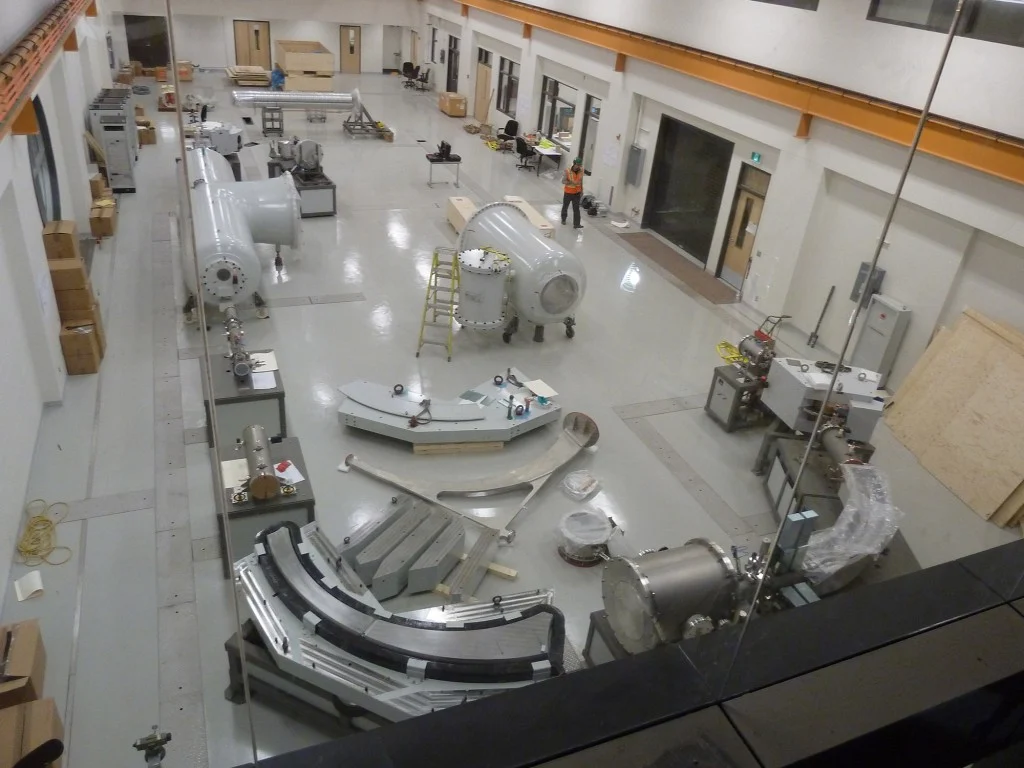
There is a strange phenomenon on the internet called unboxing. Unboxing is when a person receives a new package of something and takes a video or pictures of the process of opening it for the first time and posts it online. Mostly, from what I can see, people “unbox” electronics or hockey cards or things …[Read More]
Citizen science in ecology and evolution? Sounds apps-olutely fantastic.. *tumbleweed*
There’s a lot of talk these days about science communication. Some people spend their lives debating the differences between outreach, public engagement, and science communication, and how they all mean different things. As a scientist, and I’m quite sure I can speak on behalf of the entire community, we don’t give a toss what you …[Read More]
What are the key questions in palaeoecological research?
Last year, a throng of palaeoecologists from the world around descended into Oxford to discuss what the 50 most pressing questions in palaeoecology are. I was happy to see some great scientists and communicators among them, including Anson Mackay, Jacquelyn Gill, and Gavin Simpson, which gives me real hope that these questions were crafted with …[Read More]