
Say hello to Sam Illingworth, Young Scientist Representative, Science Communication Lecturer and education enthusiast! Sam will be making regular contributions to the GeoEd series, sharing his experience of science outreach with geoscientists, educators and the public at large. In his GeoEd debut Sam reports on the importance of evaluating outreach activities, one of the key …[Read More]
Latest posts
Imaggeo on Mondays: Light fantastic – flashing phenomena in Norway’s night sky
In this week’s Imaggeo on Mondays, Bjørn Gitle Hauge – from Østfold University College – opens our eyes to the astounding aurora borealis, and the unusual phenomena seen in Norway’s night sky… Hessdalen is a former mining district in the middle of Norway with huge ores of copper and mineshafts up to a kilometre deep. …[Read More]
An 18th Century London Volcano
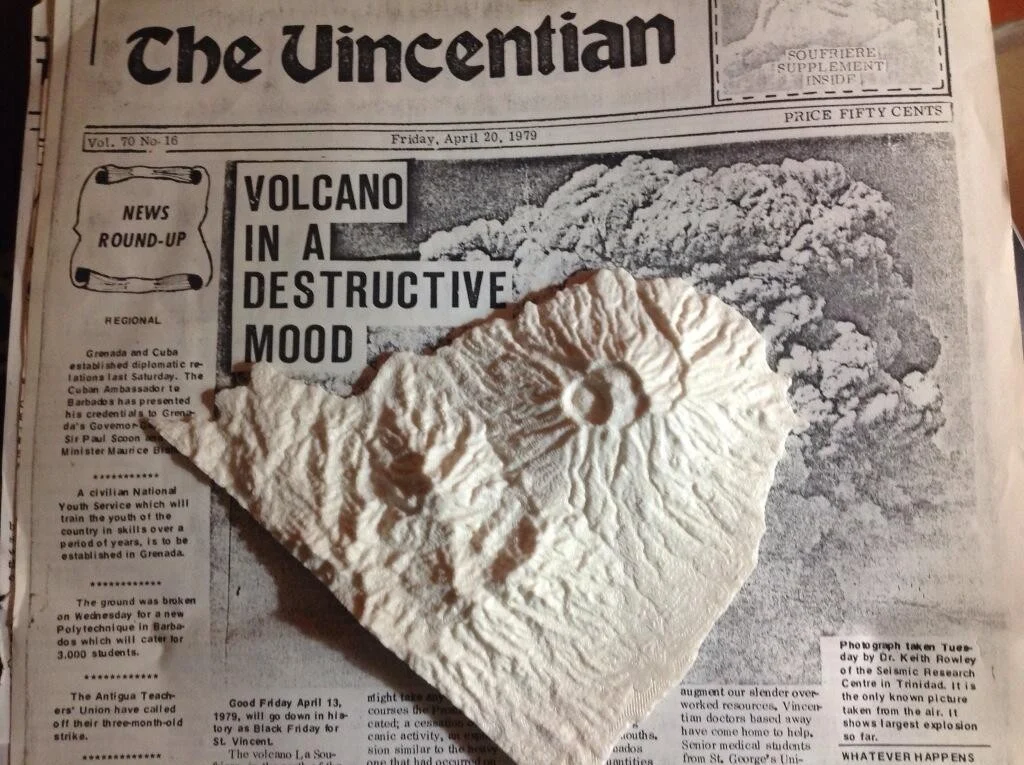
We are now just three weeks away from the launch of an ambitious public engagement project – ‘London Volcano‘. This will see us build a large scale-model of volcano on the front lawn of London’s Natural History Museum. This activity is all part of Universities UK Week 2014, and our aim is to highlight the work we are …[Read More]
Thermal imaging of volcanic eruption plumes
Thermal imaging using infra-red cameras is now a widely used tool in the monitoring and analysis of volcanic explosions, and this pair of time-series snapshots of two short-lived ‘Vulcanian‘ explosions at Volcán de Colima, Mexico, shows one example of why. In each panel, times (in seconds) are times since the start of the explosion sequence; and …[Read More]
Capturing Cassini – 10 years of Saturnian science on camera
This year marks the 10th anniversary of the Cassini-Huygens mission to study Saturn and its moons. But what’s 10 years to us is only a fraction of the Saturnian calendar – in the decade we’ve been studying Saturn up close, the planet has been through only a third of its annual cycle. In that short …[Read More]
Last dinosaur of its kind found in the land that time forgot
In terms of iconic dinosaurs, the gargantuan sauropods are certainly up there. Along with the mostly meat eating-theropods, and herbivorous and often armoured ornithischians, they form one of the three major groups, or clades, of dinosaurs, and were the biggest animals to ever walk this Earth. The end of the Jurassic period, some 145 million …[Read More]
GeoEd: New educational activities at the EGU!
In the past few months, the EGU worked particularly hard on its educational activities. The Committee on Education organised no less than three GIFT workshops and, with the help of Jane Robb, who took part in EGU’s Educational Fellowship, the Union has expanded its education portfolio. Here Jane shares these new and exciting EGU educational …[Read More]
AGU journal content to be made freely available
In case you have missed the news, “Starting 1 May, all AGU journal content from 1997 to content published 24 months ago will be freely available“. Below is the announcement sent out to the AGU members. Dear Colleagues, I am pleased to let you know that we are announcing a major step forward in making …[Read More]
Social Media and the Seven Twitter Accounts
“Postpublication peer review on social media is like the mosh pit at a punk rock conference. It’s fast, uncoordinated, a lot less subtle, more in your face, and involves a few more risks.’ Peer review is the cornerstone of scientific legitimacy – it is the process where research is analysed by your professional peers. Traditionally, …[Read More]
What busy profs would like to read in a blog post about active learning

During a great workshop today on active learning in engineering at McGill I asked two questions (using Socrative) , of the audience. Here is a summary of 24 answers I received: 1) I would like to read blog posts about: activities for large classes (18% of people) activities for small classes (30% of people) technology …[Read More]