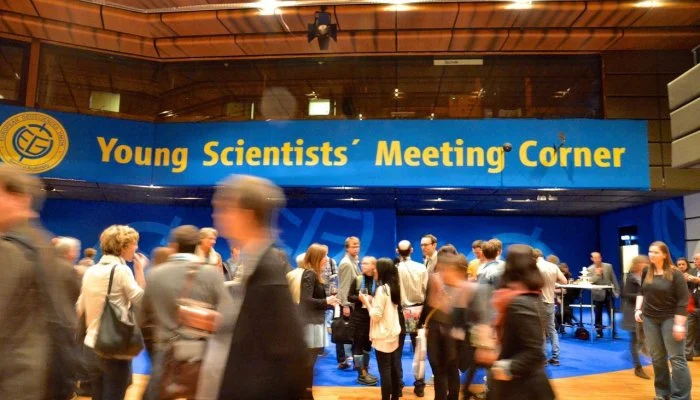
A message from Laura Roberts the EGU Communications Officer (early career scientists’ contact person at the EGU Office) Following feedback from the 2014 young scientists survey, supported by the findings of the Young Scientist Forum at the EGU General Assembly 2014, the EGU Council has decided to replace the term Young Scientist (YS) by Early Career Scientist …[Read More]
Latest posts
Nessie dwarfed by new Scottish crocodile
Yes, Nessie had to be in the title. Am I sorry? A little. But not enough to not use it. Colleagues from the University of Edinburgh and myself have described the first Scottish crocodile fossil! It’s from the Isle of Skye, from a time known as the Middle Jurassic, and dates back around 160 million …[Read More]
A guide to convening a session at the General Assembly – Part II
Convening a session at a conference can seem daunting, especially if you are an early career research and a first-time convener. That’s why we’ve put together this two part series to outline the main steps of the process, with more detailed instructions to be published on the 2016 EGU General Assembly in due course. Remember, …[Read More]
Molecular clocks and the End-Permian mass extinction
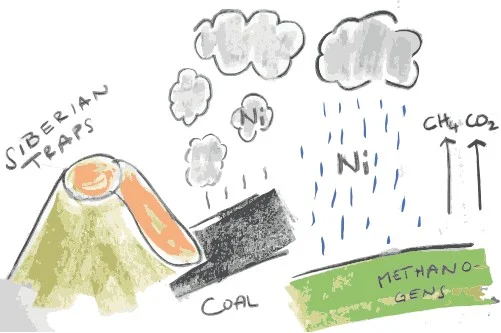
Earth’s history is punctuated by extreme events known as mass extinctions. The End-Permian extinction, 252 million years ago, is believed to be the biggest, killing 90 % or more of all species – no wonder it is also called “The Great Dying”. The big question out there is to understand what caused it, but it …[Read More]
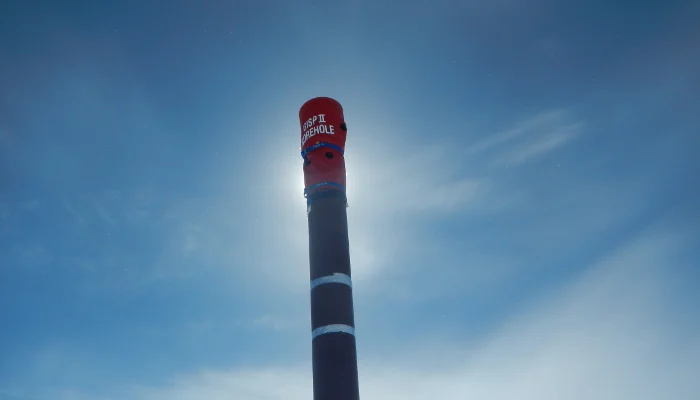
Image of the Week: GISP II Borehole
Climate records from ice cores have helped scientists understand the past changes in climate.The GISP II (Greenland Ice Sheet Project Two) ice core was more than 3km long and was drilled during a five year period in the 1990s. After the drilling ended the casing of the borehole was extended above the surface, so that …[Read More]
Guest Post: Jeremy Bennett – Approaches to modelling heterogeneity in sedimentary deposits
Hello everyone. Great that you could make it out to my blog post. I would like to introduce you to some ideas about environmental modelling that I have recently discovered during my work. These ideas are from this paper by Christine Koltermann and Steven Gorelick back in 1996. Whilst the primary focus of their paper …[Read More]
Looking for a new position in seismology?
Did you know that EGU has a dedicated page for jobs. The EGU offers a platform for job seekers to find vacancies in the Earth, planetary and space sciences. Available research positions are displayed online. Checkout the seismology jobs currently advertised on the EGU page: https://www.egu.eu/jobs/search/?category=18 Employers can post a vacancy, free of charge, by filling …[Read More]
GfGD Annual Conference 2015 – Speaker Introductions (Session 2)
Our 3rd Annual Conference, with the theme Fighting Global Poverty – Geology and the Sustainable Development Goals (SDGs) takes place on Friday 30th October, hosted by the Geological Society of London. Here we introduce the speakers taking part in Session 2, a panel discussion on ‘Geology and the SDGs’… Dr Katherine Royse (Science Director – Environmental Modelling, British Geological …[Read More]
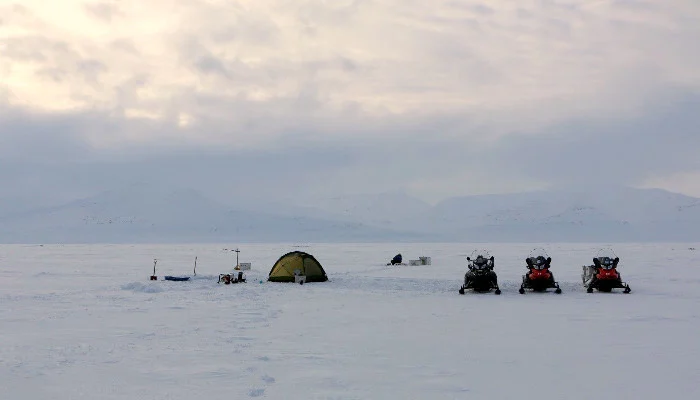
Camping on the Svalbard coast
In early April 2015, a small team of 2 Belgian and 2 French researchers went to Svalbard. The goal? Testing new methods to measure sea-ice thickness and ice algal biomass, but also measuring greenhouse gases in the sea ice in relation with the ‘STeP’ (Storfjorden Polynya multidisciplinary study) campaign. With funding from the French Polar …[Read More]
How to assess geo-exchange potential for shallow geothermal energy at regional scale?
Words on Wednesday aims at promoting interesting/fun/exciting publications on topics related to Energy, Resources and the Environment. If you would like to be featured on WoW, please send us a link of the paper, or your own post, ERE.Matters@gmail.com **** By Eloisa Di Sipio Galgaro A., Di Sipio E., Teza G., Destro E., De Carli M., Chiesa S., Zarrella …[Read More]