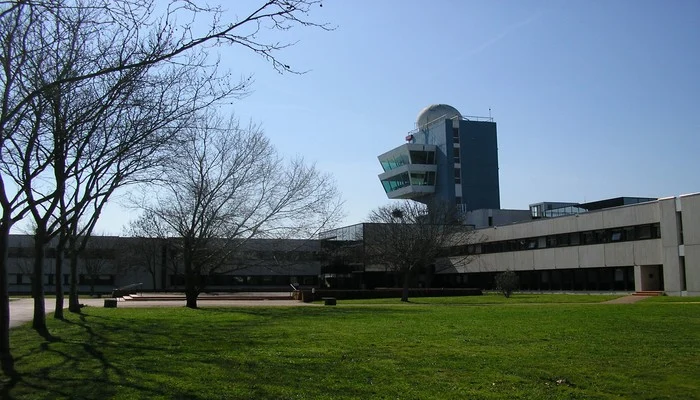
Twice a year in Toulouse Meteo-France runs a tutorial on Meso-NH – the non-hydrostatic mesoscale atmospheric model of the French research community. Last week I was fortunate enough to attend their autumn 2015 tutorial. But, what is this model and was the tutorial useful? Atmospheric models solve the governing equations for atmospheric motions. This allows us, …[Read More]
Latest posts
INVITATION: Special Issue on Georisks in the Mediterranean
A special issue themed “Georisks in the Mediterranean and their Mitigation” is being compiled to be published in Natural Hazards (Springer) (Impact Factor of 1.719) http://www.springer.com/earth+sciences+and+geography/natural+hazards/journal/11069 Manuscripts containing original research or reviews are welcome for submission. They will be accepted or rejected after a peer review process. Topics covered by this Special Issue include but are not …[Read More]
An Andy Warhol Moment for Liverpool’s Geomagnetism Group – dating the formation of the Earth’s Inner core
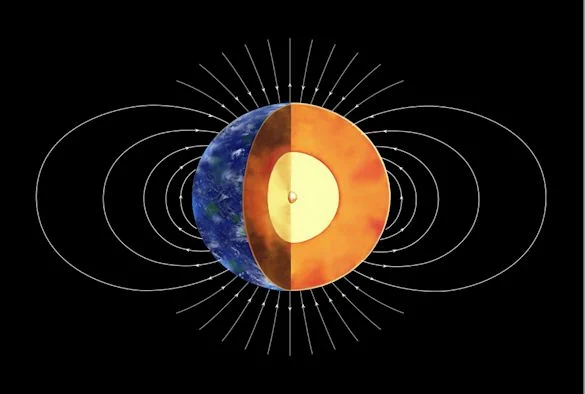
This week, my PhD supervisor, Andy Biggin, had a paper out in Nature. The findings of this new research point towards the Earth’s inner core being older than we’d previously thought. Recent estimates, suggest that the Earth’s solid inner core started forming between half a billion and one billion years ago. However, Andy’s (and co-workers) …[Read More]
GfGD Annual Conference – Speaker Introductions (Session 5)
Our 3rd Annual Conference, with the theme Fighting Global Poverty – Geology and the Sustainable Development Goals (SDGs) takes place on Friday 30th October, hosted by the Geological Society of London. Here we introduce the inspiring, early-career scientists taking part in Session 5 – “Engaging In Development – Personal Reflections from Early-Career Scientists”. They’ll be talking about their …[Read More]
Image of the Week: Antarctic ice-shelf thickness
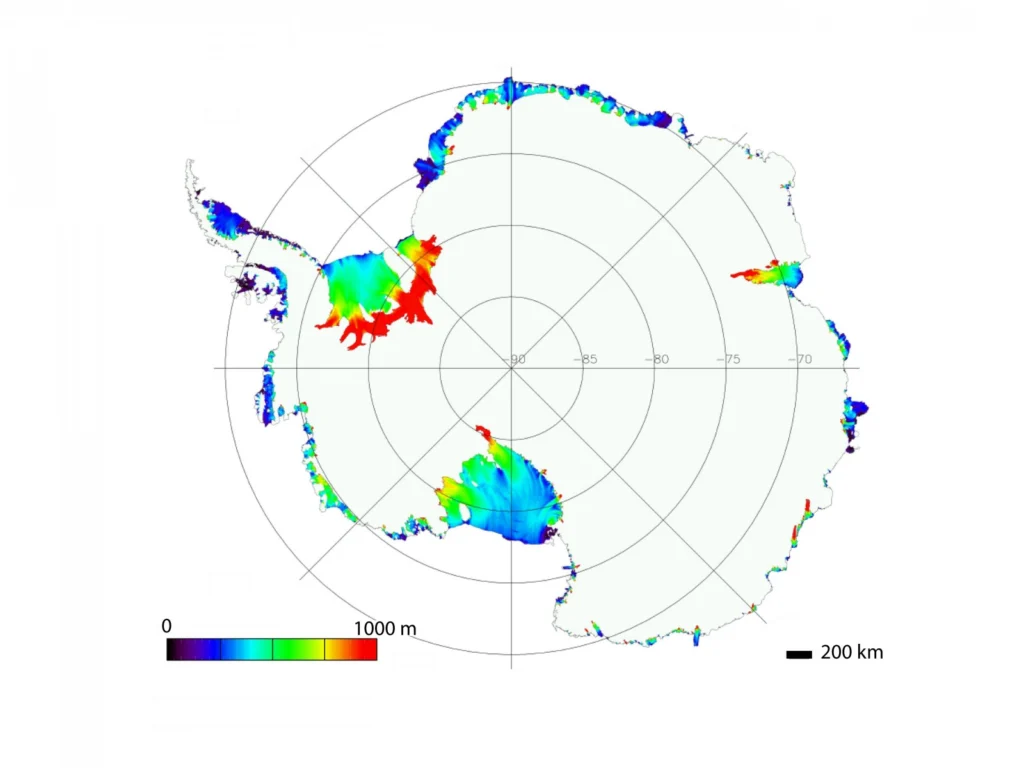
Thickness of floating ice shelves in Antarctica. Ice thickness is greatest close to the grounding line where it can reach 1000 meters or more (red). Away from the grounding line, the ice rapidly thins to reach a few hundreds of meters at the calving front. Ice thickness varies greatly from one ice shelf to another. …[Read More]
Report from the Summer School on Geomorphology in the Kaunertal Valley, Austria, 31st August – 6th September 2015
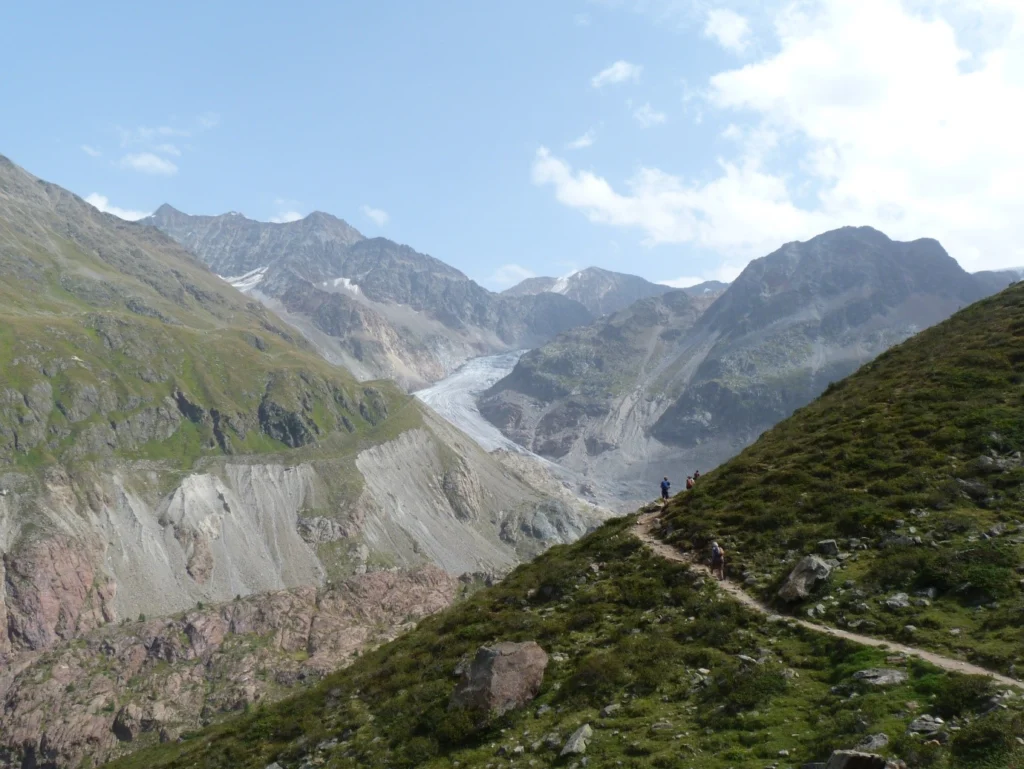
Written by Ciara Fleming ( University College Dublin) The focus of this Summer School was ‘Sediment dynamics in high mountain environments’ and as suggested by this title, the location did not disappoint. For the week-long school we were based in Feichten im Kaunertal (1273m a.s.l.), a perfectly-formed Alpine village in the Province of Tyrol, Austria. …[Read More]
Riding the Storm: The Arctic Circle Traverse 2015
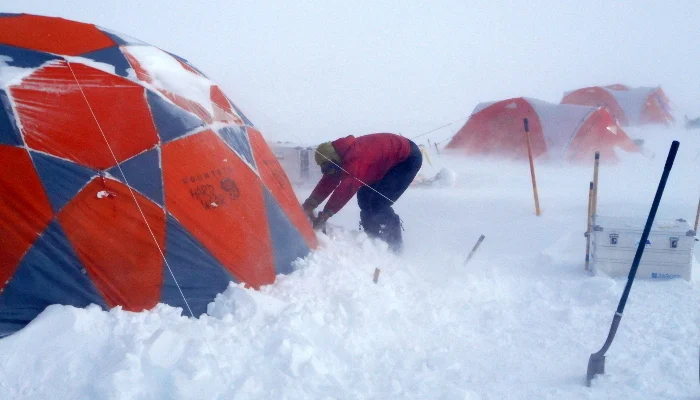
In the morning on the 19th of May, we – the Arctic Circle Traverse 2015 – found ourselves in a great dilemma; to stay or to go? On our check-in conversation with the KISS crew, we were informed that an east front from Kulusuk was expected to hit our location up on the ice sheet …[Read More]
Apply now to take part in the 2016 GIFT workshop!
The General Assembly is not only for researchers but for teachers and educators with an interest in the geosciences also. Every year the Geosciences Information For Teachers (GIFT) is organised by the EGU Committee on Education to bring first class science closer to primary and high school teachers. The topic of the 2016 edition of …[Read More]
Jobs on EGU website
If you are an Early Career Researcher or looking for a new research opportunity why not check out the EGU job site!? http://www.egu.eu/jobs/
Ingrid Kögel-Knabner, a multidisciplinary soil scientist
Ingrid Kögel-Knabner Chair of Soil Science Technical University of Munich The 2015 Philippe Duchaufour Medal is awarded to Ingrid Kögel-Knabner for her fundamental and ground-breaking work on the dynamics and stabilisation of soil organic matter in soils from a basic-chemistry and organo-mineral interactions perspective. I received my doctorate from the University of Bayreuth, Germany, in …[Read More]