EGU Blogs

Latest posts

CR
Cryospheric Sciences

A year at the South Pole – an interview with Tim Ager, Research Scientist
A year at the South Pole – an interview with Tim Ager, Research Scientist

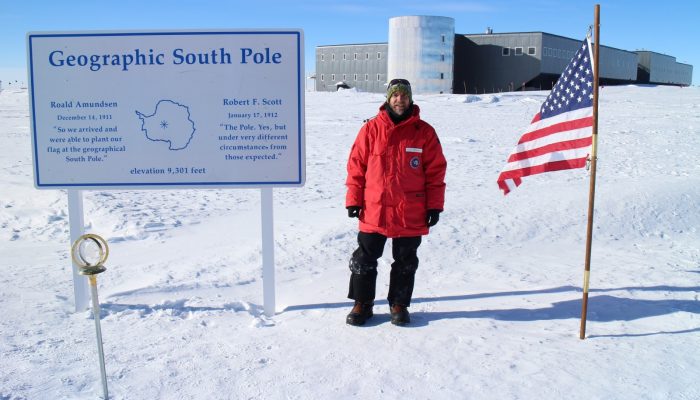
What is it like to live at the South Pole for a year?  A mechanical engineer by trade, Tim Ager, jumped at the opportunity to work for a year as a research scientist at Amundsen-Scott South Pole Station.  When not traveling on various adventures he lives in Austin, Texas, and recently took the time to answer a few questions about his time at Pole. What goes on at Amundsen-Scott South Pole Station? ...[Read More]

GeoLog

EGU 2017: Getting to Vienna, getting to sleep and getting to know the city

EGU 2017: Getting to Vienna, getting to sleep and getting to know the city

With the conference only a few weeks away here is a brief, and by no means comprehensive, introduction of how to get to Vienna and what to do when you’re there! Getting here Vienna’s International Airport is served by many of the major European airlines. If you would like to consider overland you’ll find more information on the General Assembly website. And, if you haven’t seen it already, make su ...[Read More]

GeoLog

Geosciences Column: The dangers of an enigmatic glacier in the Karakoram

Geosciences Column: The dangers of an enigmatic glacier in the Karakoram

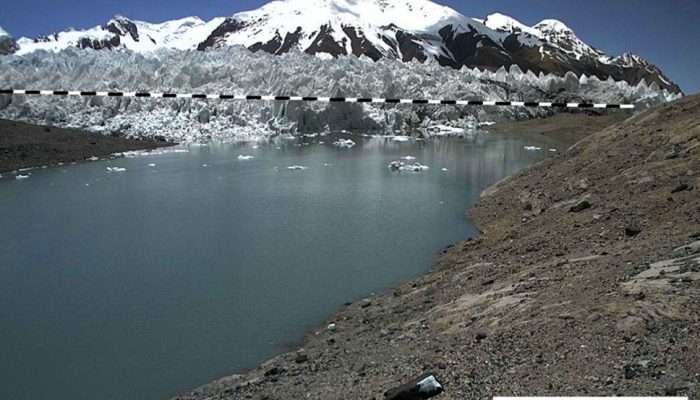
Nestled among the high peaks of the Karakoram,  in a difficult to reach region of China, lies Kyagar Glacier. It’s trident-like shape climbs from 4800 to 7000 meters above sea level and is made up of three upper glacier tributaries which converge to form an 8 km long glacier tongue. Until recently, it’s remoteness meant that studying its behaviour relied heavily on the acquisition of data by satel ...[Read More]

WaterUnderground

Of Karst! – short episodes about karst

Of Karst! – short episodes about karst

Episode 1 – A different introduction to karst by Andreas Hartmann,  Lecturer in Hydrology at the University of Freiburg Usually, textbooks or lectures start with the theoretical background and basic knowledge of the topic they try to cover. Writing my first contribution to the Water Underground blog I want to take advantage of this less formal environment. I will introduce karst as I and many othe ...[Read More]

GeoLog

Blogs and social media at EGU 2017 – tune in to the conference action

Blogs and social media at EGU 2017 – tune in to the conference action

With hundreds of oral presentations, PICO sessions and poster presentations taking place each day, it can be difficult to keep abreast of everything that is on offer during the General Assembly. As well as finding highlights of interesting conference papers, lectures and workshops in the daily newsletter at the General Assembly, EGU Today, you can also keep up to date with all the conference activ ...[Read More]

Geology for Global Development

New Articles – Social Geoscience and Sustainable Development

New Articles – Social Geoscience and Sustainable Development

We’d like to bring your attention to two new publications, relevant to the theme of this blog. These publications share some common themes, including emphasising the significant role for geoscientists in sustainable development, and enhancing the skills training of geoscientists to support effective and positive engagement. For further information on either of these articles, please contact ...[Read More]

WaterUnderground

What is the volume (in kegs) of groundwater is stored on earth?

What is the volume (in kegs) of groundwater is stored on earth?

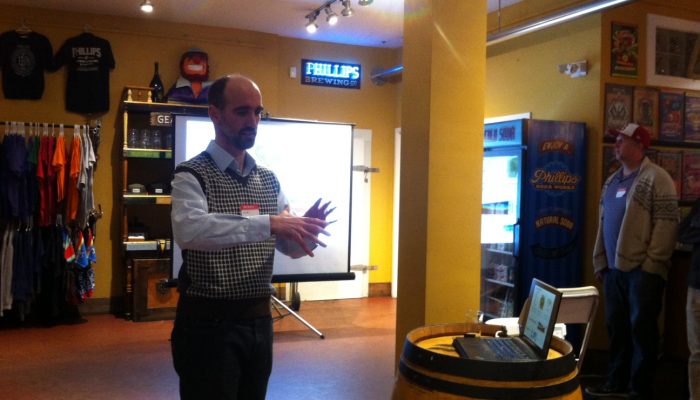
Last week I gave a ‘blue drinks’  presentation for a networking evening for the Victoria chapter of the Canadian Water Resources Association entitled “How much groundwater is on earth?” based on our paper from Nature Geoscience last year. Since the night was hosted at Philips Brewery, an awesome local brewery (who makes Blue Buck, the perfect blue drink, and lots of other g ...[Read More]

GeoLog

Imaggeo On Mondays: Halo

Imaggeo On Mondays: Halo

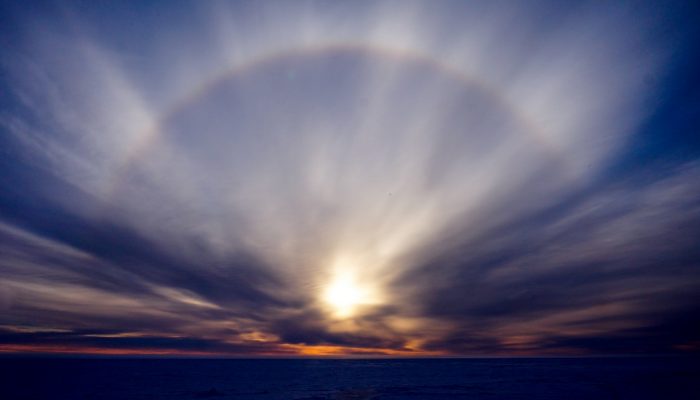
One of the main perks of being a geoscientist is that, often, research takes scientists all around the globe to conduct their work. While fieldwork can be hard and challenging it also offers the opportunity to see stunning landscapes and experiencing unusual phenomenon. Aboard the Akademik Tryoshnikov research vessel, while cruising the Kara Sea (part of the Arctic Ocean north of Siberia) Tatiana ...[Read More]

GeoSphere

Emerging Contaminants: The Rough Teenagers

Emerging Contaminants: The Rough Teenagers

In geochemistry I see the term “bad actors” used more often than it should be to describe well-known environmental contaminants. “Bad actors” refers to contaminants we see frequently in the environment and know have significant environmental or human health effects. Think mercury, nitrates, lead, arsenic, sulphur dioxide, etc. However, this article is on the up and coming c ...[Read More]

CR
Cryospheric Sciences

Image of the Week — Microbes munch on iron beneath glaciers

Image of the Week — Microbes munch on iron beneath glaciers

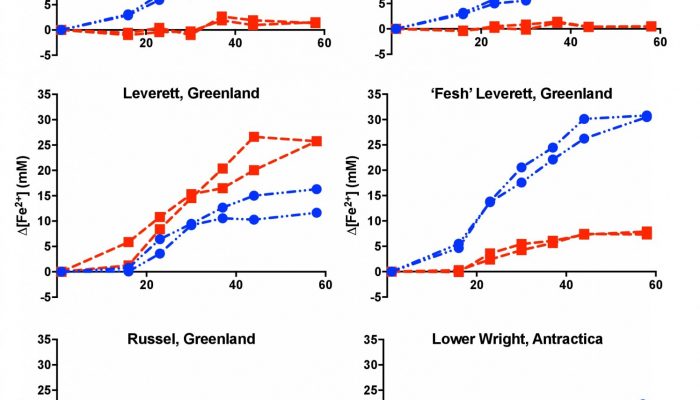
The interface between a glacier and its underlying bedrock is known as the subglacial zone. Here lie subglacial sediments, the product of mechanical crushing of the rock by the glacial ice. Despite their lack of sunlight, nutrients and oxygen, subglacial sediments host active and diverse communities of microorganisms. What we (don’t) know about subglacial microorganisms The past few decades ...[Read More]