On this page we regularly update open positions in Seismology. Do you have a job on offer? Contact us at ecs-sm@egu.eu
GeoLog
Imaggeo on Mondays: When boulders hitch a ride from glaciers
Glen More, on the Isle of Mull, Scotland, is a classic locality for studying glacial landforms and sediments. Here, two prominent ice-transported boulders stand guard at the head of the valley, left behind after the Loch Lomond Readvance (Younger Dryas stade), the final pulse of Quaternary glaciation in Scotland. Behind them in the characteristic U-shaped valley, hummocky morraines are littered wi ...[Read More]
Biogeosciences
EGU2020 BG Sessions in the spotlight: Stable isotopes
The deadline for EGU 2020 abstract submissions is coming closer – today we highlight sessions focused on the application of (stable) isotope tracers to questions in biogeoscience. First, for those of you who use light stable isotopes, there is session BG2.8 Application of Stable Isotopes in Biogeosciences, co-organized by HS13, co-sponsored by EAG and convened by Michael E. Böttcher, ...[Read More]
Biogeosciences
EGU2020 BG Sessions in the spotlight: Global P and N cycles
The EGU 2020 abstract submissions are open until January 15. Here, we’ll highlight the planned Biogeoscience (BG) sessions. Stay tuned and find the session for your abstract! Today’s focus is on the more general BG-sessions for those of you dealing with the important nutrient cycles. First, BG1.2: Nitrogen cycling in terrestrial and aquatic ecosystems: microbiological processes, gas fluxes, ...[Read More]
Hydrological Sciences
2019 Recap of the HS Blog
Let’s look back on the first 22 HS blog posts published since our first Welcome to the HS division blog post in March. First and foremost, thanks to all the authors who contributed to the successful start of our blog in 2019! We hope to continue with the fortnightly publication of posts covering various topics related to hydrological sciences. If you have an idea for a topic, would like to write s ...[Read More]
Natural Hazards
Behind the scene: knowing the President of the EGU Natural Hazard Division – Ira Didenkulova!
In this last post of 2019, I have the pleasure to ask some questions to Ira Didenkulova, the President of the EGU Natural Hazards division who has been recently elected for a second mandate. Ira, can you introduce yourself and tell what led you the position of EGU Natural Hazard (NH) Division president? What are the main challenges you had and what’s next for the NH division? It seems this ...[Read More]
GeoLog
Imaggeo on Mondays: The best of imaggeo in 2019
Imaggeo, our open access image repository, is packed with beautiful images showcasing the best of the Earth, space and planetary sciences. Throughout the year we use the photographs submitted to the repository to illustrate our social media and blog posts. For the past few years we’ve celebrated the end of the year by rounding-up some of the best Imaggeo images. But it’s no easy task to pick which ...[Read More]
Biogeosciences
EGU2020 BG Sessions in the spotlight: Permafrost
The EGU 2020 abstract submissions are open until January 15. Here, we’ll highlight the planned biogeoscience (BG) sessions. Stay tuned and find the session for your abstract! Today’s focus is on permafrost. These perennially frozen regions span the Arctic, the Tibetan Plateau, and mountain regions throughout the globe. Permafrost is highly vulnerable to current and future climate change and could ...[Read More]
GeoLog
December GeoRoundup: Our most read blog posts of 2019
The past 12 months have seen an impressive 160 posts published on the EGU’s official blog, GeoLog. It regularly highlights recent research in the Earth, planetary and space sciences, interviews members of our geoscience community, and brings readers information about the Union and its activities, particularly its General Assembly. This month’s GeoRoundUp will highlight some of the most popular sto ...[Read More]
Tectonics and Structural Geology
Features from the field: Bedding/Stratification
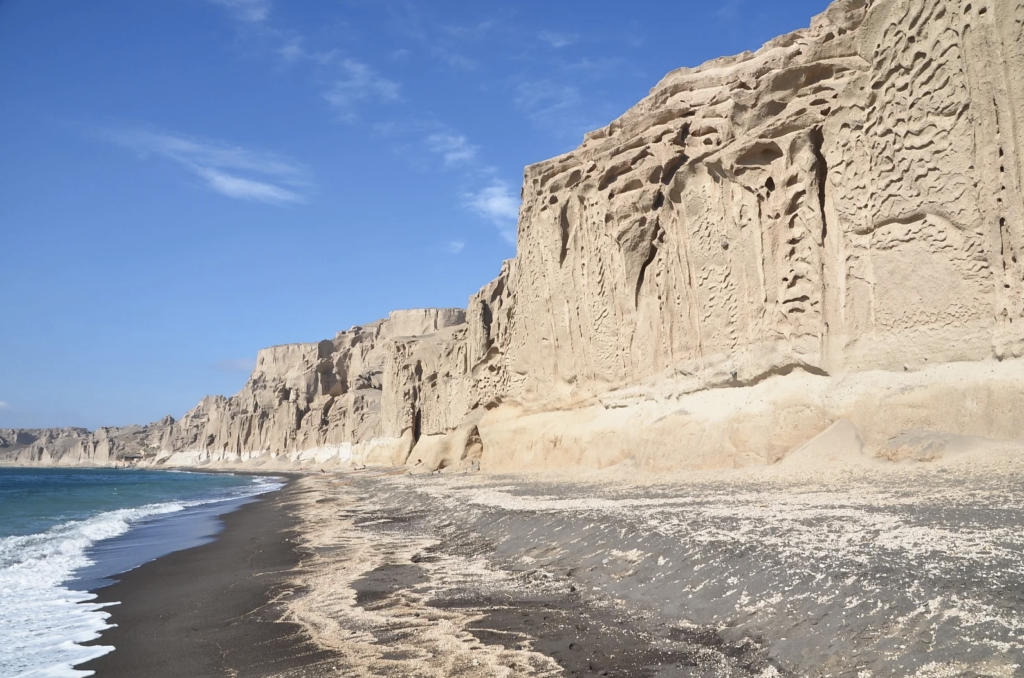
Bedding (also called stratification) is one of the most prominent features of sedimentary rocks, which are usually made up of ‘piles’ of layers (called ‘strata‘) of sediments deposited one on top of another. Every stratum is characterized by its own lithology (composition), sedimentary structures, grain size and fossil content that make it unique and different from the stra ...[Read More]