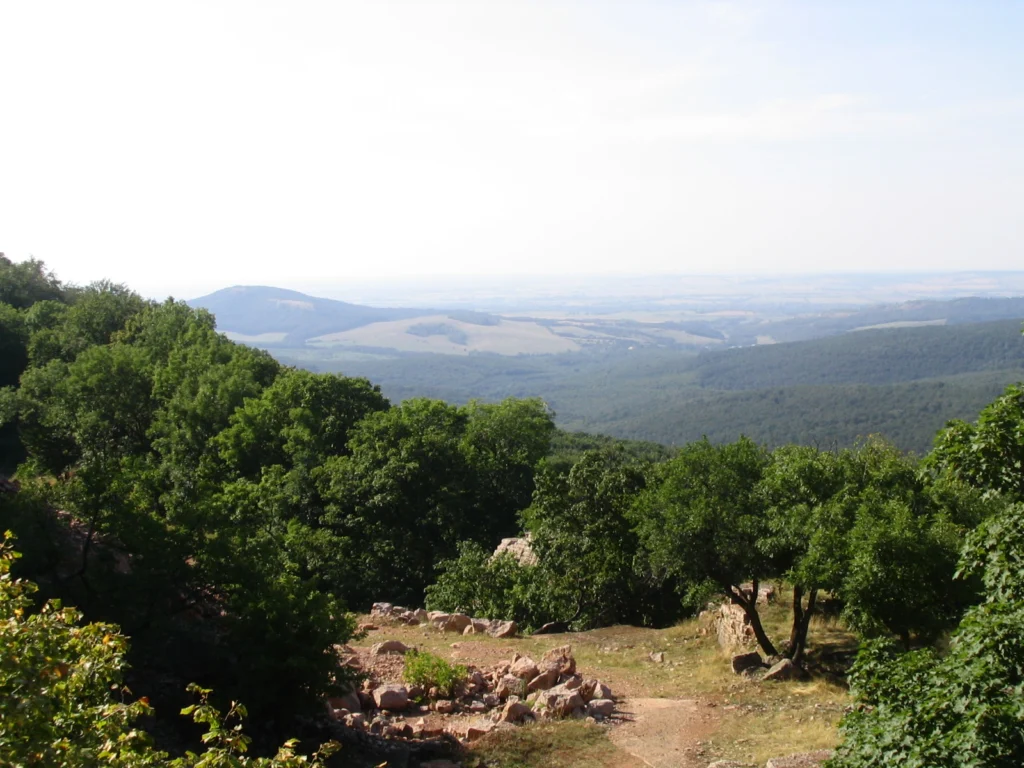
by David Litwin, licensed under a Creative Commons Attribution-ShareAlike 4.0 International License. Article: Springs regarded as hydraulic features and interpreted in the context of basin-scale groundwater flow Authors: Tóth, Á., Kovács, S., Kovács, J., & Mádl-Szőnyi, J. O Fount Bandusia, brighter than crystal, worthy of sweet wine and flowers, tomorrow shalt thou be honoured with a …[Read More]
Latest posts
GeoLog
GeoPolicy: Competencies for researchers to achieve policy impact
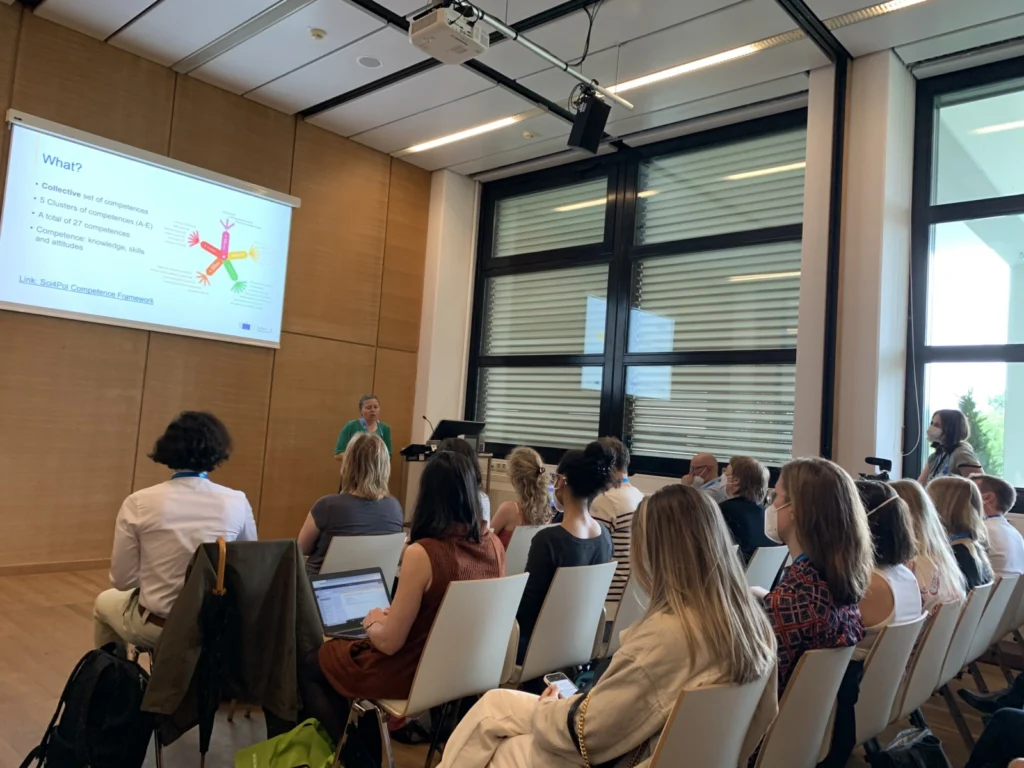
This month’s GeoPolicy Blog post features the Competence Framework ‘Science for Policy’ for researchers developed by the European Commission Joint Research Centre (JRC). This newly developed framework introduces the different competences scientists can collectively build to increase their policy impact, and how it can be used by research institutions and organisations. Throughout this post, Policy …[Read More]
Geodynamics
The Marie Skłodowska-Curie Postdoctoral Fellowship
The summer months are often considered the cucumber season both in politics and in academia. However, there are several young researchers who use these months to work like crazy on proposals for the Marie Skłodowska-Curie Actions Postdoctoral Fellowship call. To give some inspiration to these young academic adventurers, I asked some current and recently awarded MSCA …[Read More]
GeoLog
Imaggeo On Monday: The Papingo’s rock pools
The Papingo’s rock pools are located at the mountainous area of Epirus in northwestern Greece, at an altitude of 980 meters. The Rogovo stream, over the years, has eroded the limestone rocks creating a complex of water falls and cavities (natural rock pools) with clear and cold running water, which the locals call “ovires”. Photo …[Read More]
Natural Hazards
Active faulting causes subsidence-related flooding: the example of the Kashmir basin of NW Himalaya
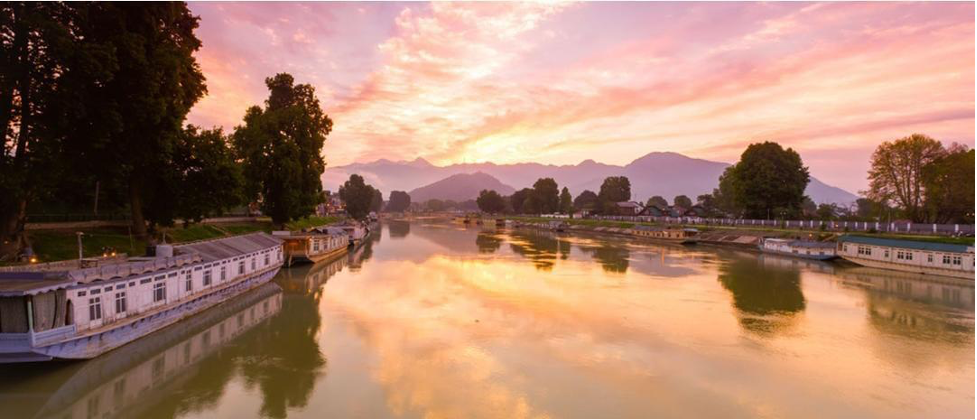
Flood hazards often turn destructive and cause substantial loss of life and assets. Annually floods cause significant damage; for example, during the last decade of the 20th century, around 100,000 people lost their lives, and more than 1.4 billion people were affected [1]. Historically, flooding has been viewed as a friend and foe of human …[Read More]
Stratigraphy, Sedimentology and Palaeontology
The Deep Dust project continues!
In 2019, the EGU SSP blog reported from a workshop exploring Paleozoic dust. By now, the Deep Dust initiative is supported by the International Continental Scientific Drilling program, which is an important step. It is planned to drill in the US in a first project phase. The Deep Dust Drilling Project (DEEP DUST) is focused …[Read More]
GeoLog
GeoTalk: meet Abraham Dabengwa, Early Career savanna conservationist!
Hello Abraham. Thank you for speaking with us today! Could you tell our readers a bit about yourself and your research? Thanks, Simon! It’s a pleasure to be invited to share about my work. Well, where do I begin? For starters, I’m a Genus Postdoctoral Fellow at the University of the Witwatersrand in Johannesburg, South …[Read More]
Seismology
Geo-Movie Cup 2022 – The Sequel!
Next week the EGU Seismology ECS team launch the most anticipated film competition of the year…! Move over Oscars; take a step back Golden Globes; it’s all about the Geo-Movie Cup 2022! In a world of endless sequels and massive franchise box-office behemoths, there is one sub-genre that is always guaranteed to entertain – the …[Read More]
Geodynamics
The Sassy Scientist – Supervision Dilemmas
The quality of supervision is arguably the most important discriminant between a nice academic experience and a hellish one. For early career scientists, supervisors are the sole responsible for our choice to leave or stay in academia. As the name suggests, supervisors are there to supervise our research activity, as it is all too easy …[Read More]
Tectonics and Structural Geology
TS Must-Read – Yin and Harrison (2000) Geologic evolution of the Himalaya-Tibetan Orogen
Yin and Harrison (2000) puts together an exhaustive review of three decades of geological and geophysical investigations on the Himalayan-Tibetan orogen. This research supports the orogenesis started during the Cenozoic between 70 and 50 Ma ago as a consequence of the Indo-Asian collision following the closure of the Tethys ocean between Laurasia and Gondwana. Yin …[Read More]