Geology for Global Development

Geology for Global Development

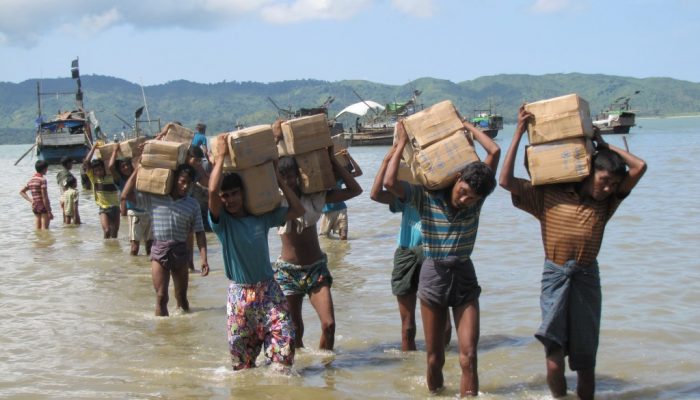
What is happening after the Fuego eruption in Guatemala? Is climate migration a bad thing? This and more in Jesse Zondervan’s June 2018 #GfGDpicks #SciComm


What is happening after the Fuego eruption in Guatemala? Is climate migration a bad thing? This and more in Jesse Zondervan’s June 2018 #GfGDpicks #SciComm
Each month, Jesse Zondervan picks his favourite posts from geoscience and development blogs/news which cover the geology for global development interest. Here’s a round-up of Jesse’s selections for the last month: Everything about the Fuego eruption At the start of this month, Guatemala’s Fuego volcano erupted explosively, costing many lives and destroying properties and infrastructure. Professor ...[Read More]

New mining frontiers: Digging into the unknown

New mining frontiers: Digging into the unknown

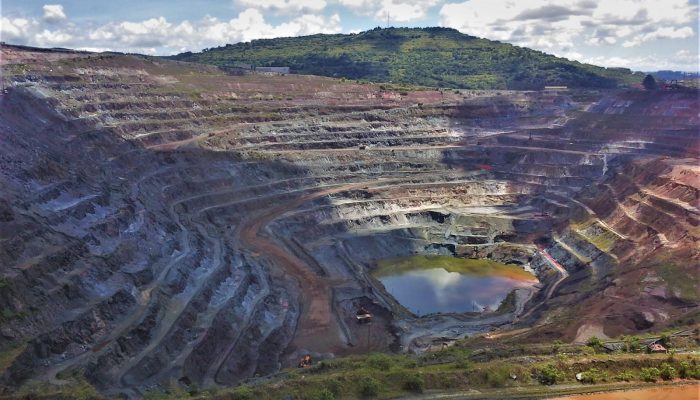
While climate change occupies the headlines as our biggest long-term concern for sustainability,  there may well be further anthropogenic challenges that arise in the next century as we disrupt the delicate interplay of natural ecological and geological cycles to satisfy the need for resources of our ever-growing population. The mining industry makes for a pertinent example: it sits on the verge o ...[Read More]

Demonstrating the Importance of Geoscience in the Transformation Towards Sustainable and Resilient Societies

Next week the UN Annual Forum on Science, Technology and Innovation for the Sustainable Development Goals (SDGs) will discuss the science required for “transformation towards sustainable and resilient societies”. Discussions will focus on SDGs 6 (water and sanitation), 7 (energy), 11 (sustainable cities), 12 (responsible consumption and production) and 15 (life on land).   This forum will bring to ...[Read More]

Circular economy of metals and responsible mining

Circular economy of metals and responsible mining

In today’s post, Bárbara Zambelli, considers how we can transition business models towards a more sustainable way of living, manufacturing and consuming. As I mentioned before in my post about Urban Geology and Underground Urbanisation, according to the UN report, the current world population of 7.6 billion is expected to reach 8.6 billion in 2030 and 9.8 billion in 2050. In addition, the pe ...[Read More]

Climate migration needs to be predicted and planned now. Geoengineering can slow down sea level rise but could also lead to international conflicts. CO2 as a natural resource. All in Jesse Zondervan’s Mar 8 – Apr 4 2018

Climate migration needs to be predicted and planned now. Geoengineering can slow down sea level rise but could also lead to international conflicts. CO2 as a natural resource. All in Jesse Zondervan’s Mar 8  – Apr 4 2018

Each month, Jesse Zondervan picks his favourite posts from geoscience and development blogs/news which cover the geology for global development interest. Here’s a round-up of Jesse’s selections for the last month: Imagine 140 million people across sub-Saharan Africa, south Asia and Latin America migrating in response to climate change effect, by 2050. This is what a recent World Bank report claims ...[Read More]

Weighing up the pros and cons of artificial coral reefs

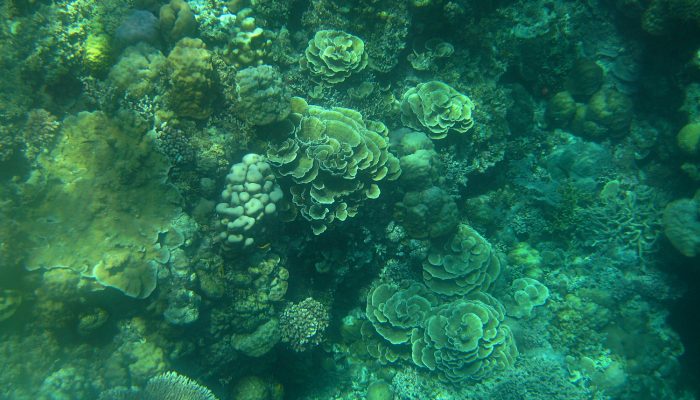
Weighing up the pros and cons of artificial coral reefs

The world’s oceans cover 71% of the Earth’s surface and contain 97% of Earth’s water. They play a key role in the climate cycle and, though perhaps not always visibly, are suffering significantly under our changing climate. An place where we can see the alarming effects of rising temperatures and increasingly acidic waters is coral reefs, which experienced the longest, most widespread, and possibl ...[Read More]

Speleology and local development

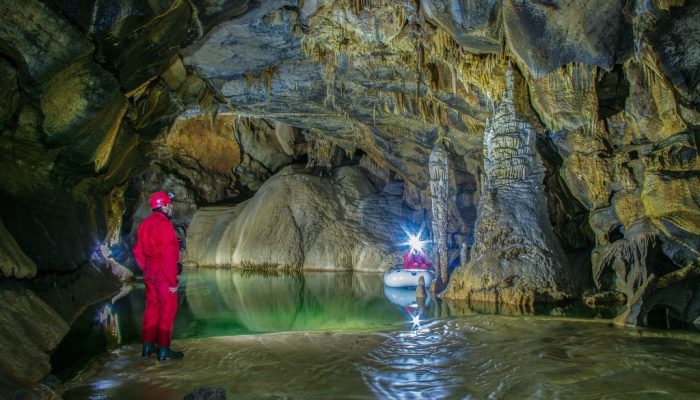
Križna jama cave, in Slovenia

Many of us seek adventures, new experiences and sights in far flung places, but very often there are beautiful wonders right on our doorstep. In today’s post, Barbara Zambelli Azevedo highlights how the promotion of local geological regions can be a valuable and effective way to encourage development and instil a sense of pride in local communities.  Plato said in the Allegory of the Cave th ...[Read More]

What would you do in the minute before an Earthquake? Do our planet’s environmental limits hamper socio-economic development? Find out in Jesse Zondervan’s Feb – Mar 7 2018 #GfGDpicks #SciComm

What would you do in the minute before an Earthquake? Do our planet’s environmental limits hamper socio-economic development? Find out in Jesse Zondervan’s Feb  – Mar 7 2018 #GfGDpicks #SciComm

Each month, Jesse Zondervan picks his favourite posts from geoscience and development blogs/news which cover the geology for global development interest. Here’s a round-up of Jesse’s selections for the last month: In the late afternoon of 16 February people in Mexico City celebrate Chinese New Year when they hear an earthquake alarm. If you ever wondered what it is like to experience an earthquake ...[Read More]

The Sustainability Argument for Open Access Publishing

The Sustainability Argument for Open Access Publishing

Those who follow the work of GfGD, either via posts on this blog or more direct engagement, will know that there are a multitude of connections between geoscience and the Sustainable Development Goals. The SDGs are almost impossible to disentangle from resource use and environmental pressures, subjects which are themselves cornerstones of modern geoscience. While this may be the case, a key questi ...[Read More]

Heather Britton: China’s Water Diversion Project

Heather Britton: China’s Water Diversion Project

China has enjoyed economic growth over the past decades, bringing undoubted prosperity to the country. But exponential industrialisation and rapid growth comes at a significant environmental cost. The nation is heavily dependent on coal-fired power, making it one of the world’s largest emitters of greenhouse gases and it’s thirst for development is a drain on vital resources, including ...[Read More]