What is the land use and forestry regulation? In October 2014, the EU agreed that all sectors, including land and forestry, should contribute to the EU’s 2030 climate & energy framework target to reduce greenhouse gas emissions by at least 40% by 2030 compared to 1990 levels. Almost 4 years later, in May 2018, the EU Commission’s proposal for the 2021-2030 land use and forestry regulatio ...[Read More]
#policy
GeoPolicy: Scientific research in a changing European Union
Scientific research in a changing European Union The 2018 EGU General Assembly was a huge success. Not only was it the biggest yet (with over 15,000 participants) but it also held a large variety of Short Courses, Townhalls and Union Symposia that gave the scientists attending a chance to step out of their comfort zone and learn about something other than their area of expertise. One example of su ...[Read More]
Geopolicy: Combating plastic pollution – research, engagement and the EU Plastic Strategy
Awareness around the prevalence of plastic pollution, particularly in our oceans, has been growing over the last few years. This is not surprising considering that plastic production has surged from 15 million tonnes in 1964 to 311 million tonnes in 2014 and models have shown that this number will double again within the next 20 years in a business as usual scenario. Furthermore, research conducte ...[Read More]
January GeoRoundup: the best of the Earth sciences from across the web
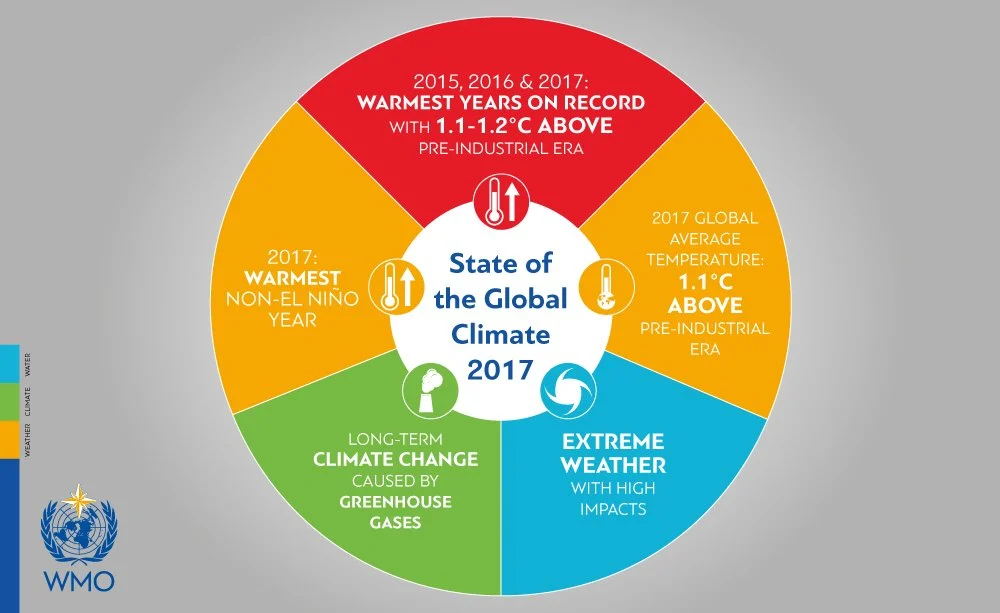
Drawing inspiration from popular stories on our social media channels, as well as unique and quirky research news, this monthly column aims to bring you the best of the Earth and planetary sciences from around the web. Major stories The World Meteorological Organization (WMO) has confirmed that 2017 is among the three warmest years on record. The three years with the highest temperature on record ...[Read More]
Geopolicy: How does scientific uncertainty translate into policy?
Scientific uncertainty is one of the only things in science that is certain. It’s found in complex modelling systems, in the unpredictability of natural processes and even when there seems to be scientific consensus, a new scientific discovery can recreate ambiguity. But how do policymakers deal with scientific uncertainty when they are making decisions? Policymakers deal with and use scientific u ...[Read More]
GeoPolicy: Reaching out on Twitter – casually engage with policymakers!
Reaching out to policymakers and sharing your research with them can seem like a daunting task! While there are many formal outlets for engaging with policymakers (such as completing questionnaires, contributing to workshops and participating in paring schemes), there are also more casual methods that can be done sporadically and with less effort. One example of this is engaging with policymakers ...[Read More]
GeoPolicy: COP23 – key updates and outcomes
What is COP23? Anthropogenic climate change is threatening life on this planet as we know it. It’s a global issue… and not one that is easily solved. The Conference of the Parties (COP) provides world leaders, policy workers, scientists and industry leaders with the space to share ideas and decide on how to tackle climate change and generate global transformative change. COP23 will predominantly f ...[Read More]
GeoPolicy: The importance of scientific foresight
Many of the issues that society currently faces are complex and research on just one angle or area does not provide sufficient information to address the problem. These challenges are compounded when more than one region (or even the entire planet) is impacted. Many of the decisions and legislations passed by governments today will go on to impact how these issues either develop or are resolved ye ...[Read More]
GeoPolicy: IPCC decides on fresh approach for next major report
This month’s GeoPolicy post is a guest post from Sarah Connors, a Science Officer in the Intergovernmental Panel on Climate Change (IPCC) Working Group 1 Technical Support Unit (and former EGU Science Policy Officer). The IPCC is starting its sixth cycle, in which hundreds of scientists take stock of the world’s climate change knowledge by assessing the current scientific literature and then summa ...[Read More]
GeoTalk: Meet the EGU’s President, Jonathan Bamber
GeoTalk interviews usually feature the work of early career researchers, but this month we deviate from the standard format to speak to Jonathan Bamber, the EGU’s President. Jonathan has a long-standing involvement with the Union, stretching back almost 20 years. Following a year as vice-president, Jonathan was appointed President at this year’s General Assembly in Vienna. Here we talk ...[Read More]