GeoLog

meltwater

GeoTalk: meet Francesco Avanzi, researcher in meltwater security!
Francesco Avanzi

Hi Francesco. Thanks for agreeing to this interview! To break the ice, could you tell our readers a bit about yourself and your research? Hey Simon! I’m an Italian hydrologist and earned a PhD at Politecnico di Milano with a dissertation on how snowmelt contributes to seasonal runoff. I then did a postdoc at UC Berkeley, California, where I collaborated with a major US hydropower company to improv ...[Read More]

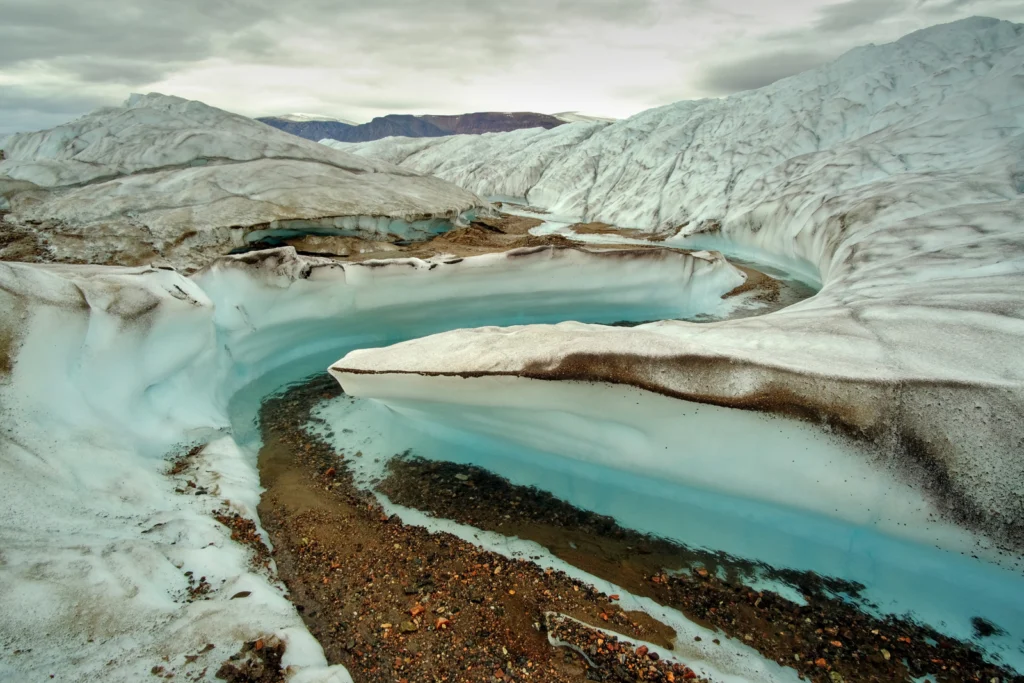
Imaggeo On Monday: A meander in the meltwater valley

Imaggeo On Monday: A meander in the meltwater valley

At the edge of the Greenland Ice Sheet, surface melt releases old layers of dust, that have travelled thousands of years into the ice. Under sunny weather, the dust heats up with radiation, melts the ice underneath, and thus accumulates in tiny potholes and meltwater creeks. However, this photo was taken after a rainy day. The rain triggered increased melt on the surface of the ice irrelevant of i ...[Read More]

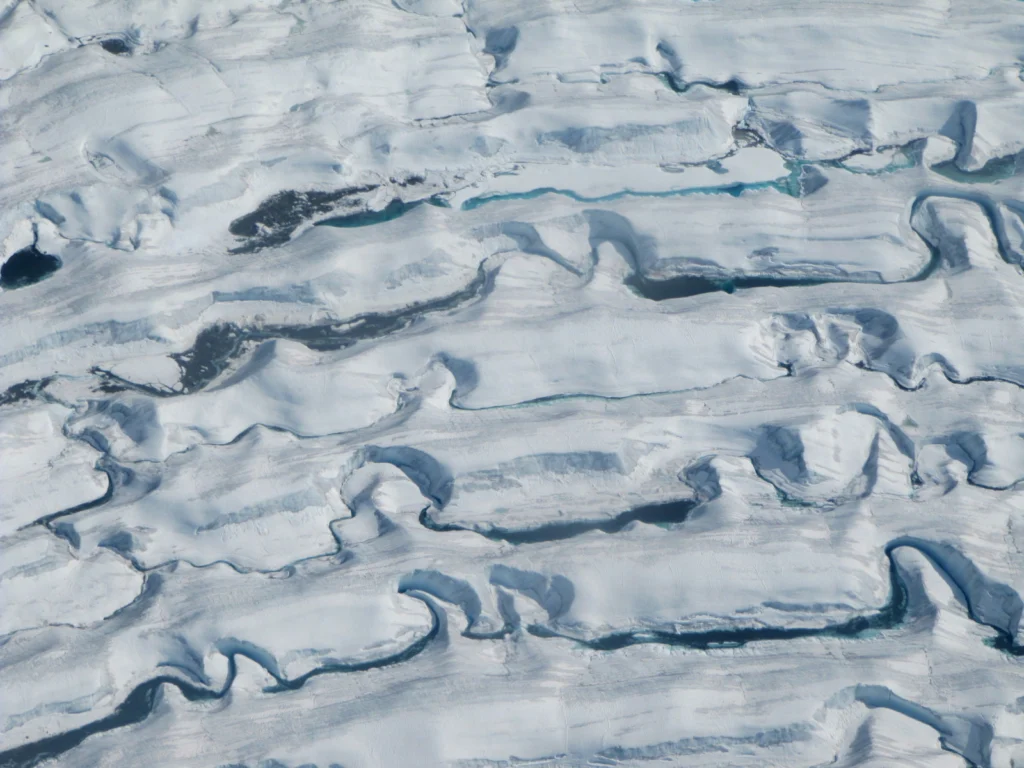
Imaggeo On Monday: Contorted Streams on the Gates Glacier

Imaggeo On Monday: Contorted Streams on the Gates Glacier

Annual ridges and troughs (called wave ogives) are formed as the ice of the Gates Glacier (in Alaska’s Wrangell Mountains) flows through a steep icefall. Down-glacier, as the ice melts, the rushing meltwater is funnelled into streams, carving ice canyons as it flows, but ultimately directed by these topographic constraints.   Description by Allen Pope, after the description on imaggeo.e ...[Read More]

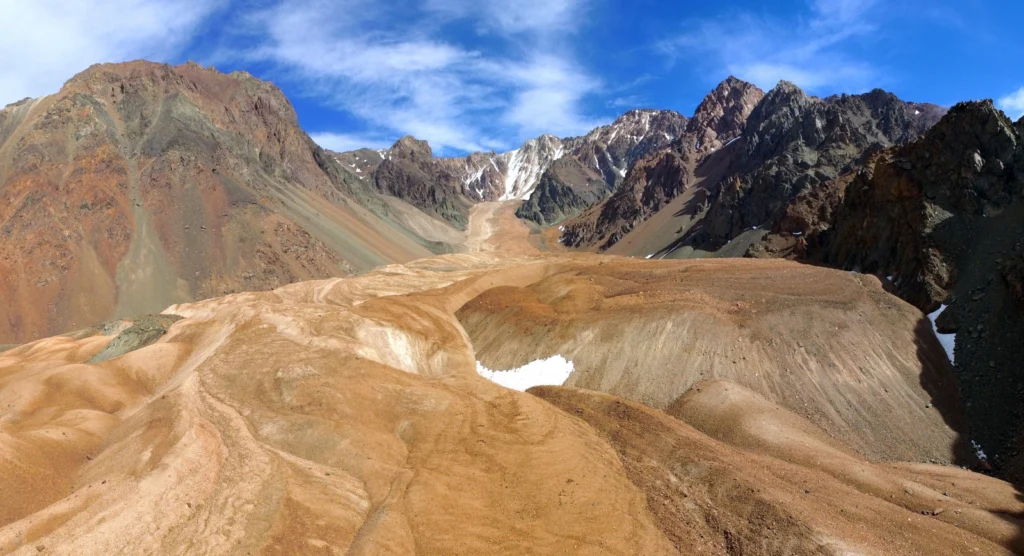
Imaggeo on Mondays: Sneaking up from above

Imaggeo on Mondays: Sneaking up from above

Take some ice, mix in some rock, snow and maybe a little mud and the result is a rock glacier. Unlike ice glaciers (the ones we are most familiar with), rock glaciers have very little ice at the surface. Looking at today’s featured image, you’d be forgiven for thinking the Morenas Coloradas rock glacier wasn’t a glacier at all. But appearances can be misleading; as Jan Blöthe (a researcher at the ...[Read More]

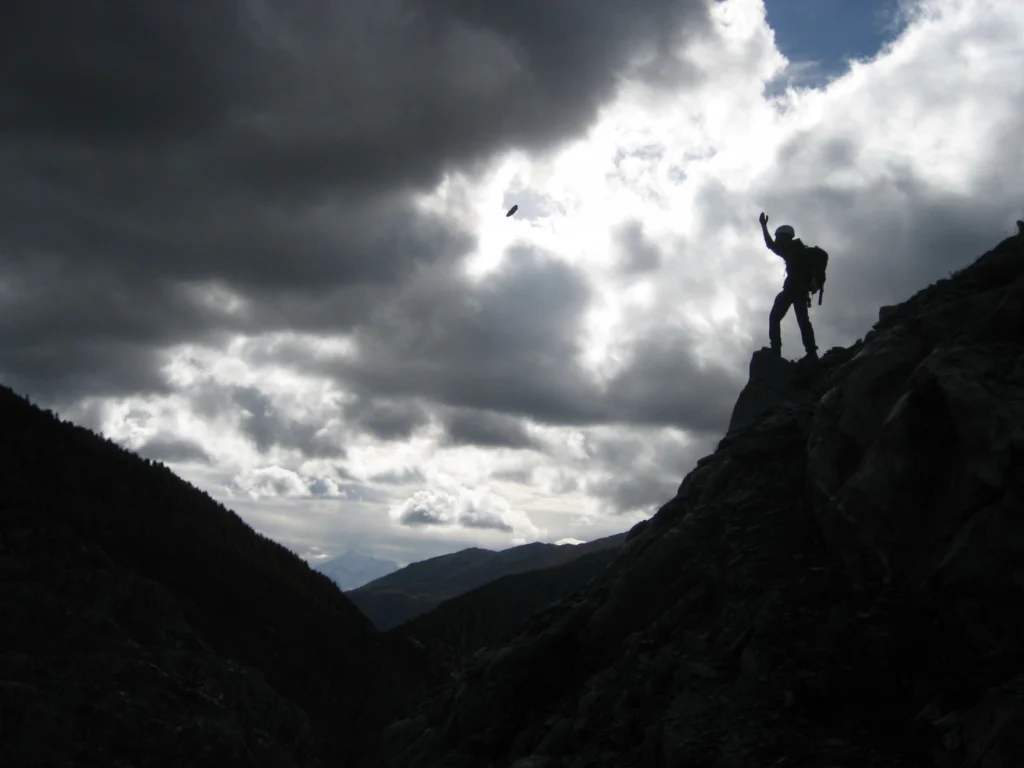
Imaggeo on Mondays: Flying Rocks

Imaggeo on Mondays:  Flying Rocks

The picture was taken at a hillslope close to the glacier tongue of the Great Aletsch Glacier, the largest glacier in the Alps. With a length of 23 km it is located in the eastern Bernese Alps of Switzerland and composed of the three smaller glaciers Aletschfirn, Jungfraufirn and Eternal snow field converging at Concordia where the ice thickness was measured to be around 900m. The whole area was d ...[Read More]

Imaggeo on Mondays: Annapurna snow avalanche

Imaggeo on Mondays: Annapurna snow avalanche

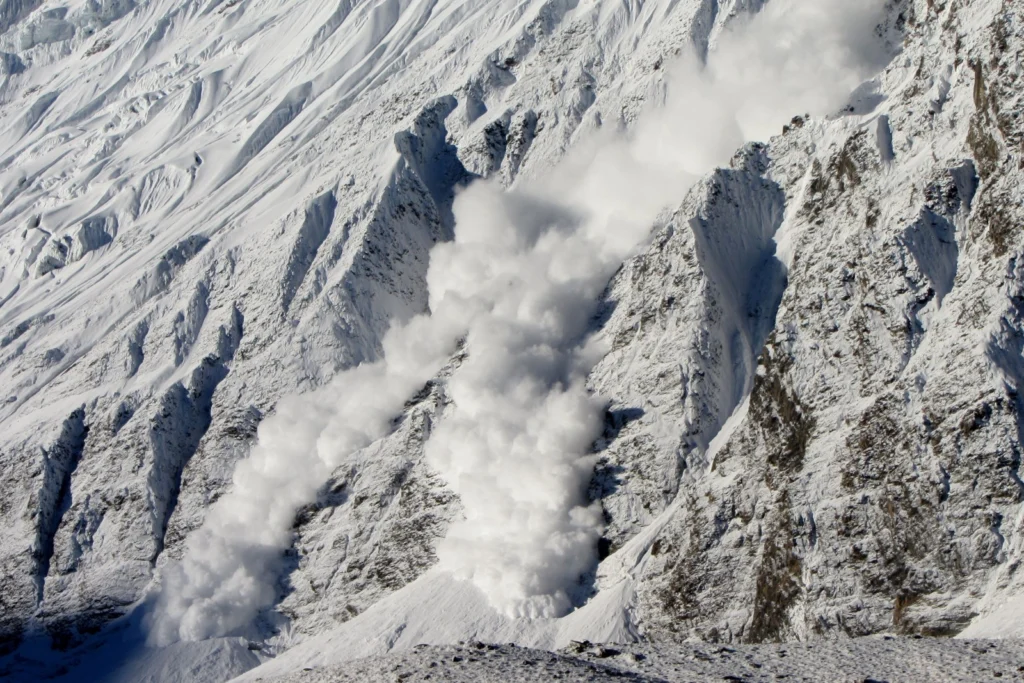
The Annapurna massif is located in an imposing 55 km long collection of peaks in the Himalayas, which behave as a single structural block. Composed of one peak (Annapurna I Main) in excess of 8000 m, a further thirteen peaks over 7000 m and sixteen more of over 6000 m, the massif forms a striking structure within the Himalayas. Annapurna I Main, the tenth highest peak in the world, is towering at ...[Read More]

Imaggeo on Mondays: Trapped air

Can you imagine walking into the depths of an icy, white, long and cavernous channel within a thick glacier? That is exactly what Kay Helfricht did in 2012 to obtain this week’s Imaggeo on Mondays photograph. Tellbreen Glacier is a small glacier (3.5Km long) in the vicinity of the Longyearbyen valley in the Svalbard region of Norway. Despite its limited size, it is an important glacier. One of the ...[Read More]

Imaggeo on Mondays: Carving polar canyons

This week Ian Joughin, a research scientist from the Polar Science Center at the University of Washington, takes us on the polar express to put glacial processes into perspective and find out what makes a moulin… This canyon formed when a melt lake on the surface of the Greenland Ice Sheet overflowed and created a stream that extended out toward a crevasse field. This outflow stream filled a creva ...[Read More]

Imaggeo on Mondays: Hot and cold – how ash influences glacial landscapes

This week’s Imaggeo on Mondays is brought to you by Joanna Nield, a lecturer in physical geography at the University of Southampton. Nield explains how volcanic eruptions can impact glaciers and how ash fall can both accelerate and slow down glacial melt… This photo was taken at Fjallsjökull, Iceland in July 2011, shortly after the eruption of Grímsvötn volcano (21 – 30 May 2011).  The Gríms ...[Read More]

Imaggeo on Mondays: How to forge a fjord

The West Norwegian Fjords are the reference point for fjords around the world. One such fjord is Geiranger, which features in this week’s Imaggeo on Mondays. The geological setting of Geirangerfjord – and its climate – has earned the area a spot on UNESCO’s World Heritage List. During the last ice age, much of northern Europe was glaciated; covered by a large ice sheet known as the Fennoscandian I ...[Read More]