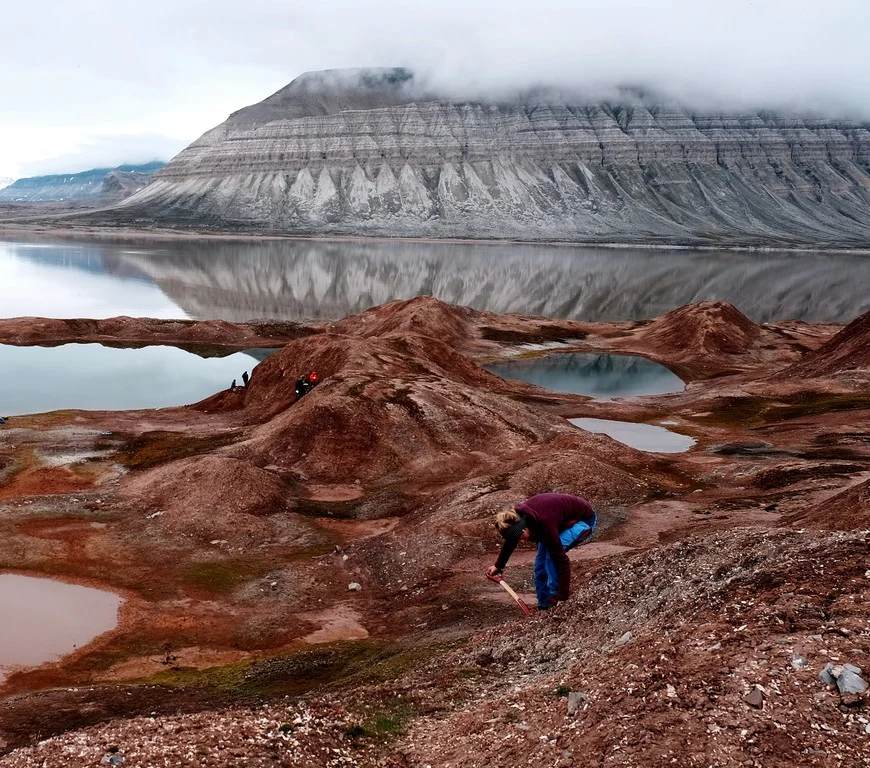
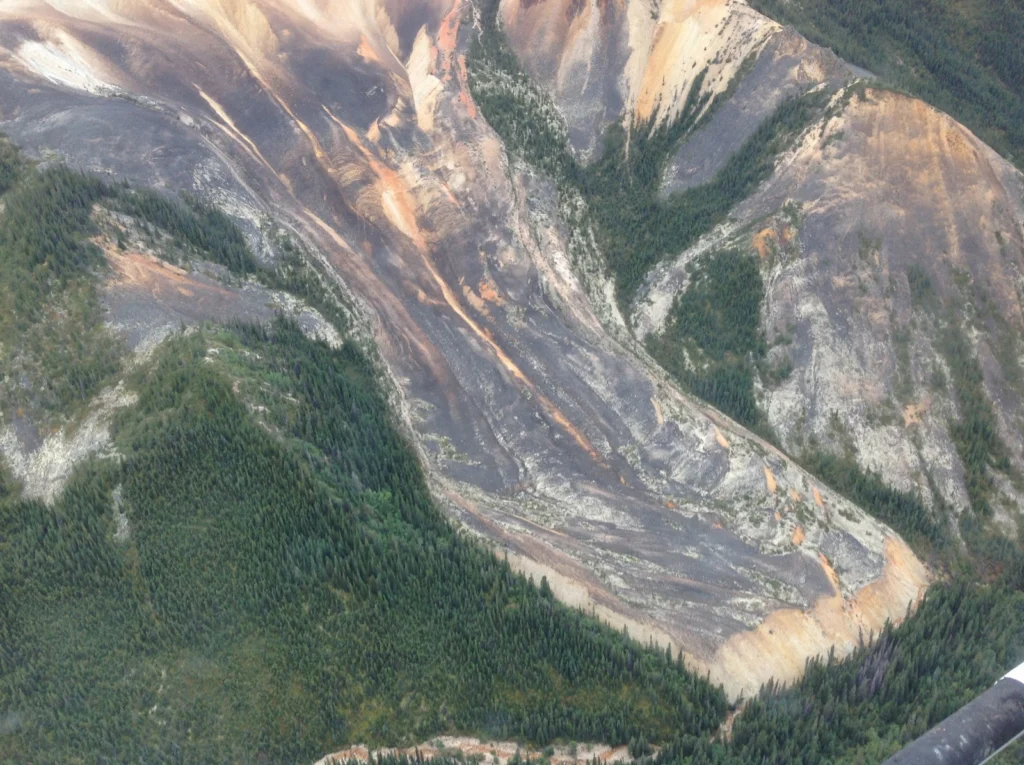
This photograph shows landforms on Coraholmen Island in Ekmanfjorden, one of the fjords found in the Norwegian archipelago, Svalbard. These geomorphic features were formed by Sefströmbreen, a tidewater glacier, when it surged in the 1880s. Although all glaciers flow, some glaciers undergo cyclic changes in their flow. This is called surging, and glaciers that surge are called surging glaciers. Dur ...[Read More]
glacier
Imaggeo on Mondays: Hints of an eruption
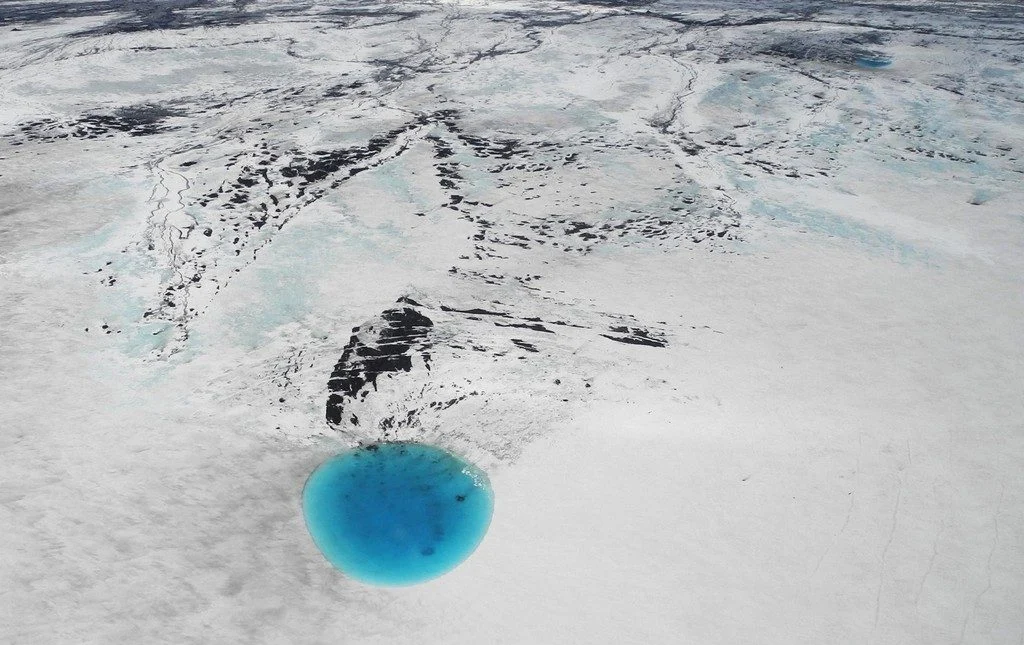
The photograph shows water that accumulated in a depression on the ice surface of Vatnajökull glacier in southeastern Iceland. This 700m wide and 30m deep depression [1], scientifically called an ‘ice cauldron’, is surrounded by circular crevasses on the ice surface and is located on the glacier tongue Dyngjujökull, an outlet glacier of Vatnajökull. The photo was taken on 4 June 2016, less than 22 ...[Read More]
May GeoRoundUp: the best of the Earth sciences from around the web
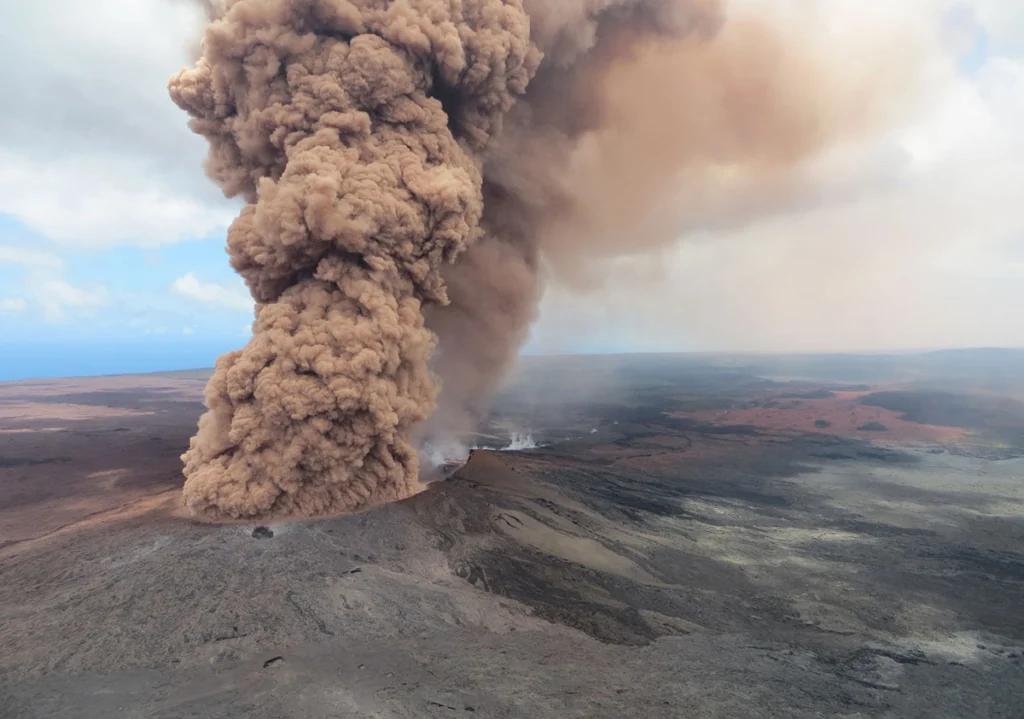
Drawing inspiration from popular stories on our social media channels, as well as unique and quirky research news, this monthly column aims to bring you the best of the Earth and planetary sciences from around the web. Major Story This month the Earth science media has directed its attention towards a pacific island with a particularly volcanic condition. The Kilauea Volcano, an active shield volc ...[Read More]
Imaggeo on Mondays: Refuge in a cloudscape
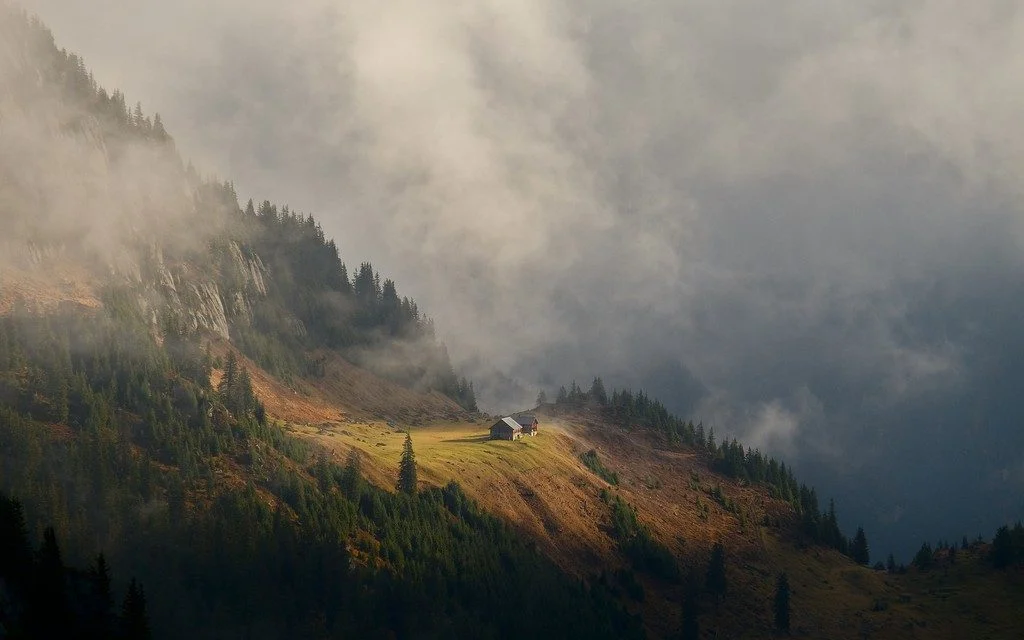
The action of glaciers combined with the structure of the rock to form this little platform, probably once a small lake enclosed between a moraine at the mountain side and the ice in the valley. Now it has become a green haven in the mountain landscape, a perfect place for an alp. In the Alps, stratus clouds opening up on autumn mornings often create gorgeous light display. That day, some of the f ...[Read More]
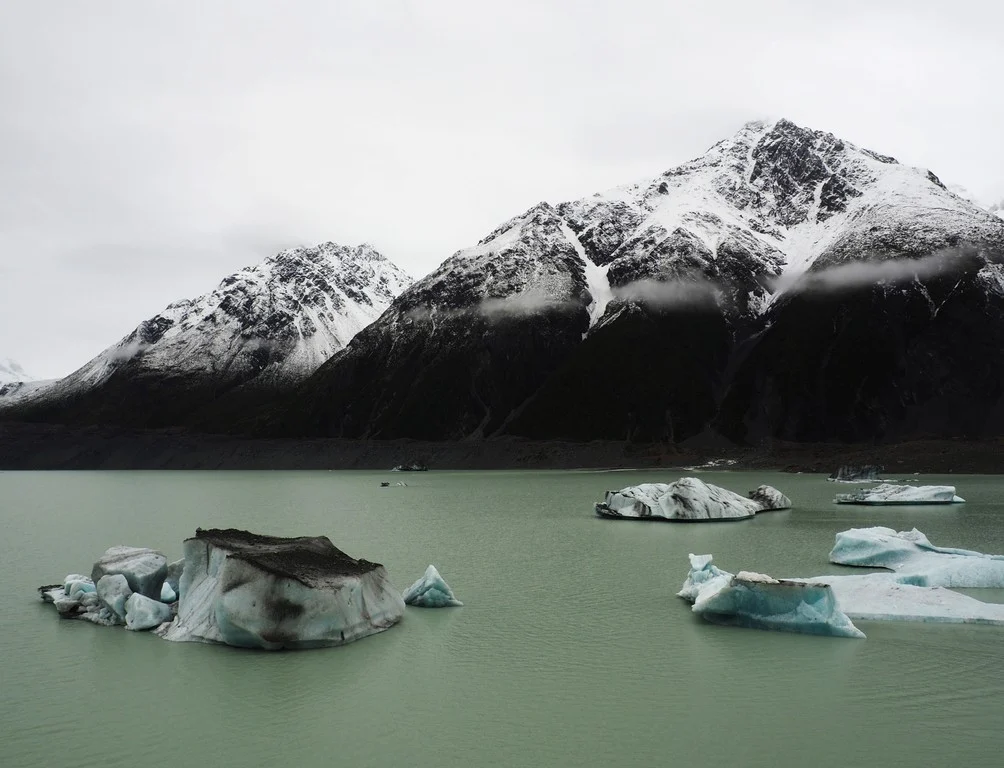
Imaggeo on Mondays: Tasman Lake Down Under
The Tasman Glacier Terminal Lake, seen in this photograph, lies in the Aoraki Mount Cook National Park in New Zealand’s south island. The photographer, Martina Ulvrova, stated she “finally got to see the largest glacier in New Zealand after several days of heavy rain, during which the landscape was bathing in mist”. The Tasman Glacier is 23 km long and is surrounded by a terminal proglacial lake w ...[Read More]
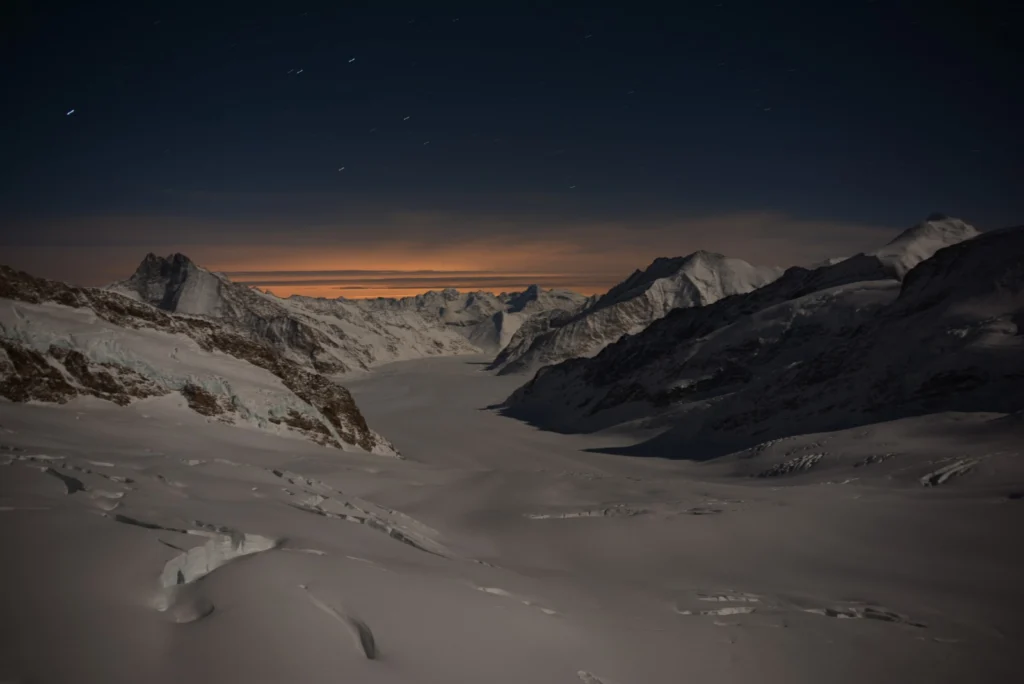
Imaggeo on Mondays: Concord at midnight
The high peaks of the Alps are always awe inspiring, but this midnight shot, captured by Alessandro Lechmann, a PhD student at the Institute of Geological Sciences at the University of Bern, further enhance their fragile beauty. With a warming climate threatening snow availability to even the highest peaks, it has never been more important to appreciate the importance of the glaciers which drape t ...[Read More]
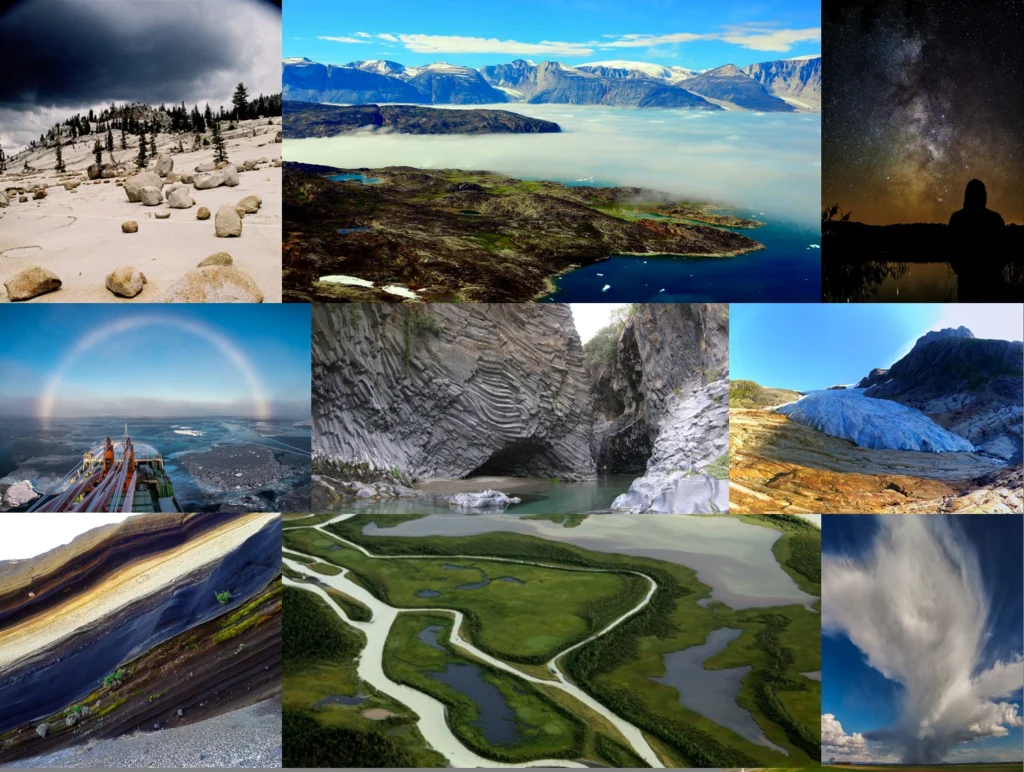
The best of Imaggeo in 2016: in pictures
Imaggeo, our open access image repository, is packed with beautiful images showcasing the best of the Earth, space and planetary sciences. Throughout the year we use the photographs submitted to the repository to illustrate our social media and blog posts. For the past few years we’ve celebrated the end of the year by rounding-up some of the best Imaggeo images. But it’s no easy task to pick which ...[Read More]
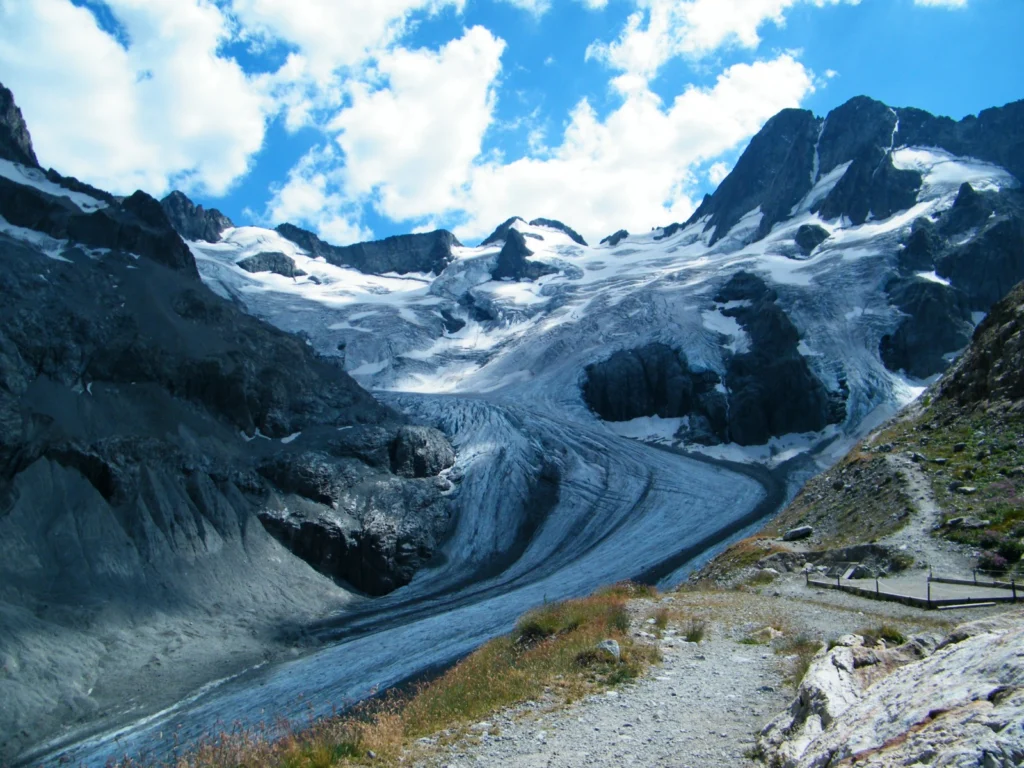
Imaggeo on Mondays: Glacier de la Pilatte
The relentless retreat of glaciers, globally, is widely studied and reported. The causes for the loss of these precious landforms are complex and the dynamics which govern them difficult to unravel. So are the consequences and impacts of reduced glacial extent atop the world’s high peaks, as Alexis Merlaud, explains in this week’s edition of Imaggeo on Mondays. This picture was taken on 20 August ...[Read More]
Imaggeo on Mondays: Rock glaciers
Picture a glacier and you probably imagine a vast, dense mass of slow moving ice; the likes of which you’d expect to see atop the planet’s high peaks and at high latitudes. Now, what if not all glaciers look like that? Take some ice, mix in some rock, snow and maybe a little mud and the result is a rock glacier. Unlike ice glaciers (the ones we are most familiar with), rock glaciers have very litt ...[Read More]
Imaggeo on Mondays: Moulin on the Athabasca Glacier
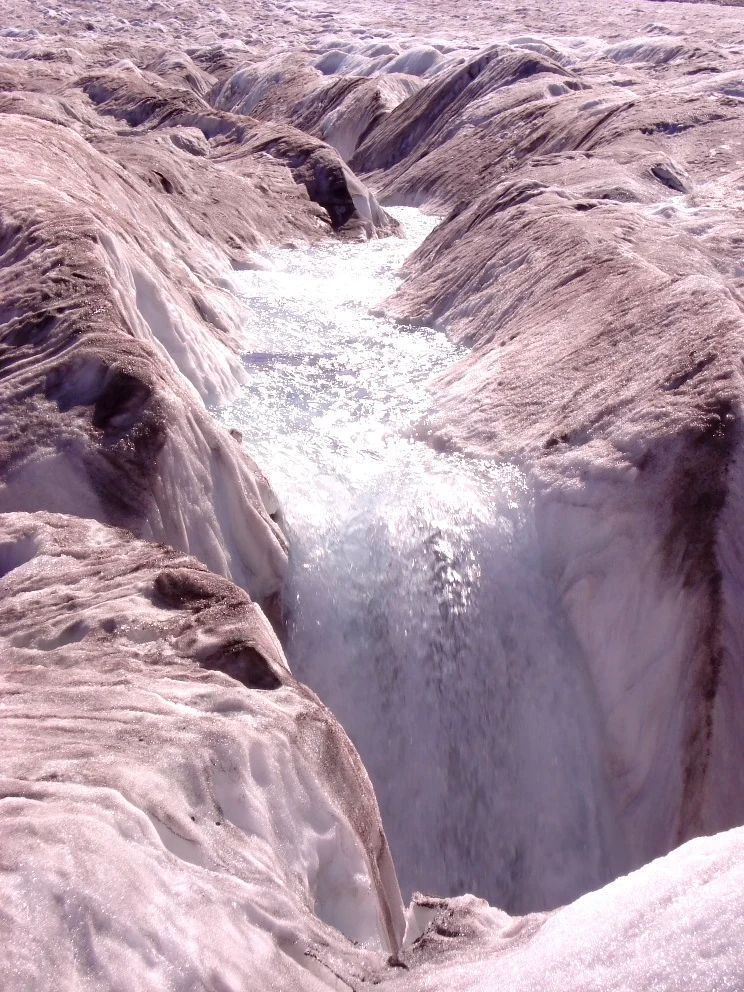
The Athabasca Glacier is located in Jasper National Park, in the Canadian Rockies. It is the largest of seven named distributary glaciers carrying ice away from the Columbia Icefield, the largest icefield in the Rocky Mountains. This picture shows a summer meltwater stream running on the surface of the ice disappear in a moulin – a vertical shaft forming part of the glacier’s internal plumbing sys ...[Read More]