GeoLog

#EGUjournals

Three peer review myths debunked by the First EGU Peer Review Training
Three peer review myths debunked by the First EGU Peer Review Training
In 2023, EGU offered Peer Review Training for the first time, over three virtual sessions in September and October 2023, with a little homework in between. With more than 100 applications, from which we chose 57, mostly Early Career Scientists (ECS) to fill the available places, the desire for this kind of training in the EGU community was clear. About 80% of the participants completed the trainin ...[Read More]

What is an Impact Factor and why does it matter to me?

What is an Impact Factor and why does it matter to me?

You have put in the hours, collected the data and written a great paper, but before you take your next steps you need to choose a journal in which to publish your work and there are a lot of factors in play. One of those, often discussed, is the Impact Factor, a number that each journal can use to demonstrate its ‘value’. Often a paper, once published, can be partly assessed by some people, based ...[Read More]

To accept or not accept: what makes a good scientific editor

To accept or not accept: what makes a good scientific editor

Researchers and those in academia sooner or later come across the scientific editor: the gatekeeper of scientific journals. The editor plays a key role in the publishing process, working closely with authors and reviewers to implement an unbiased peer-review process that upholds rigorous standards. They are often experienced scientists and experts in their field who ensure that the published resea ...[Read More]

Interactive peer review: The foundation of EGU’s open access journals

Interactive peer review: The foundation of EGU’s open access journals

Some 20 years ago, a group of young atmospheric scientists united to shake up the scientific publishing world. Their novel idea was to make the peer review process transparent and allow the scientific community to participate in the discourse – in the truest sense of the word: “reviewed by the peers.” From day one, this has been the foundation that EGU’s open access journals were built on. Today, ...[Read More]

The most-read EGU journal articles in 2021!

The most-read EGU journal articles in 2021!

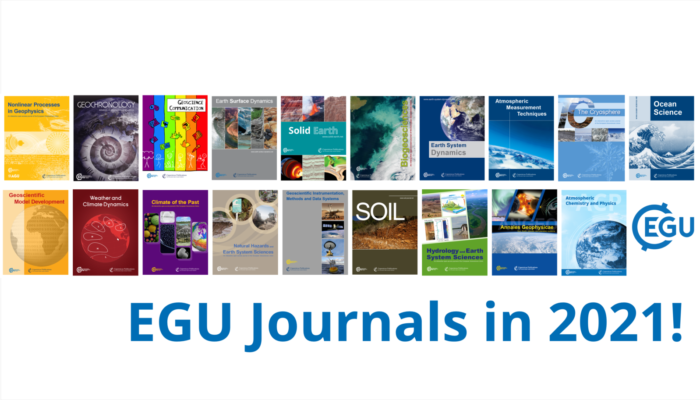
This year EGU published more than 3,375 peer-reviewed articles in our 19 Open Access journals. Upon learning about this impressive number of articles, we wondered: which of these were the most popular? You can find out in the following list of the most-read article for each EGU journal. From rainfall-runoff prediction, tipping points and open source hazard mapping, to the use of language around fr ...[Read More]

The most-read EGU journal articles in 2020!

The most-read EGU journal articles in 2020!

This year EGU published more than 3,300 peer-reviewed articles in our 19 Open Access journals. Upon learning about this impressive number of articles, which equates to just over 61,000 journal pages, we wondered: which of these were the most popular? You can find out in the following list of the most-read article for each EGU journal. From the substructure of extremely hot summers and the potentia ...[Read More]

Inclusive flood mapping: using citizen science to collect historical flood data in Dakar, Senegal.

Inclusive flood mapping: using citizen science to collect historical flood data in Dakar, Senegal.

During the month of February, we are focusing on ‘Accessibility and Inclusivity’ here at the EGU. Although these topics are clearly relevant to the General Assembly, some people may wonder whether they also relate to scientific research. Clearly all geoscientists are people, so accessibility and inclusivity matter regardless of what scientific discipline they are in. But there can also be tangible ...[Read More]

Geosciences Column: Flooded by jargon

Geosciences Column: Flooded by jargon

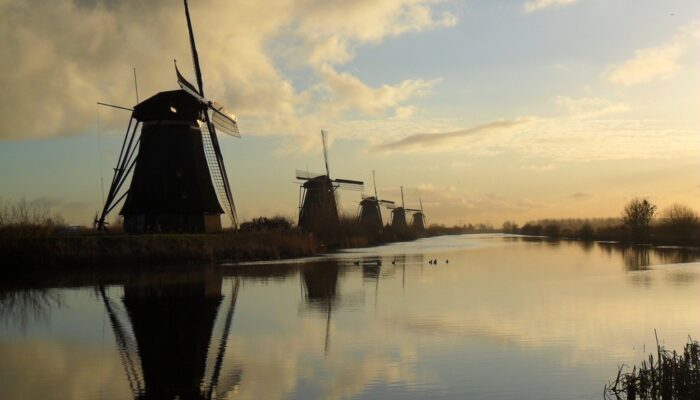
When hydrologists and people of the general public use simple water-related words, are they actually saying the same thing? While many don’t consider words like flood, river and groundwater to be very technical terms, also known as jargon, water scientists and the general public can actually have pretty different definitions. This is what a team of researchers have discovered in recent study, and ...[Read More]

Geosciences Column: Extreme snowfall potentially worsened Nepal’s 2015 earthquake-triggered avalanche

Geosciences Column: Extreme snowfall potentially worsened Nepal’s 2015 earthquake-triggered avalanche

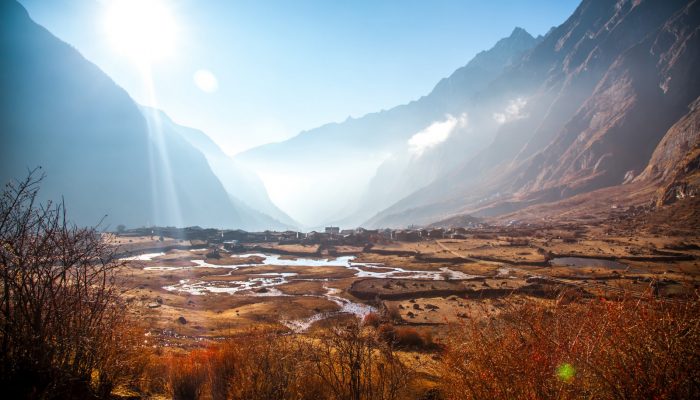
Three years ago, an earthquake-induced avalanche and rockfalls buried an entire Nepalese village in ice, stone, and snow. Researchers now think the region’s heavy snowfall from the preceding winter may have intensified the avalanche’s disastrous effect. The Langtang village, just 70 kilometres from Nepal’s capital Kathmandu, is nestled within a valley under the shadow of the Himalayas. The town wa ...[Read More]

GeoSciences Column: Don’t throw out that diary – medieval journals reveal the secret of lightning

GeoSciences Column: Don’t throw out that diary – medieval journals reveal the secret of lightning

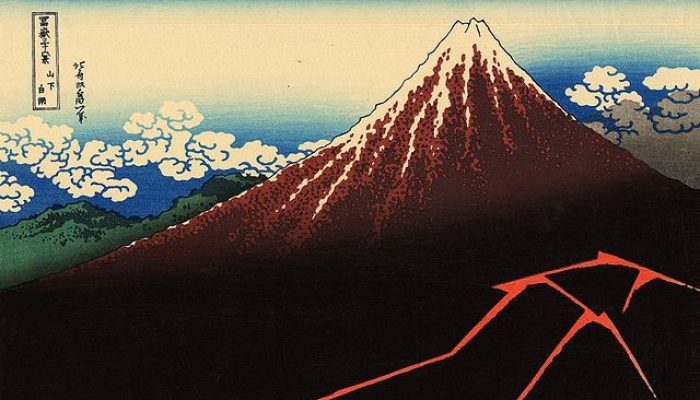
When 17th century Japanese princess Shinanomiya Tsuneko took note of an afternoon storm in her diary one humid Kyoto summer, she could not have imagined her observations would one day help resolve a longstanding scientific conundrum. Statistical analysis of her journals has revealed a link between lightning strikes and the solar wind – proving that your teenage diary could contain good scien ...[Read More]