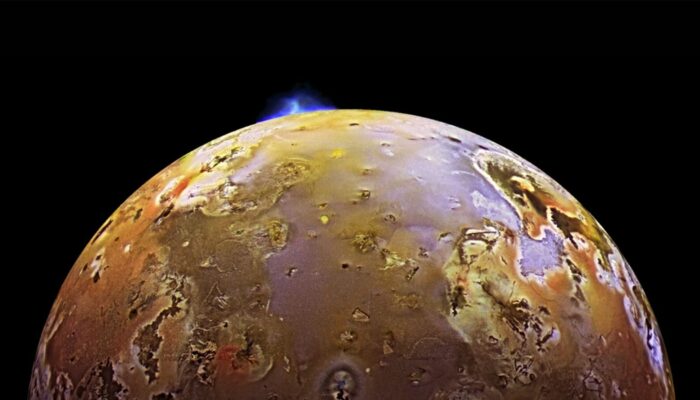
Jupiter’s moon Io is the most volcanically active world in our solar system, with hundreds of volcanoes that constantly erupt on its ever renewing surface. Although Io always points the same side toward Jupiter in its orbit around the gas giant, two other Galilean moons, Europa and Ganymede, pull Io’s orbit into an irregularly elliptical one. Thus, in its widely varying distances from ...[Read More]
Raising the (melt)stakes! How robotic innovation reveals new findings on melting glaciers
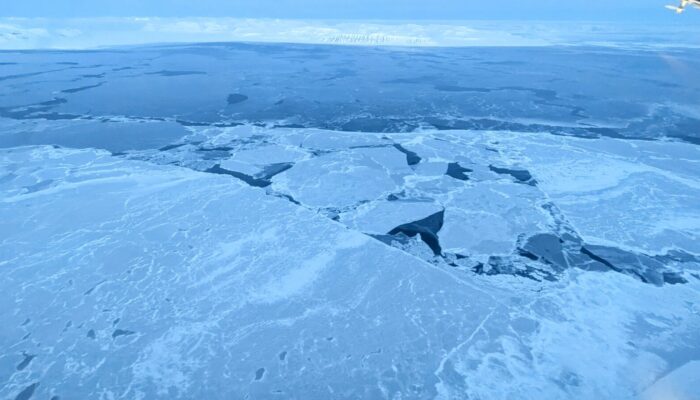
In the age of climate change, glaciers across the Arctic are melting, consequently reducing regional freshwater supplies and contributing to the ongoing rise in global sea levels. But how fast do they melt? And is it possible to predict that? A new study on the Xeitl Sit’ (LeConte) glacier in Alaska aims to answer these questions. The research group from Oregon State University, Harvard University ...[Read More]
Get our top Outstanding Student and PhD-candidate Presentation (OSPP) tips for EGU25, from previous winners and judges!
Every year at the General Assembly hundreds of students present their research with a lot of time and effort going into preparing these presentations. With the aim to further improve the overall quality of poster presentations and more importantly, to encourage Early Career Scientists to present their work in the form of a poster, the OSP Awards (as they were formerly known), were born. Since the ...[Read More]
GeoCinema: coming soon to the EGU25 General Assembly!
After a big success last year, GeoCinema is back for EGU25! As many of you know, doing science is very rarely just about the research, but also involves sharing that research in several forms and formats. For many talented researchers this means using films. Either working with a film-maker or creating something themselves, several of our EGU25 attendees submitted wonderful films this year, from s ...[Read More]