
About the unique trans-disciplinary exchanges EGU’s General Assemblies (GA) offer, and the far-reaching impact they can have.
The transformative worlds of EGU
About the unique trans-disciplinary exchanges EGU’s General Assemblies (GA) offer, and the far-reaching impact they can have.
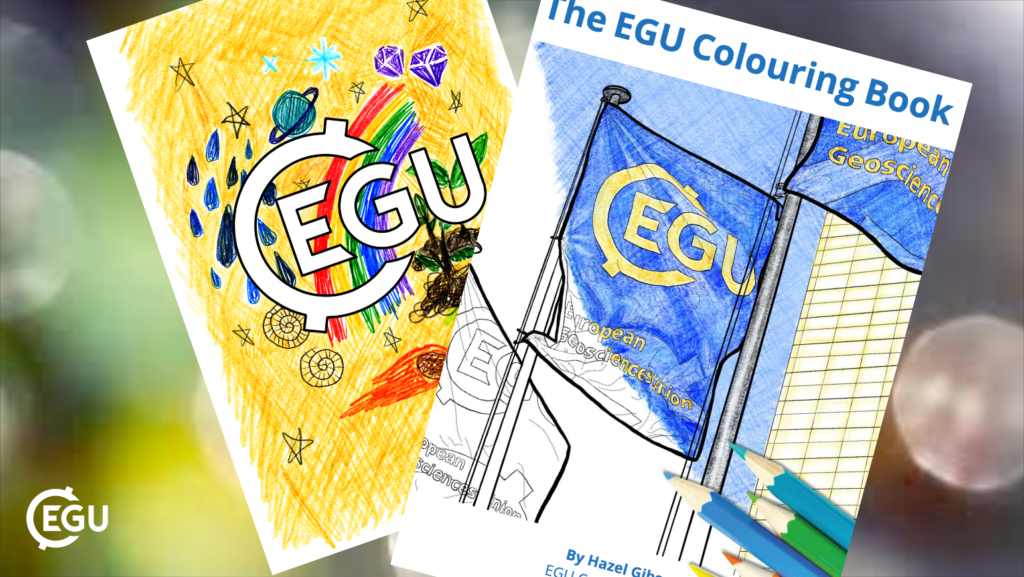
Every year EGU tries to provide more ways for people to interact with us and in 2021 we were delighted when one of our Artists in Residence Kelly Stanford, working together with members of our EDI Committee created a free colouring book! It was so popular that we decided to make two more, one with …[Read More]
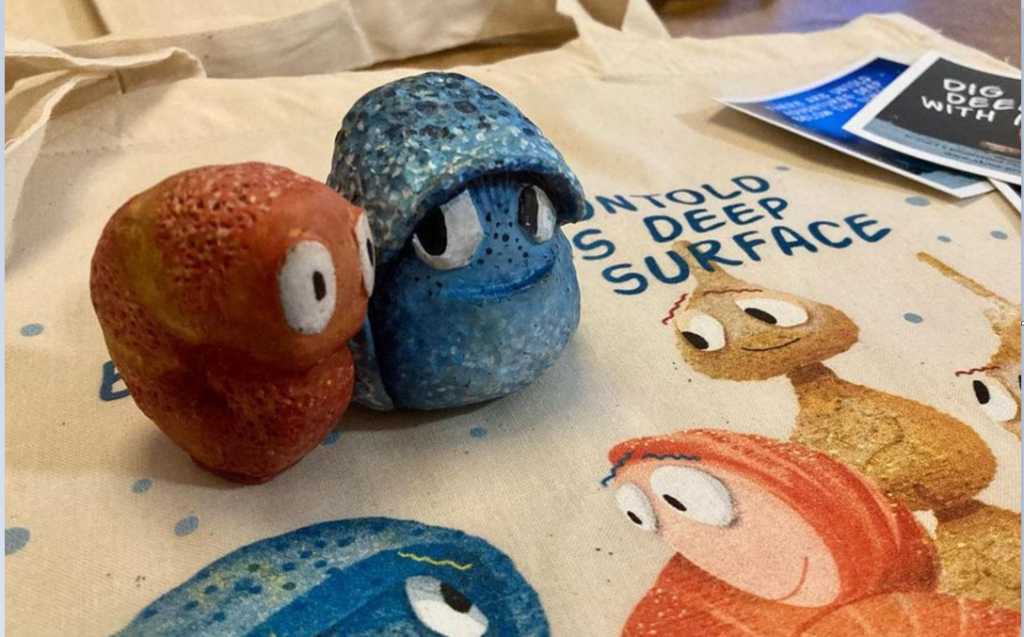
This week – on 24 January – the world observed the International Day of Education. At EGU, it felt like the perfect time for us to explore the intersection of science and art, and how they can be used in creative ways to educate and inform people regardless of their age and background. I spoke …[Read More]
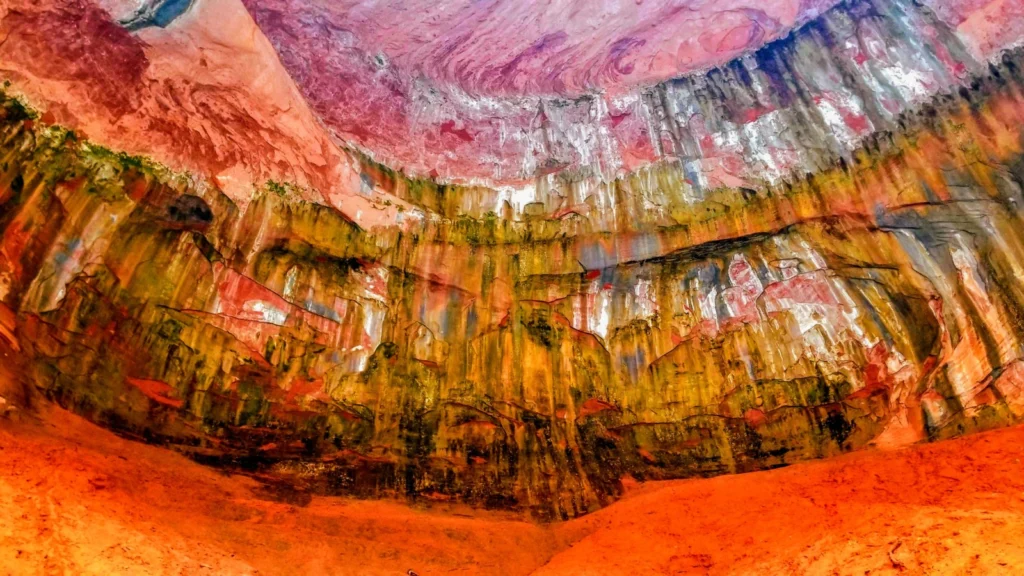
I am not a scientist by profession, but some years ago, I started seeing the far-reaching impact of geosciences as I navigated some of the Earth’s fascinating locations. From wild, remote areas to urban jungles, I learned to appreciate the sciences that make sense of places, and this concept started to inspire my artistic practice. …[Read More]
This year at EGU22 we have a whole range of brilliant science-art activities, events and sessions taking place over the two weeks to entertain, educate and inspire you! From the special session on the Art-Science interface, EOS 1.2, the #ActualLivingScientist gallery, to show the diversity of people and research that makes up our community, to …[Read More]
Microplastics are a big topic these days, so I take a look at some vital research… Plastic problems, hurdles, and nurdles A happy, healthy body has veins and arteries free from clogs and constrictions caused by build-up of lipid junk. This includes our external, shared body, a body on which we all rely, the landscape …[Read More]
This one was a challenge to write, and a challenge to get my head around, but I was challenged to write it, so challenge accepted and challenge fulfilled! Kaleidoscope of ice Frozen water, mineral ice, a simple structure, orientation concise. A fabric is woven from many crystals intertwined, axes interlocked. C-axes, crystalline kaleidoscopes of greys, …[Read More]
With a name like “atmospheric rivers” this subject is an absolute gift to the poetically-inclined! Atmospheric rivers I float high in the sky, higher than the jagged, ice-hewn nunatak peaks I see below me as I peer over the side of my coracle made of clouds. Down there, beneath frayed candifloss, Greenland glows white in …[Read More]
Concepts accepted in geology always have room for revision. In this case, time itself is revised! This one melted my brain a little. Deep time, deep circulation, deep thinking Plate tectonics, amongst the most evocative subjects in geology. The entire skin of the earth shifting and reorganising continuously, the most profound of motion. So deep …[Read More]
I find the idea of nature-based solutions hugely appealing. Let’s explore what it means! Nature-based harmony Over billions of years, natural ecosystems have co-evolved solutions that prevent their damage and destruction. So why do we think we can do better, with only 10,000 years of innovation? We can restore and reproduce the natural behaviour of …[Read More]