GeoLog

Search

GeoTalk: Stephanie Zihms, Early Career Scientist Representative
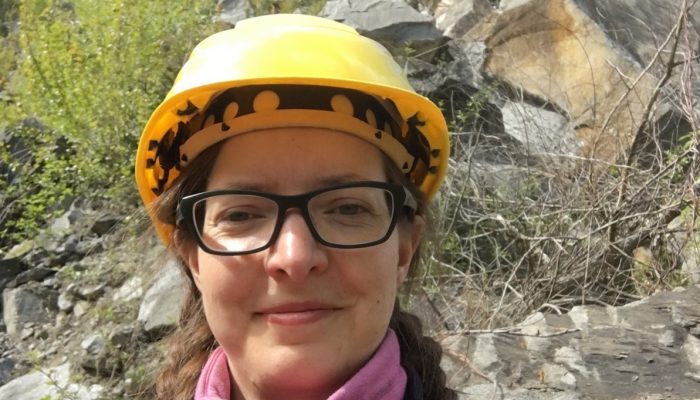
GeoTalk: Stephanie Zihms, Early Career Scientist Representative
In addition to the usual GeoTalk interviews, where we highlight the work and achievements of early career researchers, this month we’ll also introduce one of the Division early career scientist representatives (ECS). They are responsible for ensuring that the voice of EGU ECS membership is heard. From organising short courses during the General Assembly, through to running and attending regular EC ...[Read More]

Get involved: become an early career scientist representative

Get involved: become an early career scientist representative

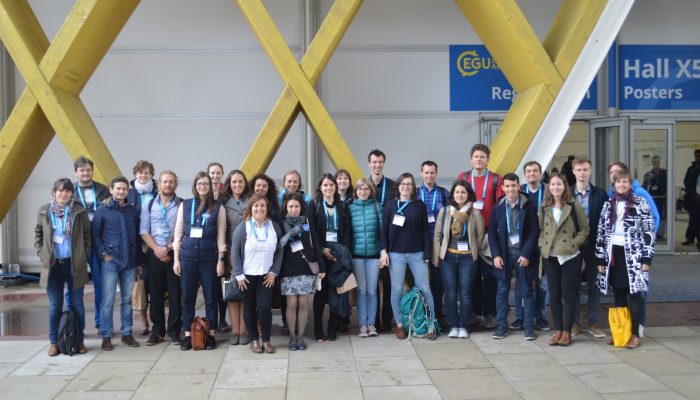
Early career scientists (ECS) make up a significant proportion of the EGU membership and it’s important to us that your voices get heard. To make sure that happens, each division appoints an early career scientists representative: the vital link between the Union and the ECS membership. After tenure of two or four years, a few of the current ECS Representatives are stepping down from their post at ...[Read More]

GeoTalk: Maribel García-Ibáñez, Early Career Scientist Representative
GeoTalk: Maribel García-Ibáñez, Early Career Scientist Representative
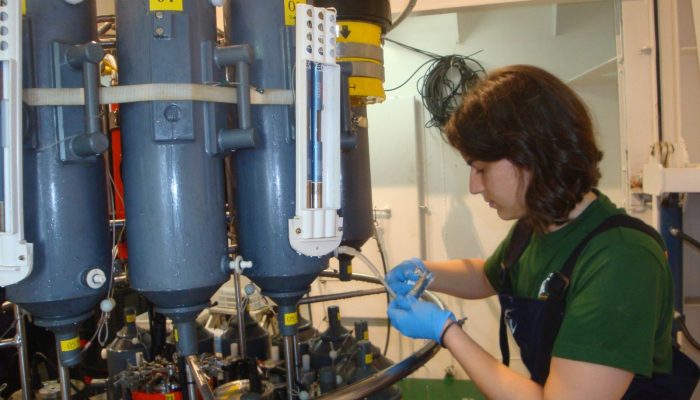
In addition to the usual GeoTalk interviews, were we highlight the work and achievements of early career researchers, this month we’ll also introduce one of the (outgoing) Division early career scientist representatives (ECS). The representatives are responsible for ensuring that the voice of EGU ECS membership is heard. From organising short courses during the General Assembly, through to running ...[Read More]

Five top tips to apply for small grants

Five top tips to apply for small grants

Stephanie Zihms, the ECS Representative for the EMRP Division (and incoming Union Level Representative) has applied for a range of small scale grants (<£15,000, ca. 16,965€). At this year’s General Assembly, she was one of two speakers at the ‘How to write a research grant’ short course, where she shared  insights from her successes and failures. In today’s post she tells us about the top five ...[Read More]

Try something different at EGU 2018– choose a PICO session!

Try something different at EGU 2018– choose a PICO session!

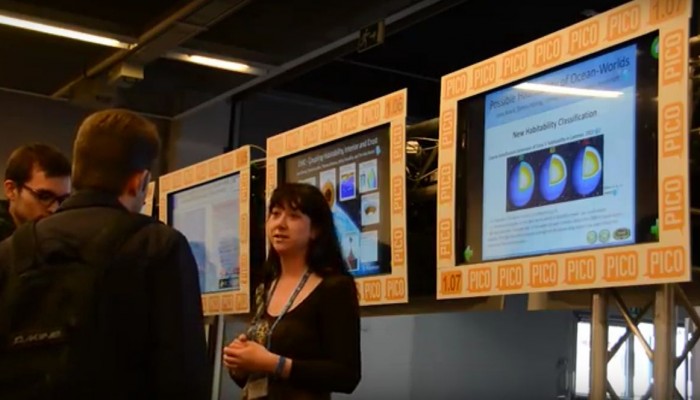
Some of the sessions scheduled for the upcoming EGU General Assembly are PICO only sessions. This means that, rather than being oral or poster format, they involve Presenting Interactive COntent (PICO). The aim of these presentations is to highlight the essence of a particular research area – just enough to get the audience excited about a topic without overloading them with information. What’s gr ...[Read More]

We are hiring: be our next Communications Officer!

We are hiring: be our next Communications Officer!

Do you have an interest in the Earth, space and planetary sciences and love blogging and using social media channels to communicate that passion? Then our latest job opening might be just right for you! We are looking for a Communications Officer to work with the EGU Media and Communications Manager in maintaining and further developing media- and science-related communications between the EGU and ...[Read More]

EGU announces 2018 awards and medals

EGU announces 2018 awards and medals

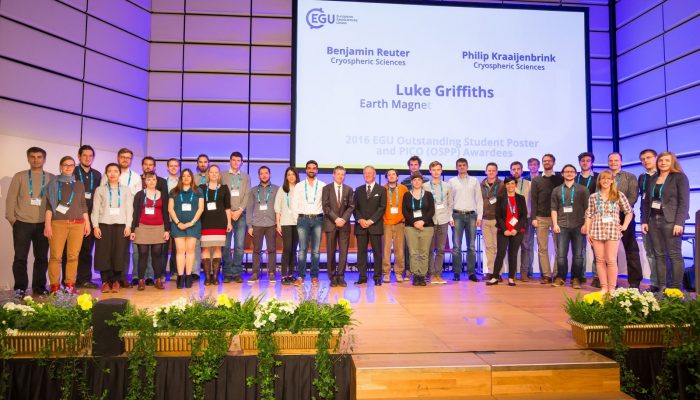
From 8th to the 14th October a number of countries across the globe celebrate Earth Science Week, so it is a fitting time to celebrate the exceptional work of Earth, planetary and space scientist around the world. Yesterday, the EGU announced the 49 recipients of next year’s Union Medals and Awards, Division Medals, and Division Outstanding Early Career Scientists Awards. The aim of the awards is ...[Read More]

Mexico earthquakes: What we know so far

Mexico earthquakes: What we know so far

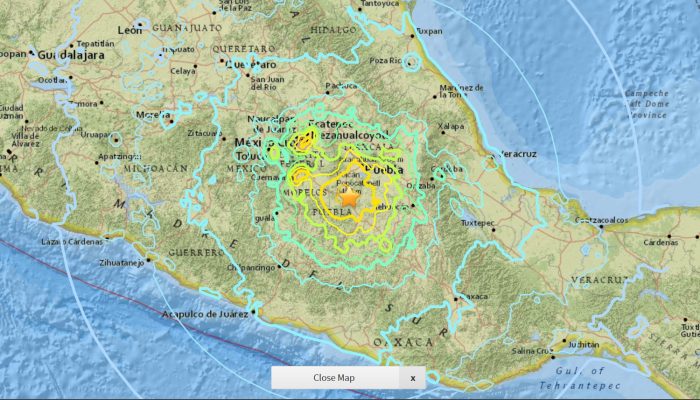
On Friday 8 September 2017 at 04:49 am UTC, a magnitude 8.1 earthquake hit off the coast of Mexico, 87 km SW of Pijijiapan. According to the U.S. Geological Survey, the epicentre was at 15.07 N, 93.72 W at a depth of about 69.7 km. Yesterday, another strong (magnitude 7.1) earthquake hit central Mexico, 55 km SSW of the city of Puebla and 120 km south of Mexico City. Despite the lower magnitude, y ...[Read More]

Academia is not the only route: exploring alternative career options for Earth scientists

Academia is not the only route: exploring alternative career options for Earth scientists

With more PhD and postdoc positions than there are tenured posts, landing a permanent job in academia is increasingly challenging. For some, years of funding and position uncertainty, coupled with having to relocate regularly is an unwelcome prospect. A changing job market also means that aspiring to the traditional, linear career path might be an unrealistic expectation. Skills acquired by those ...[Read More]