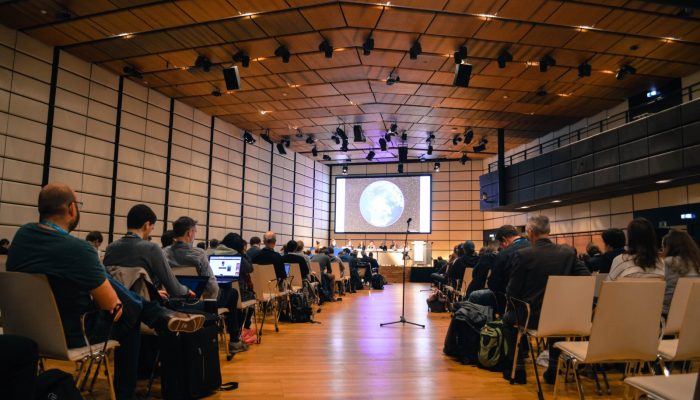
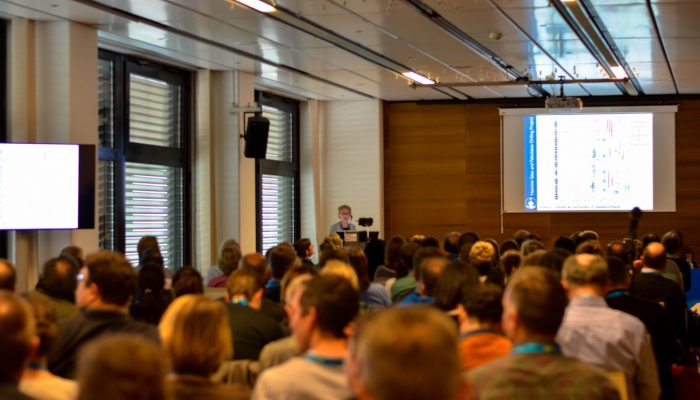
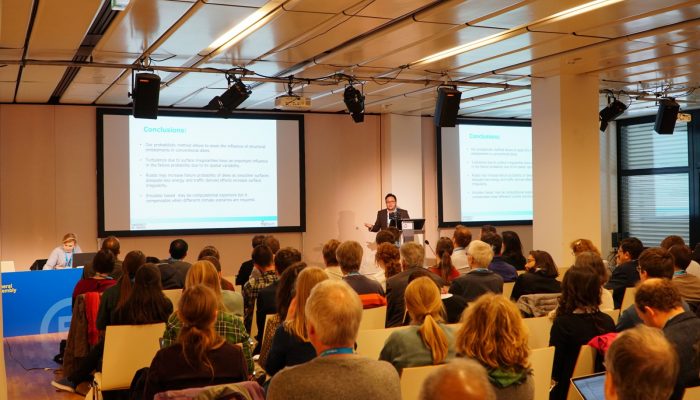
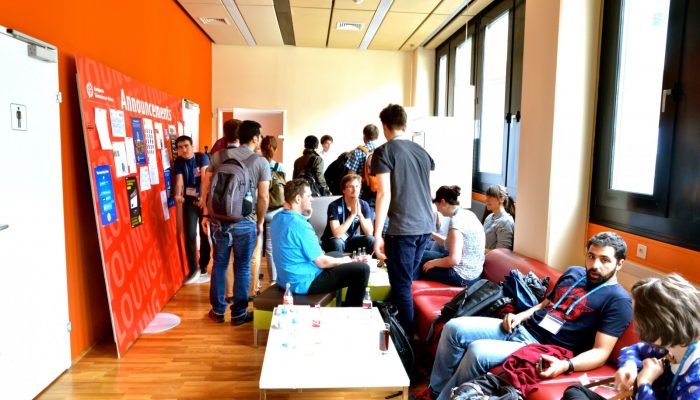
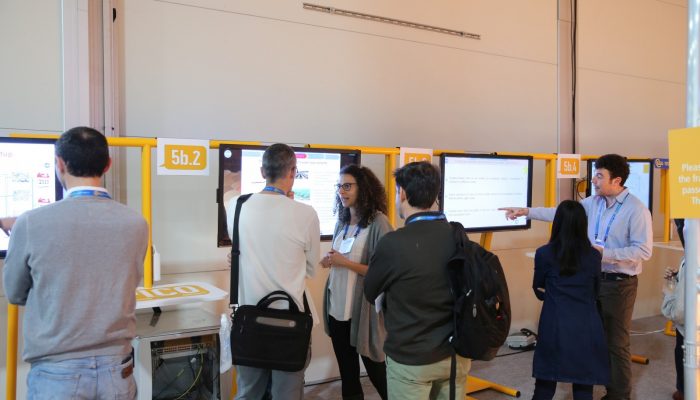
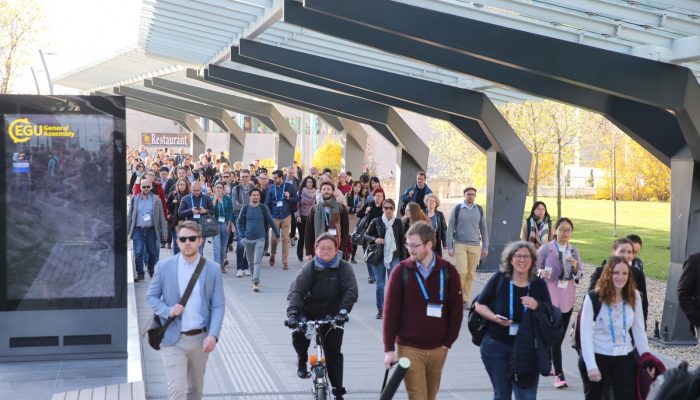
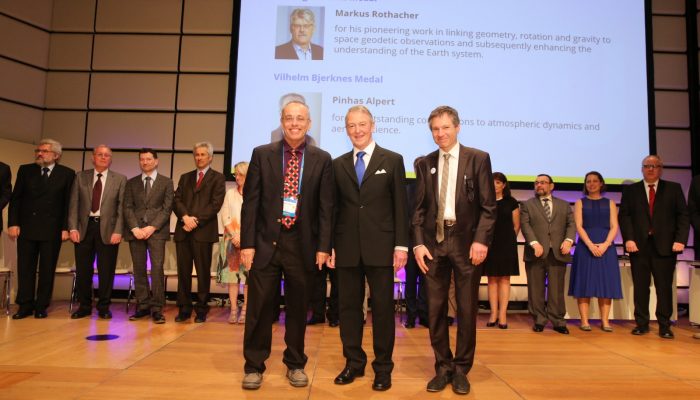
Attending the EGU General Assembly offers you countless opportunities to meet scientists from all over the world, learn about the latest advances in the Earth, planetary, and space sciences, and present your research to the science community. This annual meeting is also a great chance to network, pick up tips on how to boost your career, and find job opportunities. Here are just some of the ways t ...[Read More]
New Search
If you didn't find what you were looking for, try searching again.
Union-wide events at EGU 2019
Wondering what to expect at the General Assembly this year? Here are some of the highlights: Union Symposia (US) For events which will have general appeal, regardless of your field of research, look no further than the Union Symposia. The very first session celebrates 30 years of the WMO Global Atmosphere Watch Programme (US5). This session will highlight the need for, and illustrate exciting adva ...[Read More]
Short courses at EGU 2019
At this year’s General Assembly there are loads of short courses to choose from for broadening your expertise. You can supercharge your scientific skills, broaden your base in science communication and pick up tips on how to boost your career – be it in academia or outside. There is also a course aimed at making your time at the conference easier – be sure to take part, especially if it is your fi ...[Read More]
GeoTalk: Making their mark: how humans and rivers impact each other
Geotalk is a regular feature highlighting early career researchers and their work. In this interview we speak to Serena Ceola, a hydrologist and assistant professor at the University of Bologna, Italy, who studies interactions between humans and river systems. At the upcoming General Assembly she will be recognised for her research contributions as the recipient of the 2019 Hydrological Sciences D ...[Read More]
Presenting at the General Assembly 2019: A quick ‘how to’ from the EGU
The schedule is out, presentation slots have been assigned and it’s time to start thinking about putting yours together. Whether you have an oral, poster or PICO slot, we have a suite of simple guidelines to get you ready for the conference! Orals The guidelines for oral presentations are online. All oral presentations should have the dimensions 16:9 or 4:3 and last about 12 minutes, with 3 minute ...[Read More]
EGU 2019: Connect at the Networking & Early Career Scientists’ Zone
The EGU General Assembly, the largest geoscience conference in Europe, attracts more than 15,000 participants every year. While there are countless opportunities throughout the week to meet new people and reconnect with colleagues, the convention centre can be overwhelming, especially for early career scientists (ECS) and first-time attendees. The Networking & Early Career Scientists’ Zone (fo ...[Read More]
Making a poster or PICO presentation: top tips from the Outstanding Student Poster and PICO (OSPP) Award judges
Every year at the General Assembly hundreds of students present their research at the conference with a lot of time and effort going into preparing these presentations. With the aim to further improve the overall quality of poster presentations and more importantly, to encourage early career scientists to present their work in the form of a poster, the OSP Awards (as they were formerly known), wer ...[Read More]
Make your EGU 2019 experience more environmentally friendly
The annual EGU General Assembly, the largest geoscience conference in Europe, attracts more than 15,000 attendees to Vienna, Austria every year. With such a large number of participants, many flying to the Austrian capital to attend, the meeting has a large environmental impact. Given this, the EGU is implementing a number of initiatives towards minimising the General Assembly’s carbon footprint. ...[Read More]
GeoPolicy: The importance of communicating your research with the public
Science and innovation are a central priority for the European Union with the current research framework, Horizon 2020, allocating almost €80 billion to research and innovation over seven years, until 2021. It appears that policymakers are currently happy with this investment as they are looking to increase research and innovation spending to at least €100 billion in the next research funding fram ...[Read More]
GeoTalk: Research reflections and lessons learned from Pinhas Alpert
GeoTalk interviews usually feature the work of early career researchers, but this month we deviate from the standard format to speak to Pinhas Alpert, professor in geophysics and planetary sciences at Tel Aviv University and recipient of the 2018 Vilhelm Bjerknes Medal. Alpert was awarded for his outstanding contributions to atmospheric dynamics and aerosol science. Here we talk to him about his c ...[Read More]