GeoLog

GeoLog

Imaggeo On Monday: Konsfjorden and Kronebreen glacier
Imaggeo On Monday: Konsfjorden and Kronebreen glacier
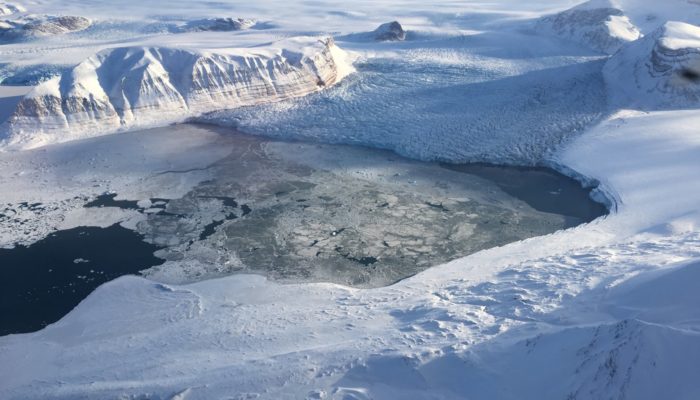
Taken shortly after our departure from Ny-Ålesund after our first “Lost Meteorites” field trial in Greenland testing new equipment that can be used to discover ‘missing’ iron meteorites in Antarctica, the return flight gave incredible views of the surrounding landscape. This photo was taken looking down to the icy waters of Kongsfjorden on the west coast of Svalbard and the ...[Read More]

Imaggeo On Monday: Nature of ice crystals

Imaggeo On Monday: Nature of ice crystals

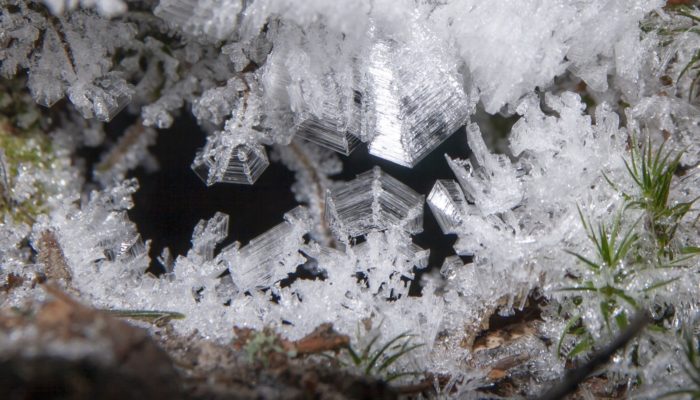
Moisture coming from the ground is freezing at the entrances of small ground pockets, shaping wonderful natural ice crystals, during a very cold and dry winter in Poland in 2019. Description by Katarzyna Walczak, after the description on imaggeo.egu.eu.   Imaggeo is the EGU’s online open access geosciences image repository. All geoscientists (and others) can submit their photographs and video ...[Read More]

GeoRoundup: the highlights of EGU Journals published during December!

GeoRoundup: the highlights of EGU Journals published during December!

Each month we feature specific Divisions of EGU and during the monthly GeoRoundup we will be putting the journals that publish science from those Divisions at the top of the Highlights roundup. For December, the Divisions we are featuring are: Cryospheric Sciences (CR), Climate: Past, Present & Future (CL) and Nonlinear Processes in Geoscience (NP). They are served by the journals: Geoscientif ...[Read More]

Imaggeo On Monday: Ice-coated roots at sunset

Imaggeo On Monday: Ice-coated roots at sunset

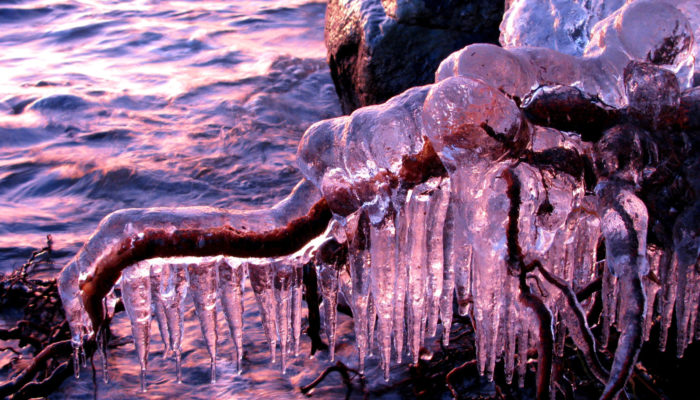
The coating by the ice and the icicles are created through the interplay of wave action and the simultaneous freezing of the water around the exposed tree roots. The reason for the exposed tree roots is increased bank erosion due to a rather unusual circumstance. The combination of the lake not yet being frozen in early winter, and strong winter storms, make it very easy for the waves to erode the ...[Read More]

Top 5 (Last Minute) Gifts for Geoscientists…!

Top 5 (Last Minute) Gifts for Geoscientists…!

So it’s the winter holidays, and you may be looking for some last-minute gifts for the geoscientists in your life. But because it’s 2020, if you haven’t got anything already, you may be getting worried: shipping times are taking longer and longer, and you might not even be able to visit the nearest shopping centre due to a lockdown.   If this is you, don’t panic: we’ve got you covered with th ...[Read More]

GeoPolicy: European Research Council funding opportunities – Your questions answered!

GeoPolicy: European Research Council funding opportunities – Your questions answered!

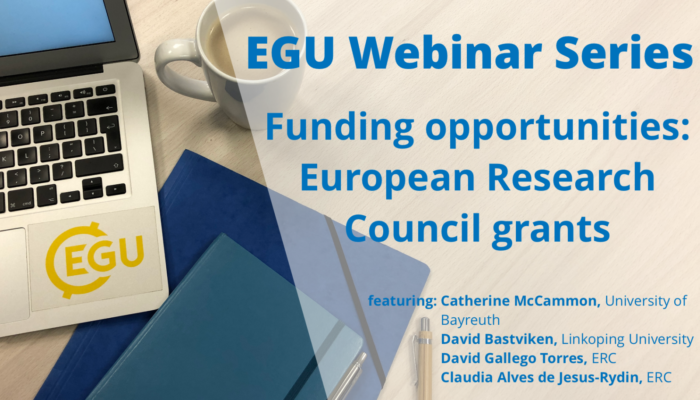
The European Research Council (ERC) is a leading European funding body supporting frontier research, investigator-driven, across all fields of science.The ERC offers various different funding opportunities with grants budgets of €1.5 to €3.5 million for individual scientists with the sole criterion for selection being scientific excellence. In October, the EGU hosted a webinar that highlighted som ...[Read More]

Imaggeo On Monday: A science outpost in midnight sun

Imaggeo On Monday: A science outpost in midnight sun

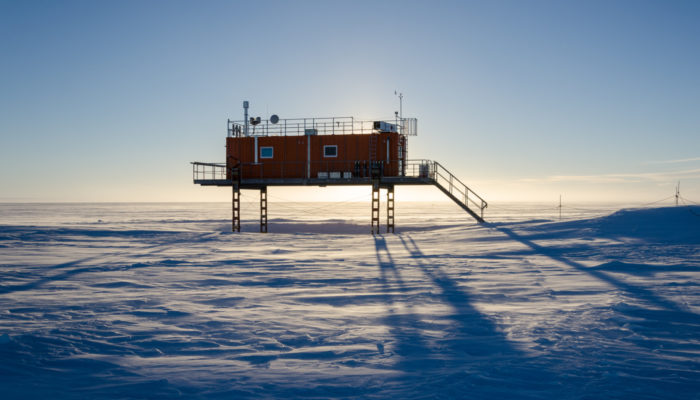
Photo of the air chemistry observatory of the German Neumayer III Antarctic station during Polar Day 2017. Located in a clean air sector south of the station, the observatory’s main purpose is to record continuous, year-round data records of relevant particulate and gaseous trace components of the troposphere. As one of only few stations located in the very clean troposphere of Antarctica, i ...[Read More]

GeoTalk: Meet the Nonlinear Processes Division, with Division President Stéphane Vannitsem and ECS Rep Tommaso Alberti

GeoTalk: Meet the Nonlinear Processes Division, with Division President Stéphane Vannitsem and ECS Rep Tommaso Alberti

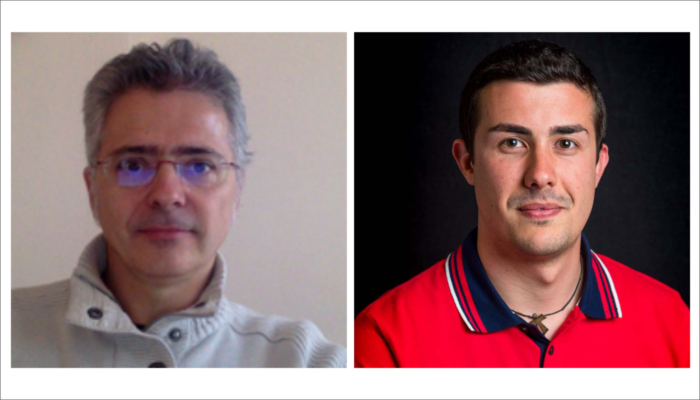
Hello Stéphane and Tommaso, thank you for speaking with us today – could you briefly introduce yourselves? Stéphane Vannitsem Okay, so my name is Stéphane Vannitsem, and I am a researcher at the Royal Meteorological Institute of Belgium, in Brussels, and I’ve recently become head of the Meteorological and Climatological Information Service. I’m also a lecturer at the Free Univers ...[Read More]

It’s Black in Marine Science Week!

It’s Black in Marine Science Week!

Earlier this summer, as a global society we were reminded; our societies are riddled with inequalities. The deaths of Ahmaud Arbery, George Floyd, Breonna Taylor and other Black people over minor infringements of the law if any, flooded our news feeds; Black people like myself were reminded of just how dangerous our world is. The remnants of slavery and Jim-Crow era segregation are still felt in t ...[Read More]

Why is research in Antarctica so important?

Why is research in Antarctica so important?

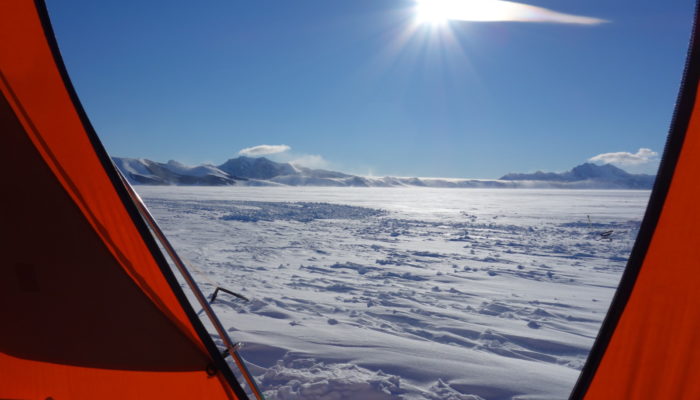
On the 1st December 1959 the Antarctic Treaty was signed by 12 nations, setting aside nearly 10% of the Earth “forever to be used exclusively for peaceful purposes… in the interests of all mankind.” In the years that followed more and more countries signed the agreement, until today when the agreement has been signed by 54 countries around the globe.  In 2010, the Foundation for ...[Read More]