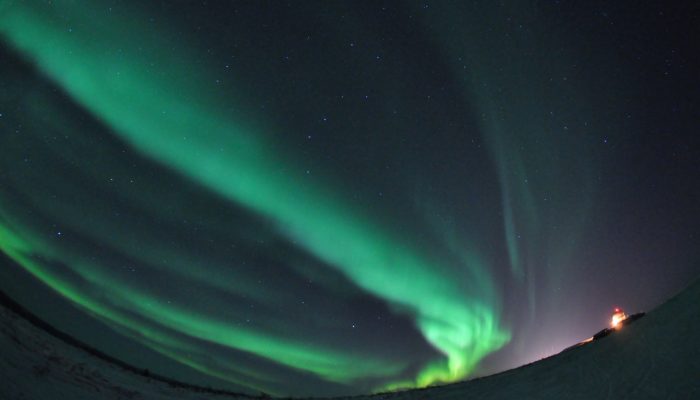
It’s a clear night, much like any other, except that billions of kilometers away the Sun has gone into overdrive and (hours earlier) hurled a mass of charged particles, including protons, electrons and atoms towards the Earth. As the electrons slam into the upper reaches of the atmosphere, the night sky explodes into a spectacular display of dancing lights: aurora. Aurora remain shrouded in myste ...[Read More]
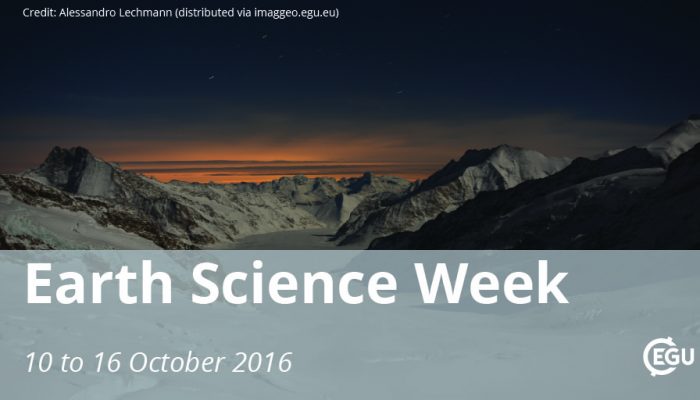
Celebrating Earth Science Week!
For those not so familiar with the Earth sciences, geosciences and all its subdisciplines might be shrouded in mystery: boring, unfathomable, out of reach and with little relevance to everyday life. Nothing could be further from the truth! Earth Science Week, an international annual celebration founded by the American Geosciences Institute in 1998, aims to change the public’s perception of the ge ...[Read More]
Educators: Apply now to take part in the 2017 GIFT workshop!
The General Assembly is not only for researchers but for teachers and educators with an interest in the geosciences also. Every year the Geosciences Information For Teachers (GIFT) is organised by the EGU Committee on Education to bring first class science closer to primary and high school teachers. The topic of the 2017 edition of GIFT is ‘The Mediterranean’. This year’s workshop is co-organised ...[Read More]
Imaggeo on Mondays: The invaluable role of soil dwellers
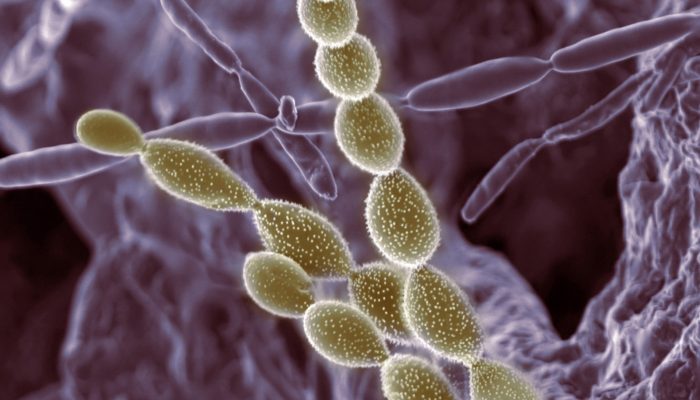
That soils are vital to secure our future supplies of water, food, as well as aiding adaptation to climate change and sustaining the planet’s biosphere is a subject we’ve featured on the blog as recently as the summer. That’s because never have humans been more out of touch with the vital importance of this natural resource. Inhabiting among soil particles thrives an even less familiar, but equall ...[Read More]
This calls for a celebration: GeoLog’s 1000 post!
As far as blogging milestones go, today is pretty special. This is GeoLog’s 1000 post! Since the EGU’s official blog launched back in March 2010 (that’s right, there’s over 6 years of back catalogue for you to enjoy!), we’ve shared posts about research spanning almost every discipline in the Earth sciences; highlighted member’s adventures in the field and showcased the work of outstanding early ca ...[Read More]
Stop the press!: How to pitch your research to a journalist or editor
Why does some research make it into the main stream media, while so many stories languish in the expanse between the lab bench and research papers? The answer isn’t straightforward. A variety of factors come into play: is the research newsworthy; is it timely; does it represent a ground-breaking discovery; or is it of human and societal interest? Newsworthiness isn’t the be all and end all. Someti ...[Read More]
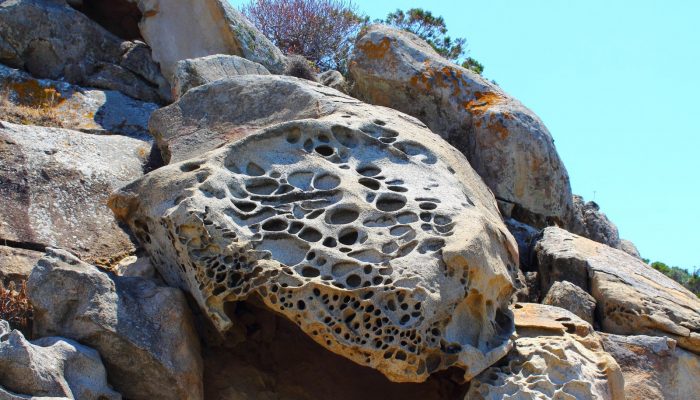
Imaggeo on Mondays: the rocks that look like Swiss cheese
Over the course of centuries and millennia, the force of winds, seas, ice and rains, sculpt rock formations around the globe. From the world-famous glacier carved landscapes of Yosemite National Park, to the freeze-thawed hoodoos at Bryce National Park, through to the wind battered stone pillars of South China Karst, boundless geological formations have been transformed by the power of erosion and ...[Read More]
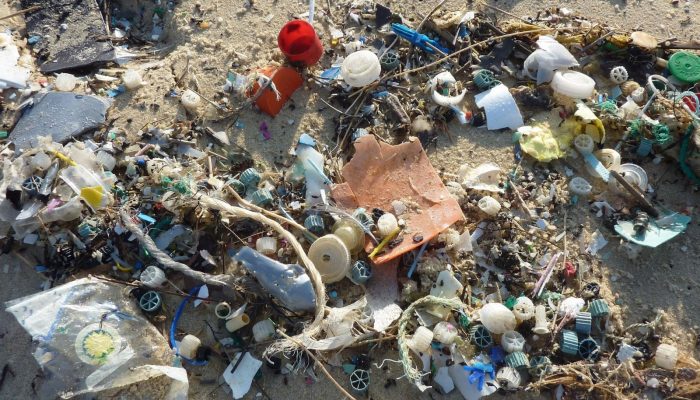
GeoTalk: Investigating the transport of plastic pollution in the oceans
Geotalk is a regular feature highlighting early career researchers and their work. In this interview we speak to Erik van Sebille, an oceanographer at the Grantham Institute at Imperial Collage London, and winner of the 2016 OS Outstanding Young Scientist Award. As an expert in understanding how oceans transport all kinds of materials, from water and heat through to plastics, Erik has gained detai ...[Read More]
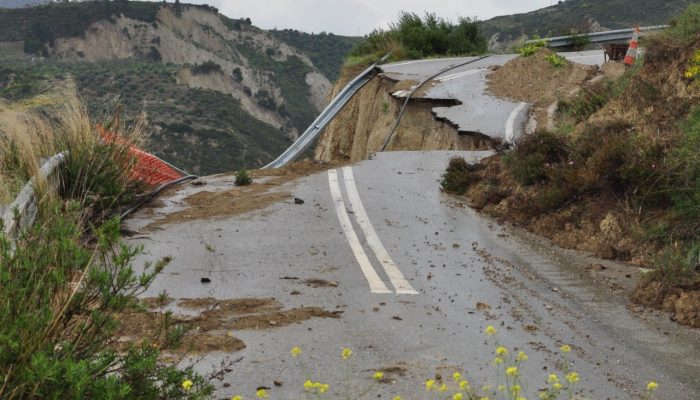
Imaggeo on Mondays: The road to nowhere – natural hazards in the Peloponnese
The Gulf of Corinth, in southern Greece, separates the Peloponnese peninsula from the continental mainland. The structural geology of the region is complex, largely defined by the subduction of the African Plate below the Eurasian Plate (a little to the south). The Gulf itself is an active extensional marine basin, i.e., one that is pulling open and where sediments accumulate. Sedimentary basins r ...[Read More]
What is in your field rucksack? Camping in Iceland
Inspired by a post on Lifehacker on what your average geologist carries in their rucksack/backpack, we’ve put together a few blog posts showcasing what a range of our EGU members carry in their bags whilst in the field! Beautiful, eyrie, the land where fire meets ice: Iceland. An Earth scientist’ dream, complete with lava, volcanoes, earthquakes, impossible landscapes, ice, snow, the ocean…Iceland ...[Read More]