GeoLog

GeoLog

Imaggeo on Mondays: In the belly of the beast

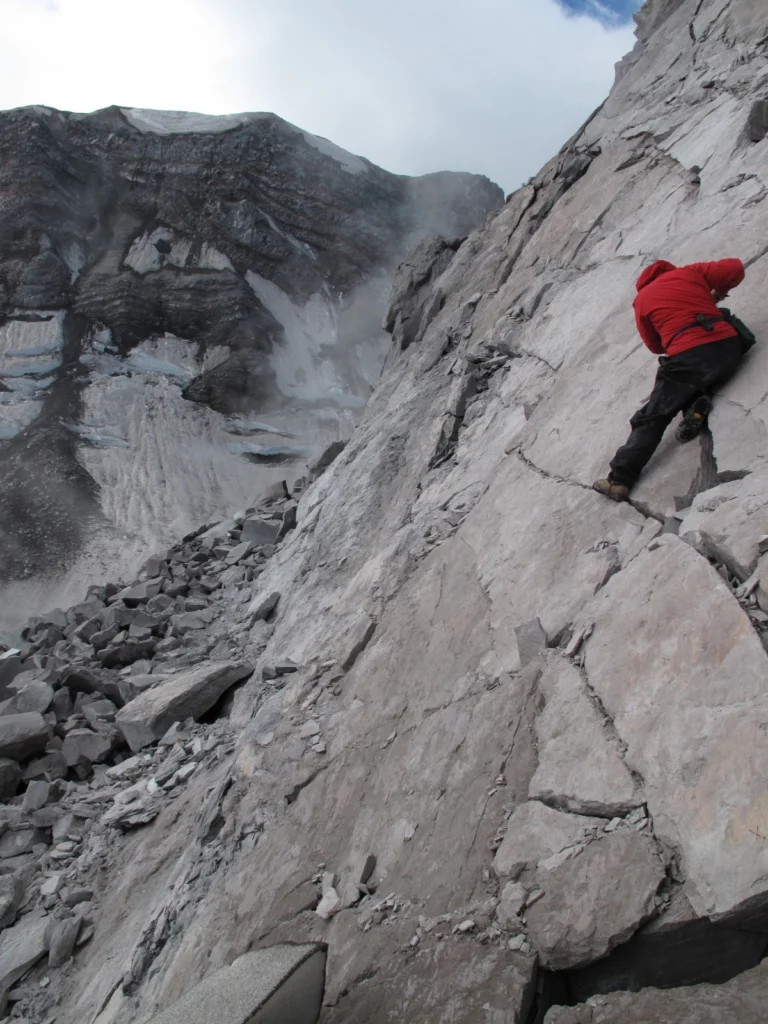
Conducting research inside a volcanic crater is a pretty amazing scientific opportunity, but calling that crater home for a week might just be a volcanologist’s dream come true, as Alexandra postdoctoral researcher at the Institut de Physique du Globe de Strasbourg, describes in this week’s Imaggeo on Mondays. This picture was taken from inside the crater of Mount St Helens, a stratovolcano ...[Read More]

Union-wide events at EGU 2017

Union-wide events at EGU 2017

Wondering what to expect at the General Assembly this year? Here are some of the highlights: Union Symposia (US) For events which will have general appeal, regardless of your field of research, look no further than the Union Symposia.  In particular, if you want to stand up for science at a time when (some) politics seems at odds with science, come along to Union Symposia 3, Make Facts Great Again ...[Read More]

Marching for Science in Vienna

On 22 April, Earth Day and the day before the start of the EGU General Assembly, scientists and science enthusiasts across the globe will be marching to celebrate science and to call for the safeguarding of its future. While the main march is taking place in Washington D.C. in the US, there are hundreds of satellite marches happening around the world, including in Vienna. Representatives of both t ...[Read More]

Knowing the ocean’s twists and turns

Knowing the ocean’s twists and turns

Navigating the ocean demands a knowledge of its movements. In the past, sailors have used this knowledge to their advantage, following the winds and the ocean currents to bring them on their way. Prior to mutiny in 1789, Captain Bligh – on the HMS Bounty – famously spent a month attempting to pass westward through the Drake Passage, around Patagonia’s Cape Horn. Here the westerly ...[Read More]

Imaggeo on Mondays: Atmospheric gravity waves

Imaggeo on Mondays: Atmospheric gravity waves

From the tiny vibrations which travel through air, allowing us to hear music, to the mighty waves which traverse oceans and the powerful oscillations which shake the ground back and forth during an earthquake, waves are an intrinsic part of the world around us. As particles vibrate repeatedly, they create an oscillation, which when accompanied by the transfer of energy, creates a wave.  The way in ...[Read More]

GeoTalk: How are clouds born?

GeoTalk: How are clouds born?

Geotalk is a regular feature highlighting early career researchers and their work. In this interview we speak to Federico Bianchi, a researcher based at University of Helsinki, working on understanding how clouds are born. Federico’s quest to find out has taken him from laboratory experiments at CERN, through to the high peaks of the Alps and to the clean air of the Himalayan mountains. His innova ...[Read More]

EGU 2017: Getting to Vienna, getting to sleep and getting to know the city

EGU 2017: Getting to Vienna, getting to sleep and getting to know the city

With the conference only a few weeks away here is a brief, and by no means comprehensive, introduction of how to get to Vienna and what to do when you’re there! Getting here Vienna’s International Airport is served by many of the major European airlines. If you would like to consider overland you’ll find more information on the General Assembly website. And, if you haven’t seen it already, make su ...[Read More]

Geosciences Column: The dangers of an enigmatic glacier in the Karakoram

Geosciences Column: The dangers of an enigmatic glacier in the Karakoram

Nestled among the high peaks of the Karakoram,  in a difficult to reach region of China, lies Kyagar Glacier. It’s trident-like shape climbs from 4800 to 7000 meters above sea level and is made up of three upper glacier tributaries which converge to form an 8 km long glacier tongue. Until recently, it’s remoteness meant that studying its behaviour relied heavily on the acquisition of data by satel ...[Read More]