
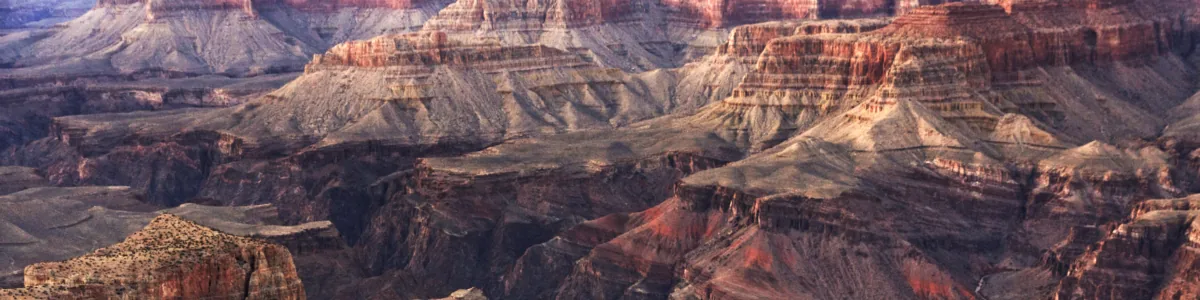
This week’s Imaggeo on Mondays is brought to you by Robert Wills, a Caltech Ph.D. student studying how mountain ranges help set the global pattern of rainfall and how these rainfall patterns affect the erosional evolution of mountain ranges. Robert is also an avid photographer who particularly enjoys nature photography in the American Southwest. This …[Read More]
Imaggeo
Imaggeo on Mondays: Volcanic Zones and Colourful Stones
This week’s Imaggeo on Mondays is Written by Yiming Wang, a paleoceanographer and paleolimnologist and keen photographer from the University of Kiel, Germany… Námafjall is a high temperature geothermal area by Lake Myvatn in northeastern Iceland, which known for its sulphurous mud springs. My fascination of Iceland began during a fieldwork expedition in March 2004 …[Read More]
Imaggeo on Mondays: Great Glacial Folds
Whether you’re climbing, hiking or caving, it’s hard to ignore the geology around you. For keen climber and environmental geoscientist Ivan Bour, a trip to the French Alps is no exception… I’ve practiced mountain climbing for a dozen years. During my ascents, I seek geomorphological and geological peculiarities. Very often, I associate my profession as …[Read More]
Imaggeo on Mondays: Stars in the Sand
This week’s Imaggeo on Mondays is brought to you by the photographer herself, Jana Eichel, who tells us about her expedition to the Mingsha Mountains and the stunning aeolian landforms that characterise the landscape. This photo was taken during a journey through Asia in spring 2012, which took me across Bangladesh, India and Nepal through …[Read More]
Imaggeo on Mondays: Spying on the Arctic
This week’s Imaggeo on Mondays is brought to you by the photographer himself, Fabien Darrouzet who captured the beautiful glacial landscape during a summer expedition to the Arctic. This picture was taken in Svalbard (78° lat.) in June 2012. I was there for one week in order to observe the transit of the planet Venus in …[Read More]
Imaggeo on Mondays: The Chalk Cliffs of Étretat
Étretat is a coastal region in northern France, well known for its stunning geological landscape. Particularly the headland you see here. Headland erosion is perhaps one of the best known processes in coastal erosion, where a crack in the headland is opened and enlarged by hydraulic abrasion. Continued wave action causes the widened crack or …[Read More]
Imaggeo on Mondays: Explosions in the Sky
Suwanosejima, which lies within the Ryukyu Islands, is one of Japan’s most active volcanoes, erupting almost continuously between the 1950s and mid 1990s. It has two active craters, the central Otake crater and the Bunka crater, to the southwest. While the frequency of these eruptions has declined, the volcano remains active, with strombolian and vulcanian …[Read More]
Imaggeo on Mondays: cutting through a slice of geological cake
Nothing captures beauty of Arizona’s landscape better than the Grand Canyon and its steeply-sided cliffs that have been carved by the Colorado River. This photo by Lukas Hoertnagl shows this stunning landscape as seen from Lipan Point in the Grand Canyon National Park. The early geological history of America is preserved in the strata that make …[Read More]
Winners of the Imaggeo Photo Competition Announced!
Congratulations to Philipp Stadler, Yiming Wang and Eva van Gorsel, winners of this year’s Imaggeo photo competition! Imageo photos are distributed by EGU under a Creative Commons licence and are available in Imaggeo, the EGU’s online open access geosciences image repository. All geoscientists (and others) can submit their images to this repository and since it is open access, these photos …[Read More]
Photo finalists! Do you have a favourite?
The selection committee received close to 200 photos for this year’s EGU Photo Competition, covering fields across the geosciences. The stunning finalist photos are below and they are being exhibited in Hall X (basement, Blue Level) of the Austria Center Vienna, where you will also find voting terminals. Do you have a favourite? Vote for …[Read More]