GeoLog

Geochemistry, Mineralogy, Petrology & Volcanology

Imaggeo on Mondays: Mount Elgon, a balance between fertility and destruction
Imaggeo on Mondays: Mount Elgon, a balance between fertility and destruction
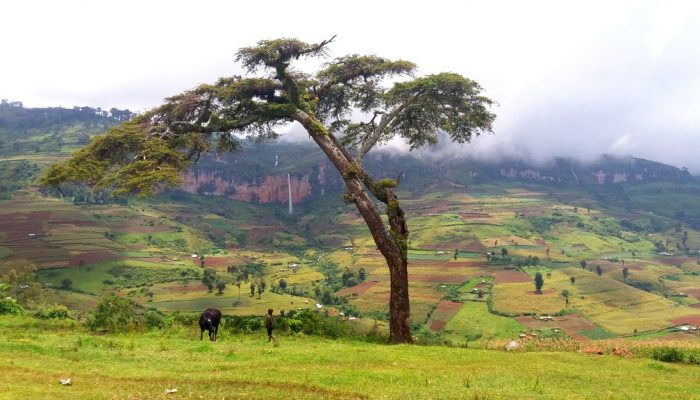
This colourful cropland patchwork is located on the fertile flanks of Mount Elgon, Uganda at an elevation of 2,400 metres above sea level. The extinct shield volcano, the oldest in East Africa, is mostly covered in clouds and provides an infinite flow of wonderful waterfalls. Due to the climate at this elevation, the cultivated crops experience more temperate weather conditions compared to crops m ...[Read More]

GeoTalk: How will large Icelandic eruptions affect us and our environment?

GeoTalk: How will large Icelandic eruptions affect us and our environment?

Geotalk is a regular feature highlighting early career researchers and their work. In this interview we speak to Anja Schmidt, an interdisciplinary researcher at the University of Cambridge who draws from atmospheric science, climate modelling, and volcanology to better understand the environmental impact of volcanic eruptions. She is also the winner of a 2018 Arne Richter Award for Outstanding Ea ...[Read More]

Imaggeo on Mondays: Chilean relics of Earth’s past

Imaggeo on Mondays: Chilean relics of Earth’s past

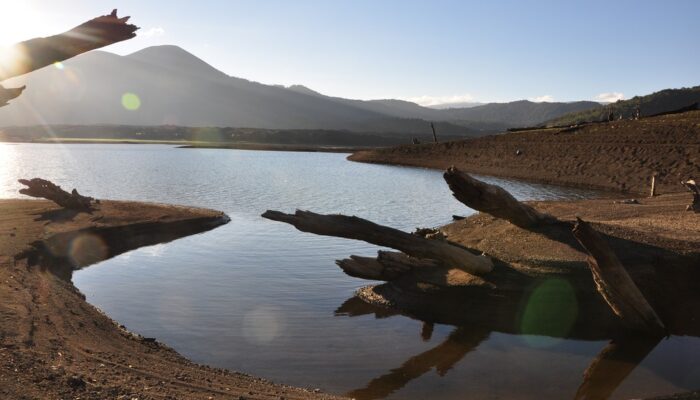
As Earth’s environment changes, it leaves behind clues used by scientists to paint portraits of the past: scorched timber, water-weathered shores, hardened lava flows. Chile’s Conguillío National Park is teeming with these kind of geologic artifacts; some are only a few years old while others have existed for more than 30 million years. The photographer Anita Di Chiara, a researcher at Lancaster U ...[Read More]

Imaggeo on Mondays: Snow folded by advancing lava

Imaggeo on Mondays: Snow folded by advancing lava

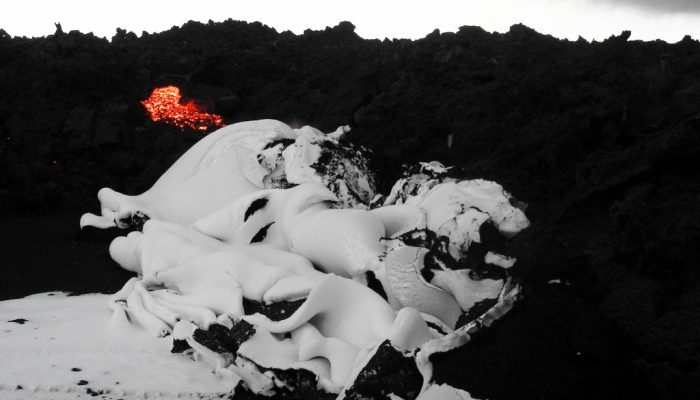
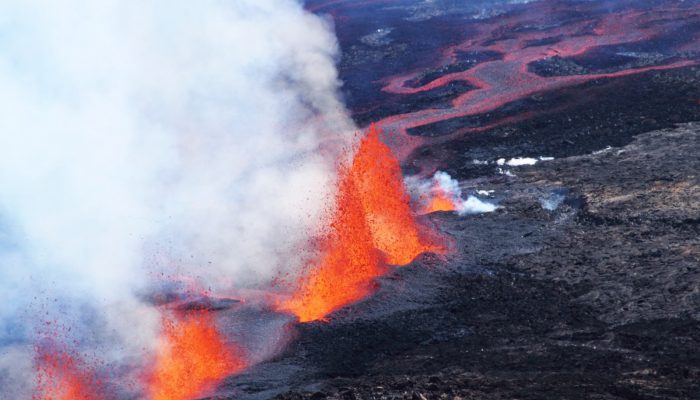
The photograph shows the interaction of the first snow and an active lava flow during the 2014 / 2015 Holuhraun eruption in Iceland. The first snow fell onto a ground covered by fine black ash on 26 September 2014. While the meter thick lava flow advanced a few meters per day, it neither melted the snow nor flowed on top of it. Instead, it pushed a layer of centimetre-thick snow and millimetre-thi ...[Read More]

Imaggeo on Mondays: The best of imaggeo in 2017

Imaggeo on Mondays: The best of imaggeo in 2017

Imaggeo, our open access image repository, is packed with beautiful images showcasing the best of the Earth, space and planetary sciences. Throughout the year we use the photographs submitted to the repository to illustrate our social media and blog posts. For the past few years we’ve celebrated the end of the year by rounding-up some of the best Imaggeo images. But it’s no easy task to pick which ...[Read More]

MinCup: Elevating humble minerals to new heights

MinCup: Elevating humble minerals to new heights

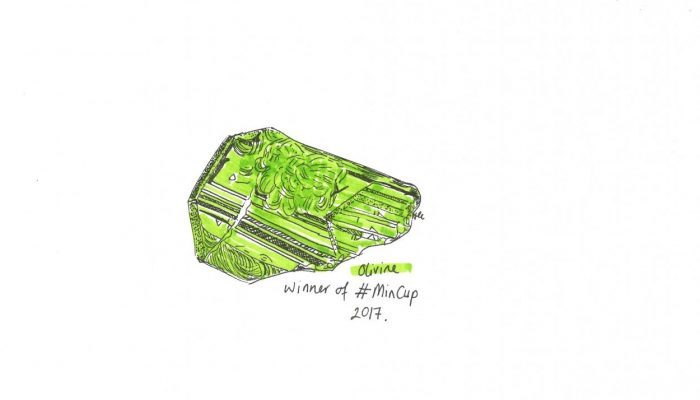
Throughout October and November, the world of (Earth science) Twitter was taken by storm: Day after day, Eddie Dempsey (a lecturer at the University of Hull, and @Tectonictweets for those of you more familair with his Twitter handle) pitted minerals against each other, in a knock out style popular contest. The aim? To see which mineral would eventually be crowned the best of 2017. Who knew fiery ( ...[Read More]

Imaggeo on Mondays: Smoking mountain top

Imaggeo on Mondays: Smoking mountain top

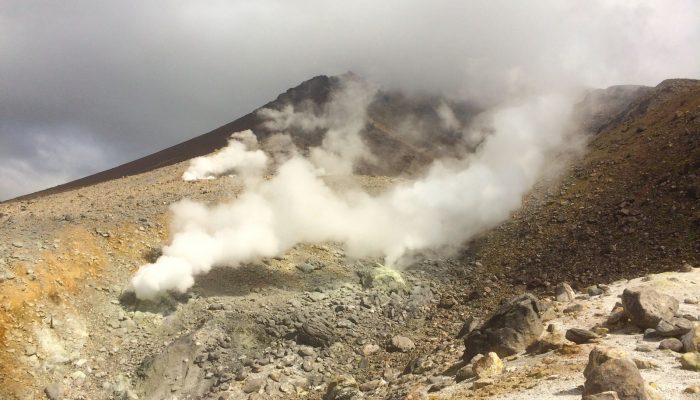
Japan’s northernmost, second largest and least developed island, Hokkaido, is famous for its unspoilt nature. Harsh, cold and snowy winters make way for pleasant summers, which allow tourists and locals to enjoy a variety of outdoor activities, year-round, in the island’s six protected areas. The largest of the natural parks is Daisetsuzan: known for it’s wilderness and volcanoes. It is formed by ...[Read More]

Imaggeo on Mondays: A spectacular view of moss-covered rocks

Imaggeo on Mondays: A spectacular view of moss-covered rocks

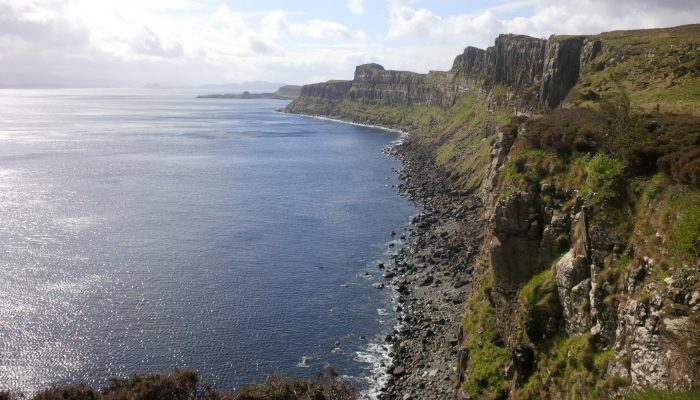
Geology has shaped the rugged landscape of the Isle of Skye – the largest island of Scotland’s Inner Hebrides archipelago. From the very old Precambrian rocks (approximately 2.8 billion years old) in the south of the island, through to the mighty glaciers which covered much of Scotland as recently as 14,700 years ago, the modestly-sized island provides a snap-shot through Earth’s dynamic his ...[Read More]

October GeoRoundUp: the best of the Earth sciences from around the web

Display "Following Carbon Dioxide Through the Atmosphere" from YouTube Click here to display content from YouTube. Learn more in YouTube’s privacy policy (opens in a new tab). Please enable JavaScript in your browser to load this content. Always display content from YouTube Open "Following Carbon Dioxide Through the Atmosphere" directly Carbon dioxide plays a significant role i ...[Read More]

GeoTalk: Hellishly hot period contributed to one of the most catastrophic mass extinctions of Earth’s history

GeoTalk: Hellishly hot period contributed to one of the most catastrophic mass extinctions of Earth’s history

Geotalk is a regular feature highlighting early career researchers and their work. Following the EGU General Assembly, we spoke to Yadong Sun, the winner of a 2017 Arne Richter Award for Outstanding Early Career Scientists, about his work on understanding mass-extinctions. Using a unique combination of sedimentological, palaeontological and geochemical techniques Yadong was able to identify some o ...[Read More]