The European Geosciences Union isn’t all about the General Assembly, but delivers opportunities to learn, develop and network all year long! With many driven and developed by our volunteers in our committees and working groups, our initiatives cover a breadth of topics and formats, including training, funding, and more. The list below covers just some of the Union’s higlights this summ ...[Read More]
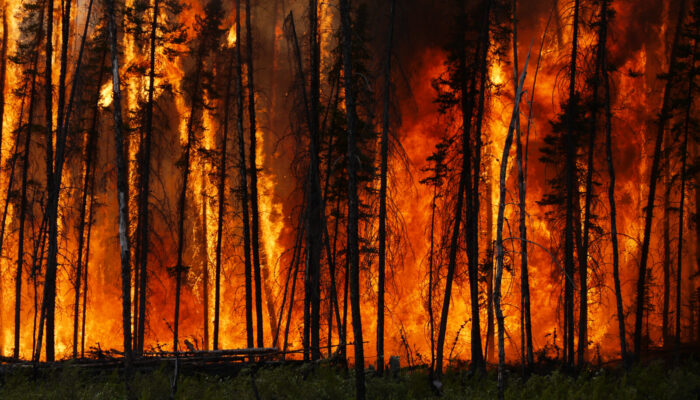
A trial by fire: Can we learn how to read a burning planet?
I grew up watching my dad come home covered in soot. For most of his life, he worked as a firefighter in a natural reserve in Galicia, in northern Spain, a region of green mountains and steep terrain, almost Lord of the Rings in its landscape, but also a place where fire moves quickly and is notoriously difficult to control. Firefighting crews there are used to the fact that, to even begin work, t ...[Read More]
Mind your mind: surviving the conference rollercoaster
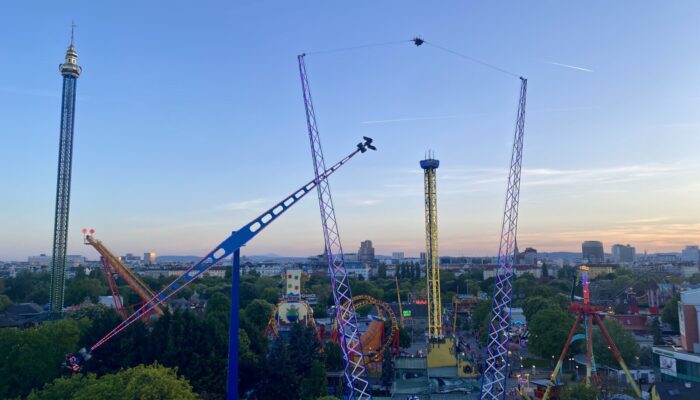
If you’ve ever been to Vienna’s Prater, you might know the ride. I can see it from my hotel window while I am getting dressed to head to the Austria Center Vienna for EGU26. It’s essentially a long, slightly questionable-looking couch, strapped on either side to cables that behave less like cables and more like very enthusiastic elastic bands. One flick of a switch and suddenly — whoooosh! you’r ...[Read More]
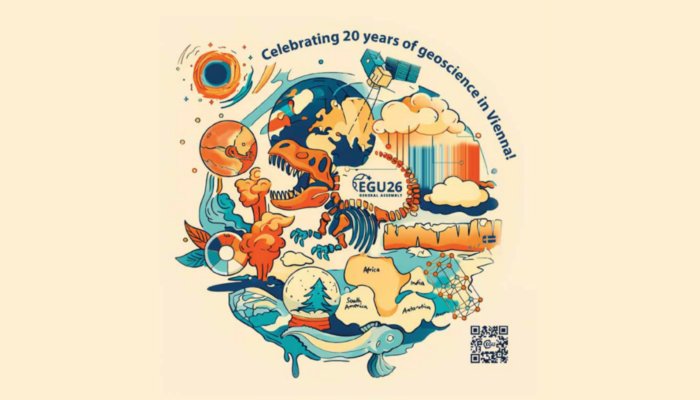
Celebrating 20 years of geoscience in Vienna with EGU!
One of our key services (and the way that many people know our organisation) is through our annual General Assembly – a meeting of around 20,000 researchers that is held in Vienna, Austria, and online in each spring. This meeting is a critical event for our community, a place for scientists to get new ideas and come together to discuss their work, plans and struggles, in a world that is increasing ...[Read More]
A hikers’ guide to the EGU General Assembly
How to navigate through the vast and seemingly complicated landscapes of the EGU26.
Entered into the EGU26 Outstanding Student and PhD-candidate Presentation (OSPP) competition? Check these top tips from former winners and judges!
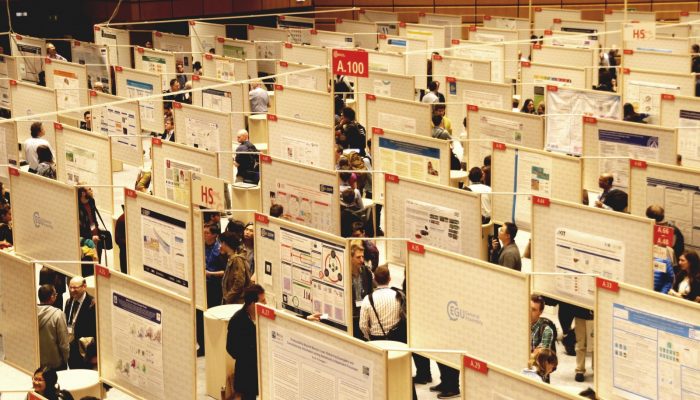
Every year at the General Assembly hundreds of students and PhD candidates present their research with a lot of time and effort going into preparing these presentations. With the aim to further improve the overall quality of poster presentations and more importantly, to encourage Early Career Scientists to present their work in the form of a poster, the Outstanding Student Presentations, or OSP Aw ...[Read More]
Communicating uncertainty to non-experts: A good problem to tackle
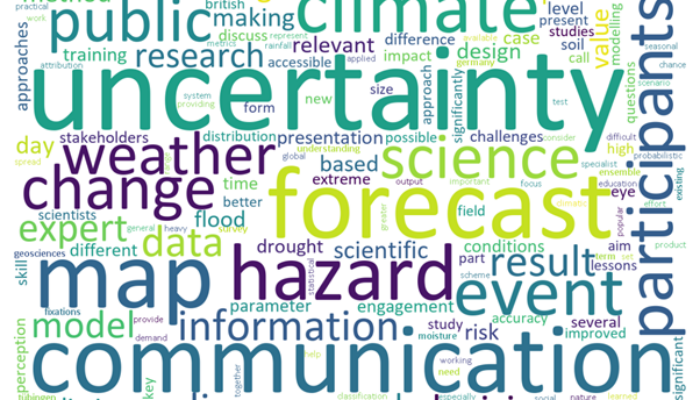
Uncertainty in geosciences is an inherent part of scientific processes and assessments, propagating throughout the entire workflow (Pérez-Díaz et al., 2020). As scientists, we are used to seeing error bars, confidence intervals, or statistical indicators that tell us how robust our models or measurements are (Padilla et al., 2021). The challenge arises when we need to communicate these scientific ...[Read More]
GeoTalk: meet Stefanie Kaboth Bahr, your new Early Career Scientist Union Representative!
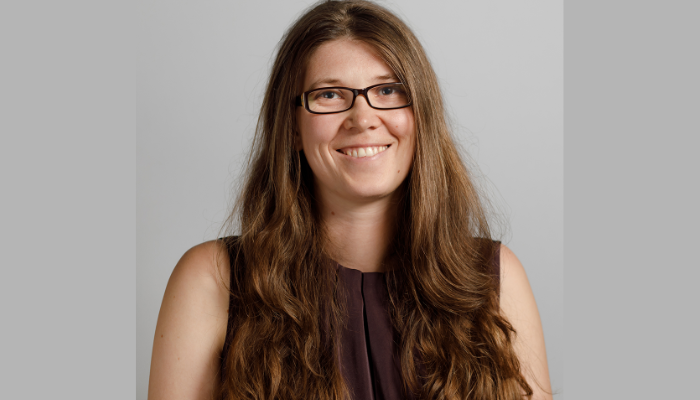
Hello Stef. Thank you for agreeing to this interview! Before we delve deeper, could you tell our readers about yourself and your background in palaeoclimatology? Thank you for having me! I’m a Junior Professor of Palaeoclimatology at Freie Universität Berlin, a position I’ve been fortunate to hold since 2023. My academic journey began with a PhD in Paleoclimatology from Utrecht University in the N ...[Read More]
Fieldwork maze: where are we and where are we going?
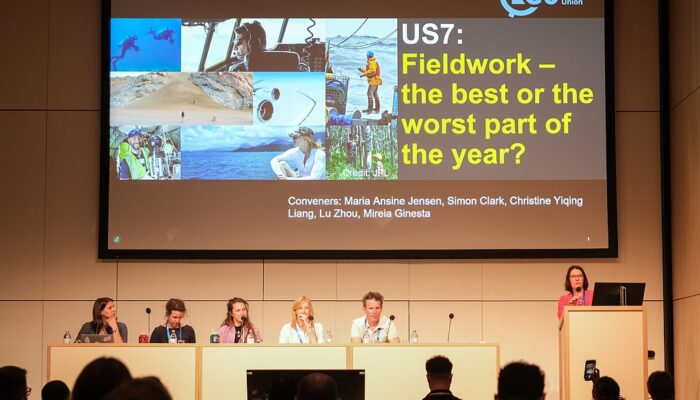
Bracing the elements to be rewarded with new data — and spectacular views in the process — can be an experience of a lifetime. Yet, zooming out of the easily romanticized image can quickly paint a different scene, where negative experiences from fieldwork drive people away from the research. Moreover, some fieldwork practices prevent people from participating in the first place. Shedding a spotlig ...[Read More]
Get our top Outstanding Student and PhD-candidate Presentation (OSPP) tips for EGU25, from previous winners and judges!
Every year at the General Assembly hundreds of students present their research with a lot of time and effort going into preparing these presentations. With the aim to further improve the overall quality of poster presentations and more importantly, to encourage Early Career Scientists to present their work in the form of a poster, the OSP Awards (as they were formerly known), were born. Since the ...[Read More]