GeoLog

EGU Scientific Divisions

Imaggeo on Mondays: A dramatic avalanche from Annapurna South

Imaggeo on Mondays: A dramatic avalanche from Annapurna South

The Annapurna massif is located in an imposing 55 km long collection of peaks in the Himalayas, which behave as a single structural block. Composed of one peak (Annapurna I Main) in excess of 8000 m, a further thirteen peaks over 7000 m and sixteen more of over 6000 m, the massif forms a striking structure within the Himalayas. Annapurna South (pictured in today’s featured image), the 101st talles ...[Read More]

Volcanic ash layers in Svalbard hold clues to the formation of the North Atlantic

Volcanic ash layers in Svalbard hold clues to the formation of the North Atlantic

This guest post by Dr Morgan Jones (a Researcher in Volcanology at the Centre of Earth Evolution and Dynamics (CEED) at the University of Oslo, Norway) describes the latest findings of his multidisciplinary research into how the North Atlantic formed. His open access study, in collaboration with colleagues at CEED and the Massachusetts Institute of Technology (MIT) is published in the Nature Journ ...[Read More]

Imaggeo on Mondays: Symbiosis of ice and water

Imaggeo on Mondays: Symbiosis of ice and water

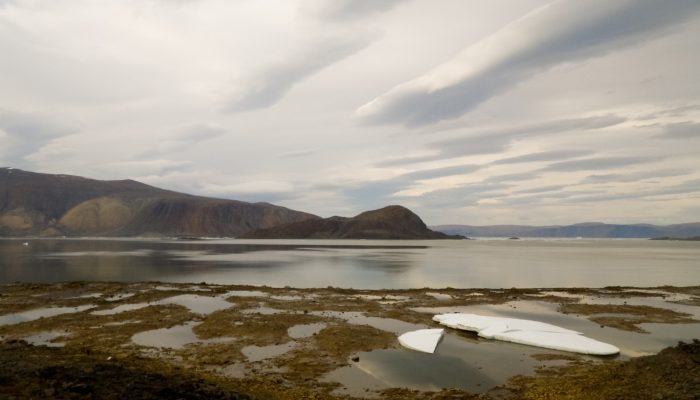
This mesmerising photograph is another of the fabulous finalists (and winner) of the 2017 imaggeo photo contest. Imaggeo is the EGU’s open access image repository. It’s a great place to showcase your photographs; so whether you are stuck in the lab this summer, frantically typing away at a paper, or are lucky enough to be in the field, be sure to submit your photographs for all EGU members to see. ...[Read More]

Imaggeo on Mondays: Nor’Wester in the Southern Alps of New Zealand

Imaggeo on Mondays: Nor’Wester in the Southern Alps of New Zealand

Stephan Winkler’s 2017 Imaggeo Photo Contest finalist photo showcases an unusual weather phenomenon… The image shows a typical weather situation in the Southern Alps of New Zealand with a moist, westerly airflow pushing over the Main Divide [which separates the water catchments of the more heavily populated eastern side of the island from those on the west coast] to create a typical foehn wind [dr ...[Read More]