GeoLog

Climate: Past, Present & Future

Imaggeo on Mondays: A single beam in the dancing night lights
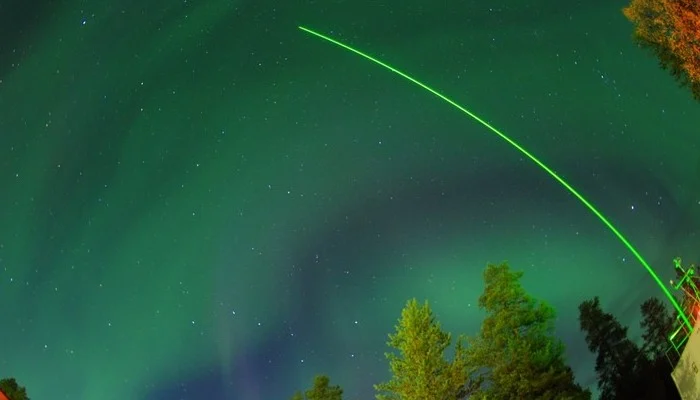
Imaggeo on Mondays: A single beam in the dancing night lights
Research takes Earth scientists to the four corners of globe. So, if you happen to have a keen interest in photography and find yourself doing research at high latitudes, chances are you’ll get lucky and photograph the dancing night lights: aurora (or northern lights), arguably one of the planet’s most breath taking natural phenomenon. That is exactly the position Matias Takala, a researcher at th ...[Read More]

GeoEd: Citizen Geoscience

GeoEd: Citizen Geoscience

In this month’s GeoEd column, Sam Illingworth tells us about the growing use of Citizen Science within research as a means of acquiring data. Whilst the practice is novel and offers exciting opportunities as to volumes of data collected Sam highlights the importance of appropriately crediting the work of the willing volunteers. Citizen Science is a phrase that is currently de rigour in scientific ...[Read More]

Geosciences Column: Is it possible to quantify the effect of natural emissions on climate?

Geosciences Column: Is it possible to quantify the effect of natural emissions on climate?

The air we breathe is full of tiny particles that can have a big impact on our climate. Industrial activities have greatly increased the number of these particles, cooling the climate and potentially offsetting some of the warming due to greenhouse gases. In this post Kirsty Pringle introduces new research that suggests that it might not be possible to quantify the effect of industrial emissions o ...[Read More]

The known unknowns: Climate, Life, and the Solid Earth (Part V)

After four fascinating instalments in the known unknowns series we have (sadly) come to the final post. Since the series began in September we have explored the top questions that still remain unanswered when it comes to understanding the inner workings of the planet as well as how the interplay of a number of systems that occur at the Earth’s surface give rise to its varied landscapes. The series ...[Read More]

Geosciences Column: Adapting to acidification, scientists add another piece to the puzzle

In the latest Geosciences Column Sara Mynott sheds light on recent research into how ocean acidification is affecting the California Current Large Marine Ecosystem. The findings, published in Biogeosciences, reveal large differences between the abilities of different animals to adapt and highlight the urgent need to understand the way a greater suite of species are responding… Large Marine Ecosyst ...[Read More]

Imaggeo on Mondays: Trapped air

Can you imagine walking into the depths of an icy, white, long and cavernous channel within a thick glacier? That is exactly what Kay Helfricht did in 2012 to obtain this week’s Imaggeo on Mondays photograph. Tellbreen Glacier is a small glacier (3.5Km long) in the vicinity of the Longyearbyen valley in the Svalbard region of Norway. Despite its limited size, it is an important glacier. One of the ...[Read More]

GeoCinema Online: Our changing Climate

Welcome to the third instalment of Geocinema! The focus this week is on climate change and how it impacts on local communities. Sit back, relax and make sure you’ve got a big bucket of popcorn on the go, as this post features a selection of short documentaries as well as trailers of feature length films. Documenting the effects of the warming conditions on the surface of our planet is the primary ...[Read More]

Imaggeo on Mondays: A massive slump

One of the regions that has experienced most warming over the second half of the 20th century is the Potter Peninsula on King George Island in Antartica. It is here that Marc Oliva and his collaborators are studying what the effects of the warming conditions on the geomorphological processes prevailing in these environments. “Permafrost is present almost down to sea level in the South Shetland Isl ...[Read More]

GeoCinema Online: The Geological Storage of CO2

 Welcome to week two of GeoCinema Screenings! In a time when we can’t escape the fact that anthropogenic emissions are contributing to the warming of the Earth, we must explore all the options to reduce the impact of releasing greenhouse gases into the atmosphere. The three films this week tackle the challenge of separating CO2 from other emissions and then storing it in geological formations deep ...[Read More]

Geosciences Column: The Toba eruption probably did have a global effect after all

Almost everyone has heard of the Toba super-eruption, which took place on the island of Sumatra roughly 74,000 years ago, but the only evidence of tephra or tuff (volcanic fragments) from the eruption is in Asia, with nothing definite further afield. It has sometimes been thought that this huge eruption may have led to a volcanic winter, a period of at least several years of low temperatures follo ...[Read More]