GeoLog

Atmospheric Sciences

Imaggeo On Monday: Catching a glimpse of the Mesosphere

Imaggeo On Monday: Catching a glimpse of the Mesosphere

In the midst of summer when the sun does not set at high latitudes one can sometimes catch a glimpse of the mesosphere shortly after sunset or before sunrise. These thin veils, known as noctilucent clouds, are the highest known cloud-like structures forming at about 80km above the surface. At this height, they are still lit by the sun and can be seen from lower latitudes many hundreds of kilometer ...[Read More]

Cyclone Idai disaster: European agencies foresee climate danger but poor countries stumble.

Cyclone Idai disaster: European agencies foresee climate danger but poor countries stumble.

Cyclone Idai, which was labelled by the UN as possibly the worst climate calamity to ever hit the Southern Hemisphere, pounded Beira, Mozambique, in March 2019. The European Space Agency images revealed that a huge new inland ´lake´ measuring about 80 miles by 15 miles, an area the size of the European state of Luxembourg, had suddenly been created by  the catastrophe. However, millions of residen ...[Read More]

Imaggeo On Monday: “Smoking” peaks of the Patagonian batholith

Imaggeo On Monday: “Smoking” peaks of the Patagonian batholith

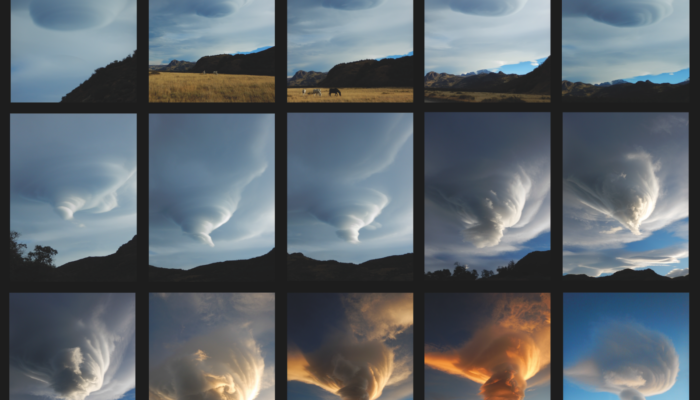
The indigenous name of the 3405 meter high Fitz Roy mountain in Patagonia, on the border between Argentina and Chile, is frequently translated as “smoking mountain”. This photo may visually explain an origin of this name. On the day the photo was taken, vortices downwind of the peak drew warmer, humid air from below, forming banner clouds at the leeward site of the Fitz Roy mountain an ...[Read More]

Imaggeo On Monday: The sudden stratospheric warming on February 12, 2018

Imaggeo On Monday: The sudden stratospheric warming on February 12, 2018

The image captures an atmospheric extreme event, a so-called sudden stratospheric warming (SSW) that occurred on Feb. 12, 2018. It is visualized through potential vorticity above the North Pole at the 10hPa level (~30km) above the Earth’s surface and consists of a split of the winter polar vortex into two separate vortices that interact with each other. Although the events are not predictable more ...[Read More]