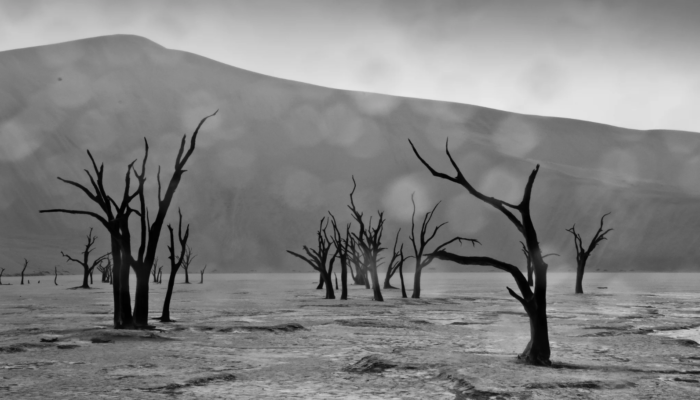
Pictured here is the arid Namib Desert on a not-so-arid day. The desert is known for its extremely dry conditions and abundance of sunshine, but this photo, taken by Christoph Schmidt, chair of geomorphology at the University of Bayreuth in Germany, gives us a rare glimpse of a rainy day. The Namib Desert spans about 81,000 square kilometres in southwest Africa, stretching throughout the entire co ...[Read More]
Imaggeo on Mondays: Setting trees aflame to understand the carbon balance of fires
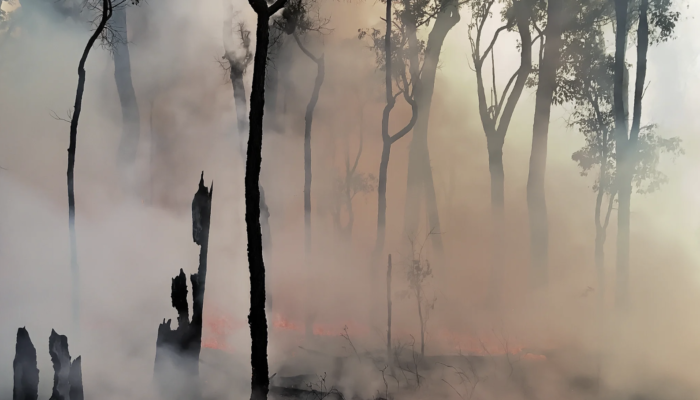
Smoke clears after an experimental wildfire in Australian eucalyptus forest carried out for carbon balance estimations of wildfires. We meticulously measured the carbon in all leaves, twigs, logs and bark in a forest block about 35km east of Manjimup and then they set it on fire with help from the Dept. of Parks and Wildlife, [Western Australia]. We the counted the carbon all over again including ...[Read More]
Mentoring programme at EGU 2020
With more than 16,000 participants, 5,500 oral presentations, 9,400 posters and 1,200 PICO presentations, all under one roof, the EGU General Assembly can be an overwhelming experience. There is a network of corridors to navigate, as well as a wide range of workshops, splinter and townhall meetings to choose from. With that in mind, we’ve put in place some initiatives to make the experience of tho ...[Read More]
The road to a greener General Assembly
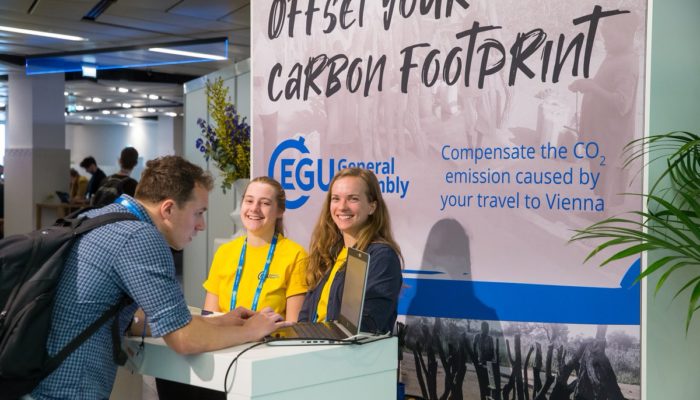
Each spring thousands of geoscientists from more than 100 countries make their way to Vienna for the EGU General Assembly. Major conferences like this offer researchers many opportunities to advance their careers: from gaining research inspiration and learning new skills to sharing ideas and networking with peers. But participant travel to and within Vienna, plus their accommodation, food and drin ...[Read More]
Imaggeo on Mondays: Mount Bromo – volcanic deity
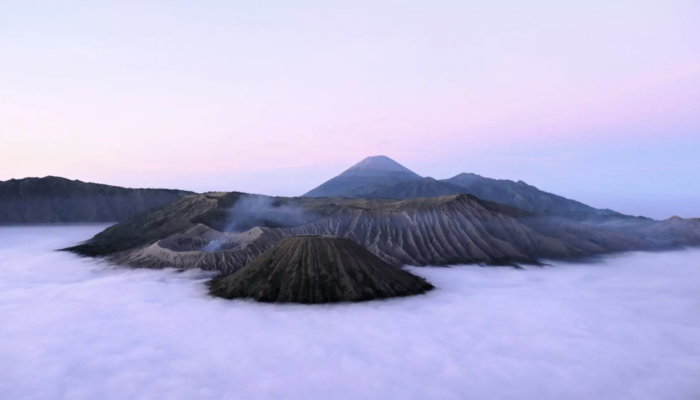
Featured in this photo, rising out from a sea of violet fog at dawn, is one of Indonesia’s most iconic volcanoes, Mount Bromo. The mountain is a large volcanic crater, also known as a caldera, which formed when an ancient cone volcano collapsed in the late Pleistocene and early Holocene epochs, between 126,000 and 8,300 years ago. The current structure stands at 2,392 metres in the eastern region ...[Read More]
Imaggeo on Mondays: Journey to Bolivia’s Laguna Negra
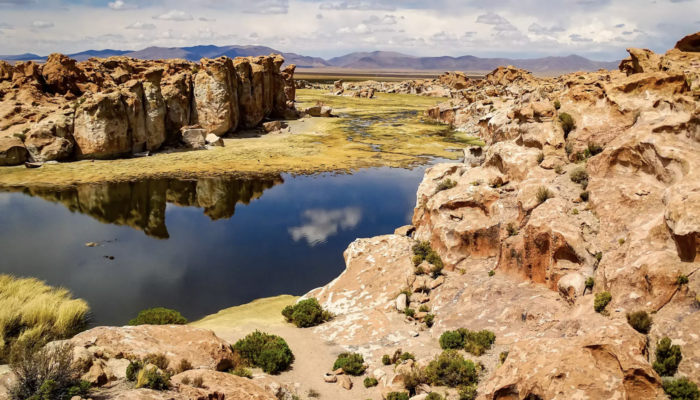
This week’s featured photo showcases one of the most geologically diverse landscapes of South America: the Altiplano, the high plateau of the Andes. This plateau covers roughly 200,000 square kilometres in central South America, stretching from southern Peru to northern Argentina. The high-elevation plain sits between the eastern and western chains of the Central Andes and is home to a myriad of n ...[Read More]
Giving everyone a voice: EGU President on promoting diversity and inclusion at scientific meetings
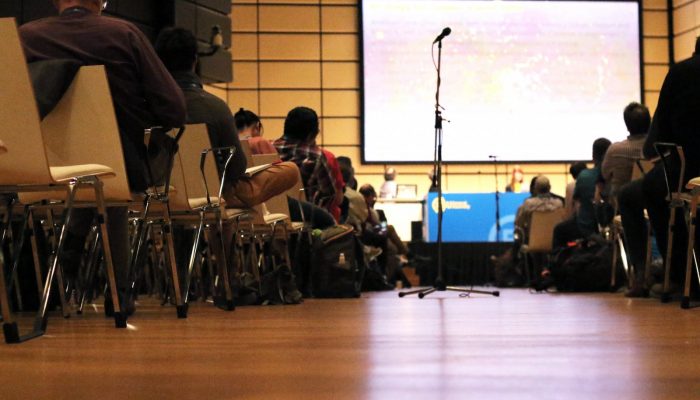
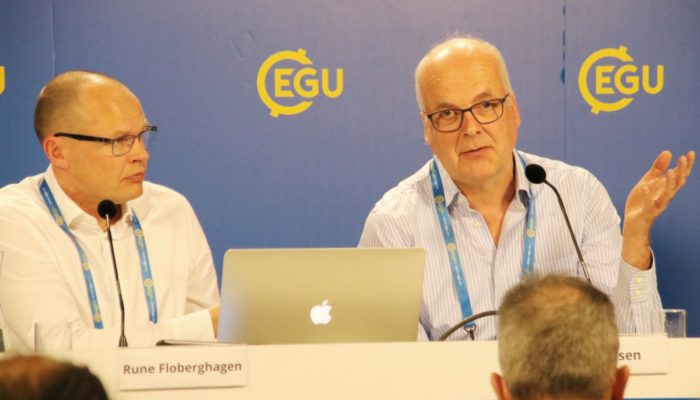
Conferences offer scientists the opportunity to share ideas, collaborate with peers, expand their networks and gain inspiration and fresh perspectives from other researchers and cutting-edge topics. These meetings bring scientists from around the world together for the purpose of advancing science, addressing societal and environmental challenges and strengthening the scientific community. However ...[Read More]
GeoTalk: Introducing EGU’s new Head of Media, Communications and Outreach
GeoTalk interviews usually feature the work of early career researchers, but this month we deviate from the standard format to speak to the newest member of the EGU office, Terri Cook. Terri is an award-winning science and travel writer who has a passion for geology and storytelling. You can find her work featured in a number of news outlets, including Scientific American, New Scientist, Eos, Lone ...[Read More]
Job opportunity at the EGU General Assembly: press assistant
We have several vacancies for science-communication or science-journalism students in Europe to work at the press centre of the 2020 General Assembly, which will be held in Vienna, Austria, from 3–8 May. Applications from geoscience students with experience in science communication are also very welcome. This is a paid opportunity for budding science communicators to gain experience in the working ...[Read More]
EGU Members: have your say on the direction of the Union
The EGU is a member-led organisation with around 20,000 members from all over the world. To promote the Earth, planetary and space sciences, the EGU conducts many activities ranging from publishing open access journals and hosting geoscientific meetings to organising education and outreach initiatives. As EGU’s representatives and staff members, we work hard throughout the year to ensure the Union ...[Read More]