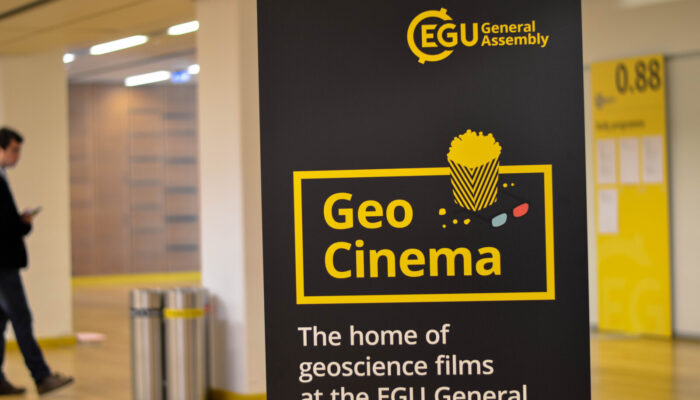
After a big success last year, GeoCinema is back for EGU26! As many of you know, doing science is very rarely just about the research, but also involves sharing that research in several forms and formats. For many talented researchers this means using films. Either working with a film-maker or creating something themselves, several of our EGU26 attendees submitted wonderful films this year, from science in the lab or fantastic spectacles in the field, to producing educational features on the Earth, planetary or space sciences! Selecting films on a first-come-first-served basis that met our criteria and standard of quality, we co-ordinated 14 films that will be screened on-site (and virtually), followed by a short Q&A with the author, and one additional film which can be watched on-demand at any time.
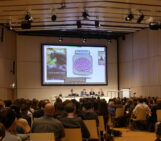
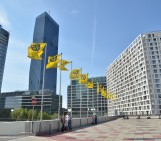
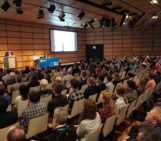
GeoCinema sessions will take place in room E1 at the Austria Center Vienna (ACV) on Monday, Tuesday, Thursday and Friday of the conference week, between 18:00 and 20:00 CEST. The room is equipped with a hybrid set-up, allowing us to live-stream the films to our virtual audience in addition to those on-site in Vienna.
If you can’t wait to get started, why not take a look at the online archive, with films that explore all facets of geoscience from ocean depths to outer space, submitted to GeoCinema in the past.
Read on for a full description for each of our on-site and on-demand films featured in GeoCinema EGU26!
On-site films
The rhythm of the lakes
Mon, 04 May, 18:10–18:20 CEST
Convener: Rodrigo Martinez-Abarca
Divisions: CL, EOS, SSP
Lake sedimentary records are excellent archives of climate system variability. Changes in the climate throughout Earth’s history have been modeled by a variety of drivers interacting over different time scales. In this film, we share the principles of paleolimnology through the versatility of oriental dances. This video illustrates the climate drivers that have shaped the climate during glacial and interglacial periods, as well as their importance in the deposition of lacustrine sediments.
The Paths of Fire
Mon, 04 May, 18:20–18:55 CEST
Convener: Giovan Peyrotty, Nicolas Oestreicher, Charline Lormand
Divisions: EOS, GMPV, GD, TS
This documentary offers an immersive journey into a unique experience carried out in 2024: a group of geoscience students from the University of Geneva travels to Iceland to explore the major natural phenomena that shape this volcanic land. The film follows their scientific expedition through breathtaking landscapes — from vast lava fields and towering glaciers to seismic faults. In the field, the students meet with Icelandic researchers, speak with experts from the Icelandic Meteorological Office, and discover the methods used to monitor volcanoes, which are essential for anticipating natural hazards. Day by day, Iceland becomes a true open-air laboratory. The young scientists collect samples, observe the traces left by past eruptions, and document the ongoing geomorphological transformations. The experience quickly takes on both an academic and deeply human dimension.
Loch Monar – the Highland fold factory
Mon, 04 May, 18:55–19:20 CEST
Convener: Rob Butler
Divisions: TS
Folds are fundamental geological structures that can tell stories of a restless world. This film – shot on location – follows structural geologist Rob Butler as he visits hallowed ground in the history of tectonics. The mission is to examine the spectacular folds on the shore of Loch Monar in the NW Highlands of Scotland. It was here, in the 1950s, that a young John Ramsay developed important ideas for recognising and analysing polyphase deformation. But the outcrops are important for understanding tectonic folds and folding in general and well as being exceptionally beautiful. The film, released in mid 2025, is one of a large number (>250) on earth science curated on The Shear Zone – a channel hosted on YouTube.
Gathered in Darkness
Mon, 04 May, 19:20–19:50 CEST
Convener: Daniel Zietlow, Rebecca Haacker
Divisions: EOS, PS
For thousands of years, total solar eclipses have captivated humanity and they continue to bring communities together to experience these celestial events. They are also great for science and deepening our understanding of our Sun. The CATE 2024 project, funded by the U.S. National Science Foundation (NSF) and led by the Southwest Research Institute and NSF National Center for Atmospheric Research, brought community and professional scientists into partnership to gather data on the solar corona, our Sun’s outermost atmosphere, during the 2024 Total Solar Eclipse in an eclipse relay race. Gathered in Darkness highlights not only the science of CATE 2024, but more importantly perspectives from community participants on total solar eclipses and being involved in a large-scale citizen science project like CATE 2024.
CAESAR: Life on an Arctic Field Project
Mon, 04 May, 19:50–20:00 CEST
Convener: Daniel Zietlow, Rebecca Haacker
Divisions: AS, EOS
Sometimes cold air moves from the poles towards the equator as part of the global circulation of air around our Earth. This is called a cold-air outbreak (CAO) and they are common in mid-to high latitudes during winter. The cold air, when moving over open water, forms unique clouds, and can result in heavy snowfall and strong winds. CAOs remain a mystery because of the many natural processes involved in their creation. CAESAR was an international field campaign to study the structure of marine boundary layer clouds during CAOs in the Sub-Arctic Region. This region is experiencing drastic effects of global warming and sea ice loss, and yet, the connection between high- and mid-latitudes and their effect on global climate is not well understood. CAESAR deployed from Kiruna, Sweden and reached the Arctic sea ice edge using the NSF/NCAR C-130 to track the evolution of the cloudy boundary layer using state-of-the-art instrumentation.
Seas of the Sun: The Cluster Story
Tue, 05 May, 18:10–19:10 CEST
Convener: C.-Philippe Escoubet, Matthew Taylor, Arnaud Masson
Divisions: PS, ST
What began with tragedy ended in triumph. This is the untold story of the European Space Agency’s pioneering 25-year Cluster mission to study how invisible solar storms impact Earth’s environment. Like a ship in a never-ending storm, Earth is bombarded by swarms of particles ejected from the Sun at supersonic speeds. Most of these solar wind particles are deflected by the magnetosphere and sail harmlessly by, but Earth’s shield is not bulletproof. Since 2000, Cluster sailed the seas of the Sun and revealed the complexities of the Sun–Earth connection. After two-and-a-half incredibly successful decades in space, ESA took the decision to safely deorbit the four Cluster satellites throughout 2024–2026. The mission officially ended on 8 September 2024. But a space mission is so much more than science. Experience Cluster’s story as told by the people who lived it. The film also features an original soundtrack by Karlotta Skagfield and additional music by Bruce Dickinson.
The Chronicles of Dudley
Tue, 05 May, 19:10–19:20 CEST
Convener: Barbara Silva, Jonathan Larwood, Lesley Dunlop
Divisions: EOS
GeoAnimations, a 2024 Natural England project led by Dr Jonathan Larwood, Dr Barbara Silva, and Cordelia Spalding, explored how animations can communicate the value of geodiversity in nature. Developed with animators Damn Fine Media, the project stressed collaboration and location-based storytelling. Premiered at the Geological Society’s 2024 Earth’s Canvas conference in London, the films aim to boost public engagement with geodiversity and inspire nature recovery. The Chronicles of Dudley (narrated by Sir Lenny Henry) follows the story of Silurian limestone – a ‘magic ingredient’ in the Industrial Revolution, and the creation of Dudley as we know it today. The narrative is connected to the deep past through tropical limestone fossils still found on the Wren’s Nest National Nature Reserve in the heart of Dudley and the Black Country UNESCO Global Geopark.
Something in the Water
Tue, 05 May, 19:20–19:50 CEST
Convener: Pauline Querella, Kyril Wittouck
Divisions: CR
In the heart of Greenland’s ice sheet, in a little-known region called the “Dark Zone,” a multidisciplinary team of scientists and explorers ventures into a landscape undergoing dramatic transformation. Where ice should reflect light, dark particles accumulate— accelerating the melt. The expedition focuses on supraglacial lakes, mysterious bodies of water that form on the surface of the ice sheet and can drain away in just a few hours. Facing extreme conditions, total isolation, and unexpected storms, the IMAQA expedition documents these invisible yet alarming phenomena. Each data point collected becomes a crucial piece of the puzzle to better understand the upheaval underway. “Something in the Water” is not just another adventure film. It’s a raw immersion into an open-air climate laboratory. Blending cutting-edge science and human adventure, the film highlights both the fragility of our planet and the determination of those striving to understand it—before it’s too late.
Surviving EGU as an introvert
Tue, 05 May, 19:50–20:00 CEST
Convener: Luc Illien
Divisions: EMRP, GM, SM
This episode is about the experience of introverts at international conferences. It is part of a web-series All is Well! (it’s a fiction). This was filmed at EGU25 with other attendees.
Polar Kinships
Thu, 07 May, 18:10–18:30 CEST
Convener: Annukka Pekkarinen
Divisions: EOS
Polar Kinships is a journey between two nomadic sea peoples from the opposite ends of the planet: the Iivi of East Greenland and the Kawésqar of Southern Chile. An ocean voyage in the Arctic brings together those who share an ancient connection with the sea, the wind, and the ice. Aboard the sailing vessel Byr, their worlds meet through gestures, songs and silences that reveal a shared strength: the resilience of those who continue to exist, to remember and to care for their lands and waters. This is a story about belonging, about continuity. This is a story that celebrates the voices of two indigenous cultures that despite distance and difference recognize themselves in the ripples of the same ocean.
Across the Caspian Shallows: The Call of the Seals
Thu, 07 May, 18:30–19:25 CEST
Convener: Assel Baimukanova
Divisions: OS
The film “Across the Caspian Shallows: The Call of the Seals” tells the story of years of research on the Caspian seal conducted by scientists from Kazakhstan. Since 2015, they have been uncovering the secrets of this remarkable animal by studying its diet, behavior, age, population, distribution, and migration. Viewers will see how researchers search for seal rookeries across the vast expanses of the Caspian Sea, conduct aerial surveys, and analyze collected data. The film not only shows unique footage of seal life but also highlights the dedication, enthusiasm, and commitment of the scientists to their work. “Across the Caspian Shalows: The Call of the Seals” is a story of people who are passionate about their work and of a rare species that needs our protection.
Inheritance
Thu, 07 May, 19:25–19:45 CEST
Convener: Maria José Llinares León
Divisions: AS, CL
Herència (Inheritance) is a documentary born as the final project for the Master’s in Scientific, Medical and Environmental Communication at UPF-BSM, with the aim of bringing the discussion on climate change to the Valencian territory. The starting point is the DANA of October 2024, which laid bare the territory’s vulnerability and the urgent need to build a culture of risk. The documentary combines interviews with young people, researchers from the Barcelona Supercomputing Center and an environmental expert from the Albufera de València. Their voices weave a narrative that unites scientific knowledge and the memory of the land, showing that climate change is not a distant threat but a present reality that is already transforming our environment.
LEAP – Learning from the past
Thu, 07 May, 19:45–20:00 CEST
Convener: Christian Burlet
Divisions: ITS
This movie relates the activities (fieldwork+lab work) of an interdisciplinary team studying the impact of rapid and short climate changes on past societies and ecosystems in Belgium during the last 10 000 years. Archaeologists, Palynologyst, geologists and speleologists gather informations on Belgian cave deposits (speleothems), peat bogs (Hautes Fagnes reserve), and human remains (archaological sites) around the Belgian Meuse basin. The team try to understand how climate change affected the environment and populations in pre-complex and early-complex societies in the Meuse basin of Belgium. This will help to gain new knowledge on human resilience and address on-going and future regional climate changes.
Magnetic Earth Entangled
Tue, 05 May, 19:45–20:00 CEST
Convener: Klaus Nielsen
Divisions: EMRP
Earth’s magnetic field is in a state of constant flux with local variations in field strength and shifting magnetic poles standard elements of what we deem a stable magnetic field. However, during the history of our planet, the magnetic field has undergone some massive changes with full pole reversals, where magnetic north and south switch places, and so-called excursions, where the poles move towards a full reversal, but do follow through. In both cases, dramatic changes occur in which the magnetic field strength are weakened and field lines entangled. In two short animations, we present the latest Excursion (the Laschamp event 42K years ago) and the latest Reversal (the Bruhnes-Matuyama event 780K years ago). Visualizations were done by Max Schanner (GFZ) and sonifications by Klaus Nielsen (DTU Space & Maple Pools).
On-demand films
The following film can be enjoyed on-demand any time by clicking the link below!
Discovering dust in the ocean
Divisions: CL, OS
In this 360 video Jan-Berend Stuut introduces you to his research onboard the RV Pelagia. You’ll find out how we measure dust over the ocean using vacuum cleaner engines, drifting traps and a buoy and how these are deployed from a Research Vessel at sea. Desert dust is transported over large distances through the atmosphere with the offshore trade winds. Dust is a potential fertilizer of the ocean and interesting for climate change (mitigation).