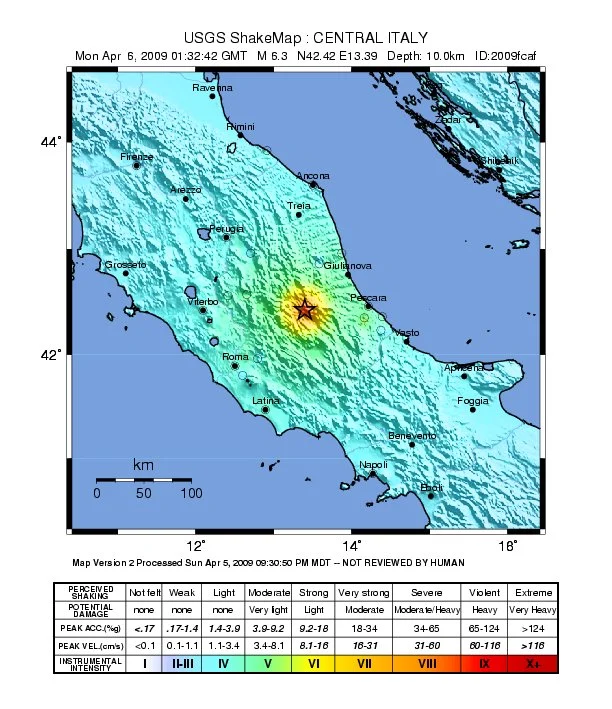
Many European and international seismologists have been following the court saga that taunted the local earthquake scientist following the 2009 L’Aquila earthquake (central Italy). Finally, the Italian supreme court has cleared the scientists for good ! Several website, blogs, journals and even conference sessions have highlighted the case: BBC, The Guardian, EOS, AGU, EGU, Natural Hazards, etc. A dedicated blog has been …[Read More]
Seismology
EGU2016: Early Career Scientist’s Travel Award
The European Geosciences Union is pleased to announce the start of the abstract submission for the EGU General Assembly 2016 (EGU2016), 17–22 Apr 2016, Vienna, Austria. You are cordially invited to browse through the sessions at: http://meetingorganizer.copernicus.org/EGU2016/sessionprogramme Each session shows the Abstract Submission link. Using this link you are asked to log in to the Copernicus Office …[Read More]
Seismix 2016
Seismix 2016 Dates: Sunday May 15 to Friday May 20, 2016 Location: Macdonald Aviemore Resort, Aviemore, Scotland Seismix is an international symposium on seismic imaging that is held every two years. The first meeting was held at Cornell in 1984, and since that time, it has visited Canada, Australia, Finland, China, Spain and many other …[Read More]
PASC16 conference: First call for abstracts
The Platform for Advanced Scientific Computing (PASC) is delighted to launch a Call for Abstracts for its next conference (PASC16) cosponsored by the Association for Computing Machinery (ACM). The Conference will be held from June 8 to 10, 2016 at the SwissTech Convention Center, located on the campus of the École Polytechnique Fédérale de Lausanne …[Read More]
Spanish-Portuguese Assembly of Geodesy and Geophysics
The Spanish-Portuguese Assembly of Geodesy and Geophysics meets every two years alternatively between the two countries, Spain and Portugal. Throughout the different editions, the assembly has consolidated a forum for research in the fields of Geodesy, Seismology, Meteorology, Geomagnetism, Hydrology, Oceanography, Volcanology, Cryospheric Sciences and Applied Geophysics, and it has given continuity to the scientific exchange …[Read More]
Renewing EGU: Vote for the President and General Secretary
A message from the EGU Executive Secretary – Philippe Courtial We herewith invite you to take part in the EGU Election Autumn 2015. You have the opportunity to vote for the next EGU President and General Secretary: Jonathan Bamber (President) Mioara Mandea (President) Carlo Laj (General Secretary) Håkan Svedhem (General Secretary) All candidates, their CVs and statements, …[Read More]
ESC 2016: Session proposals open
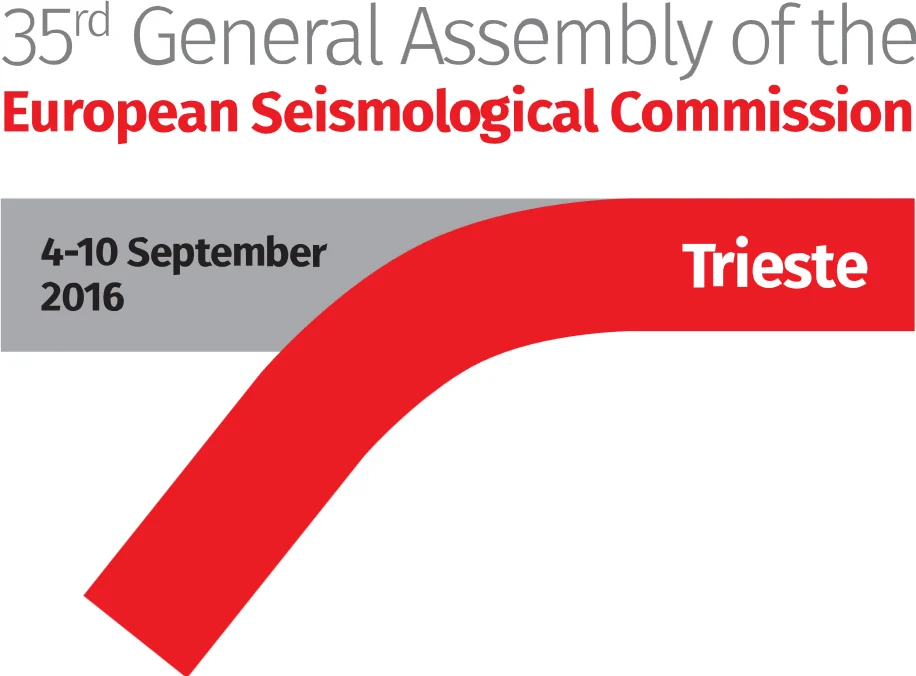
The next European Seismological Commission (ESC) meeting will be held next year in Trieste. This assembly will be the 35th General Assembly. The local organising committee, the National Institute of Oceanography and Experimental Geophysics (OGS), is glad to invite seismologists, geologists and engineers to the 35rd General Assembly of the European Seismological Commission that will be held from 4 …[Read More]
INVITATION: Special Issue on Georisks in the Mediterranean
A special issue themed “Georisks in the Mediterranean and their Mitigation” is being compiled to be published in Natural Hazards (Springer) (Impact Factor of 1.719) http://www.springer.com/earth+sciences+and+geography/natural+hazards/journal/11069 Manuscripts containing original research or reviews are welcome for submission. They will be accepted or rejected after a peer review process. Topics covered by this Special Issue include but are not …[Read More]
Who are you? An EGU Seismology Division Visibility Survey
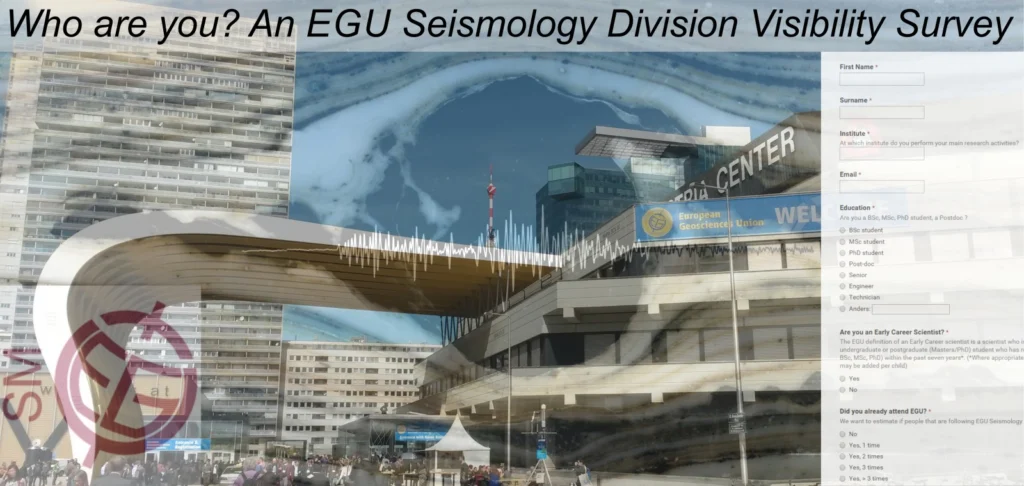
When a PhD student publishes a new paper, of course he/she would like that other scientists will read the work. However, in a busy academic world with many institutional obligations, it might be hard to promote the work and the research you are performing. Social media and blogs, however, can play an important role in research visibility and …[Read More]
Brewing wiggles on Mars
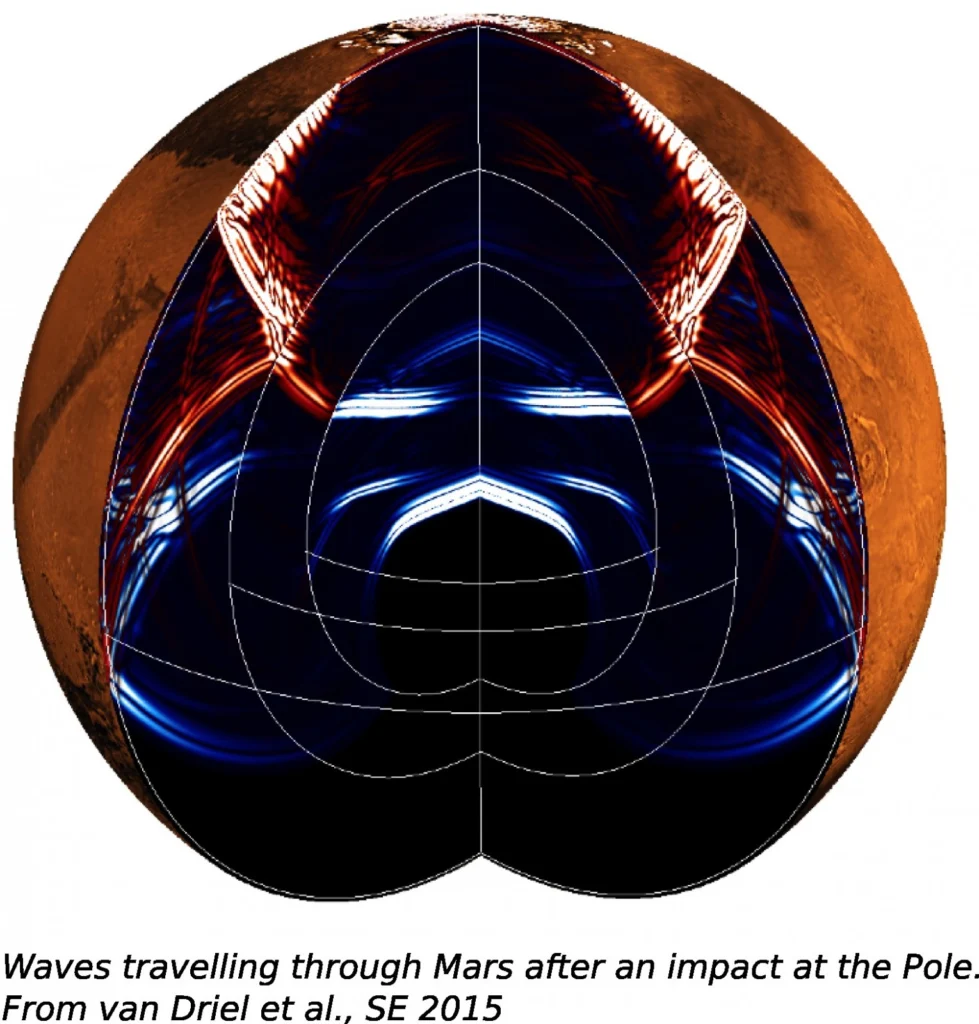
Creating 1 Hz-seismograms in a 3-D Earth model, and comparing them to observed body waves, is a dream that’s today still too expensive for routine use. But even tackling the problem for a spherically symmetric Earth poses certain challenges. Recently, a new tool entered the stage (you might have followed the Solid Earth discussion): Instaseis …[Read More]