EGU Blogs

Division blogs

SSS
Soil System Sciences

Is Soil Quality the same in all Conservation Agriculture Fields?

Soil degradation has become a major environmental concern. Today, 62% of European soils are affected by at least one degradation process, largely driven by land sealing and unsustainable farming practices (Mason et al. 2023; EUSO 2024). Conservation Agriculture (CA) is often promoted as a promising alternative, combining sustainable production with improved soil quality (Chabert et Sarthou 2020; T ...[Read More]

GD
Geodynamics

What’s blobbing inside the Earth? – insights from numerical modelling

What’s blobbing inside the Earth? – insights from numerical modelling

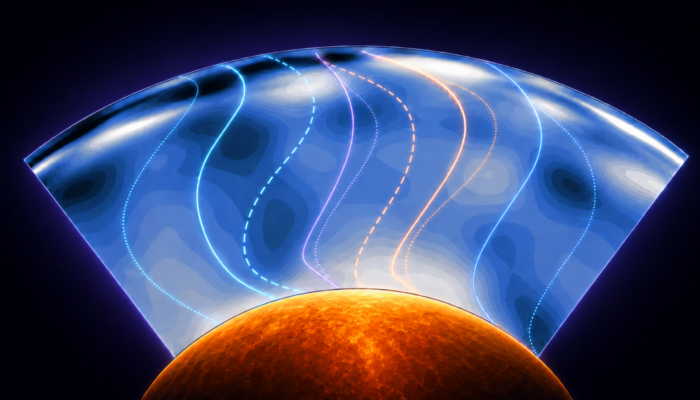
Seismic waves tell us that something unusual is happening in the lowermost few hundred kilometers of Earth’s mantle. Beneath Africa and the Pacific lie two enormous thermochemical structures known as Large Low-Shear-Velocity Provinces (LLSVPs). These “large blobs” are slower to transmit shear waves, but beyond that, their physical nature remains one of the biggest open questions in deep Earth geod ...[Read More]

G
Geodesy

EGU Campfire Geodesy – Share Your Research – 17th Edition

EGU Campfire Geodesy – Share Your Research – 17th Edition

We are excited to announce the 17th edition of Geodesy Campfire – Share Your Research in February. The Geodesy EGU Campfire Events “Share Your Research” give (early career) researchers the chance to talk about their work. We have two exciting talks by our guest speakers, Hugo Lecomte and Marius Schlaak. Below, you can find the details of the topics awaiting us. We will have time to network after t ...[Read More]

ST
Solar-Terrestrial Sciences

On the correlation and interactions of space weather with biological indicators

On the correlation and interactions of space weather with biological indicators

1. Introduction Space weather is significantly affected by geomagnetic disturbances (GMDs) that occur during or after intense solar events such as coronal mass ejections (CMEs), which expel substantial amounts of electromagnetic particles into interplanetary space. Most of these particles collide with the magnetosphere (the outermost region of the atmosphere) where the solar wind (continuous flow ...[Read More]

CR
Cryospheric Sciences

IGS: A Home for the Global Cryosphere

IGS: A Home for the Global Cryosphere

Like many glaciologists (in the broad sense – as in, cryospheric researchers, not just those who study glaciers!), my professional “home” has been the International Glaciological Society (IGS) ever since grad school; My first conference was an IGS branch meeting, I found my postdoc by networking at an IGS symposium, I have published work in IGS journals, and IGS has supported many community activi ...[Read More]

G
Geodesy

Bits and Bites of Geodesy – Satellite Gravimetry: Studying Earth’s water cycle from space

Bits and Bites of Geodesy – Satellite Gravimetry: Studying Earth’s water cycle from space

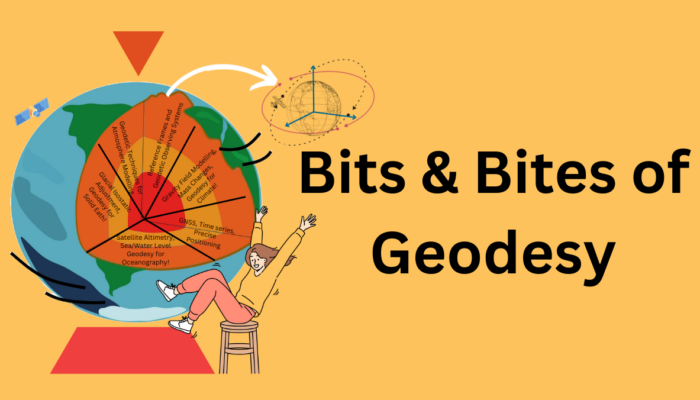
During winter, mountains gain mass because of snow covering the peaks. In spring, the snow melts and flows downstream until it reaches the ocean or evaporates into the atmosphere to reach back on the surface as rain or snow. The global water cycle is very complex and essential for life on our planet. Did you know we can measure how the water is distributed by measuring its mass from space? How can ...[Read More]

GD
Geodynamics

FrenSZ workshop: a French interdisciplinary initiative around subduction zones.

FrenSZ workshop: a French interdisciplinary initiative around subduction zones.

Since 2022, the annual FrenSZ workshop has been bringing together a vibrant and interdisciplinary community around subduction zones in France. In this week’s blog post, we dive into how FrenSZ is organized, highlight its scientific outcomes and how it is opening new connections on the international stage. A large French community. In France, a fairly large community of Earth Scientists devote thei ...[Read More]

SSP
Stratigraphy, Sedimentology and Palaeontology

Mass Transport Deposits – The smoking gun of submarine landslides

Mass Transport Deposits – The smoking gun of submarine landslides

When we think about landslides, we usually picture mountain slopes collapsing after heavy rain or earthquakes. Similar phenomena, often much larger, also occur beneath the sea along continental margins and across the deep ocean floor. Geologists refer to the deposits left behind by these collapses as Mass Transport Deposits, commonly abbreviated as MTDs. When several of these deposits form part of ...[Read More]

CL
Climate: Past, Present & Future

Studying societal climate impacts: why is it hard and what can we do about it

Studying societal climate impacts: why is it hard and what can we do about it

Due to the rapid rise in temperatures, it started raining on the snow and ice-covered roads, prompting the regional public transport operator to suspend all bus services. The rain also resulted in icing on the overhead lines of the main railway line coming into town. Rail traffic was also temporarily suspended. Before the adjacent highway could be salted, several tens of cars were involved in a ch ...[Read More]

NH
Natural Hazards

Same hills, different rules: why urban and rural landslides should not be considered together?

Same hills, different rules: why urban and rural landslides should not be considered together?

Cities are expanding faster than ever, often onto steep and unstable terrain. As urban areas grow, landslides increasingly threaten homes, roads, and critical infrastructure. To manage this risk, scientists produce landslide susceptibility maps, which estimate where landslides are most likely to occur. These maps are widely used by planners and decision-makers. But there is a quiet assumption buil ...[Read More]