The 13th edition of the Geochemistry, Mineralogy, Petrology and Volcanology division’s early career scientists Campfires will be a special edition on Subduction Zones! The talks will be held on Wednesday 13th October at 11am CEST on Zoom. Our three ECS speakers are: 1. Lorraine Tual (Twitter: @_garnetite_) Post-Doc @ the University of British Columbia, Canada Title: …[Read More]
Division blogs
The Sassy Scientist – It’s All In The Mix
Mare needs to secure some funding. Trotting through previous successful applications, she finds a common denominator. As a purebred scientist, she bellows: How important is interdisciplinary research for a research proposal? Dear Mare, Very important. Realistically, you’ll not get funded in case you’re a one-trick pony. Who will hand over their pouch of gold nuggets …[Read More]
Let’s go to School of Sustainability!
Next generations will not only see impacts of climate change first-hand, but they will also deal with the associated societal implications. Implementing climate solutions and orienting themselves in a growing, green job market need cutting-edge knowledge, which is often hard to get through the ordinary, high-school syllabus. As early-career cryo-scientists (Federica is a PhD student …[Read More]
Alberta’s Geological Riches
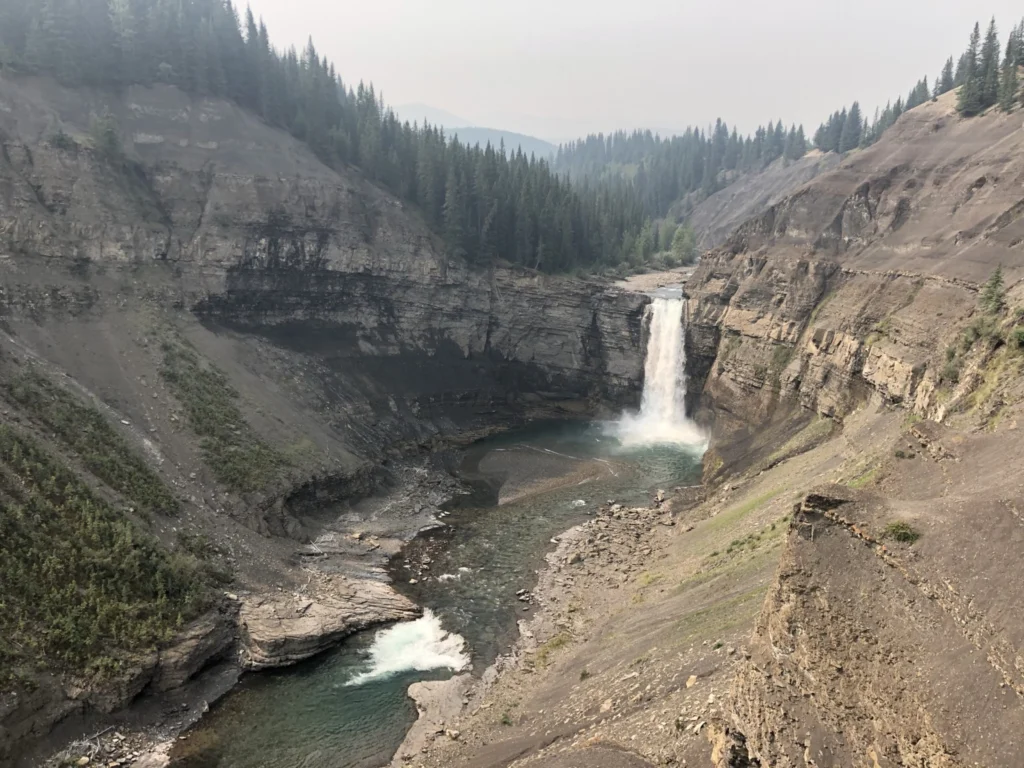
Smoky Summer It has been a difficult summer in Alberta, with smoke from forest fires in British Columbia blanketing much of the southern part of the Province. However, this has not stopped me getting out into the field on a variety of projects and hikes, including a virtual field trip looking at the Cardium Formation …[Read More]
Curious case of convex upwards topography in accretionary wedges
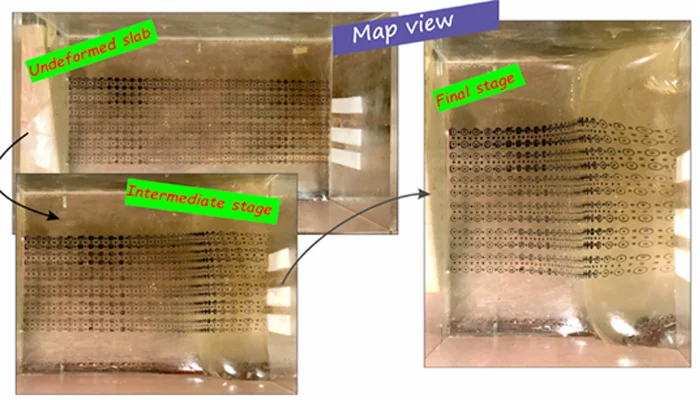
Accretionary prisms are wedge-shaped bodies of crustal rocks that are commonly known to have formed by accommodating the component of convergence along subduction margins. These prisms, primarily wedge shaped with lateral variations in topographic height from hinterland to foreland are commonly characterised by a gentle and uniform slope towards the frontal margin (for instance, the …[Read More]
The road to successful scientific writing for early-career scientists
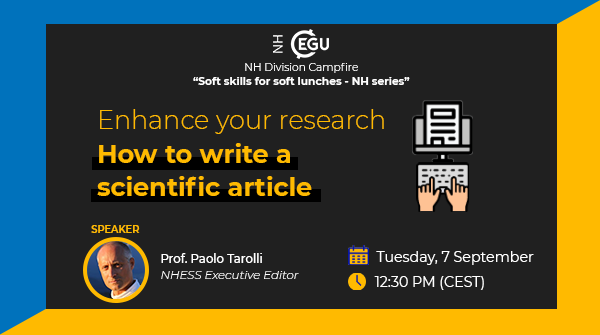
The world of research is highly competitive, and early career scientists face many challenges while trying to carve out a successful career path. Writing scientific articles is one of those challenges. Prof. Paolo Tarolli (University of Padova) shared his personal experience on “How to write a scientific article” with 130 attendees last 7th September, during …[Read More]
TS Must-Read – England and Molnar (1990) Surface uplift, uplift of rocks, and exhumation of rocks
With this paper, England and Molnar (1990) shed light on the recurrent confusion in the uses of terms ‘uplift’ and ‘exhumation’. The main focus is to clarify the difference between surface uplift, uplift of rocks, and exhumation by explaining the differences and the relations between these processes (Fig. 1). The manuscript also illustrates how other …[Read More]
Will the Arctic be ice free earlier than previously thought?
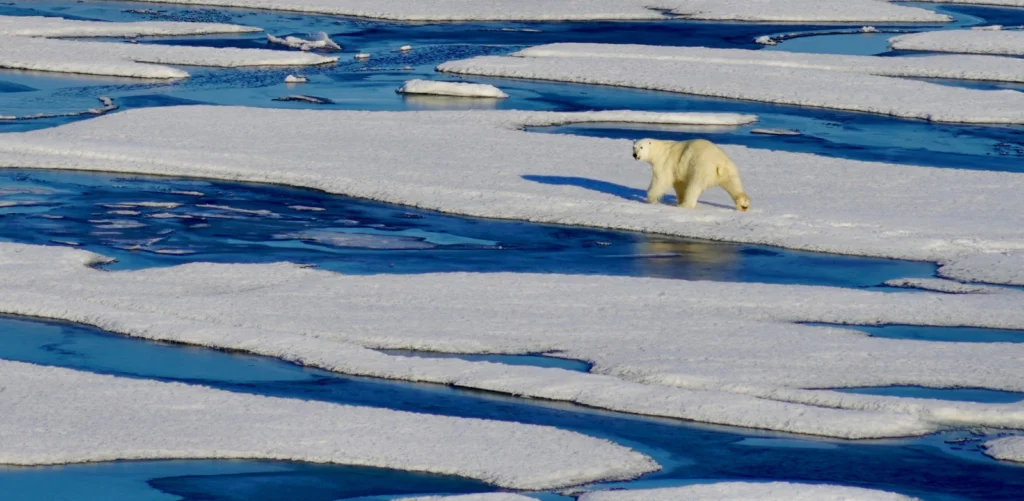
There is no doubt that the Arctic is currently losing its sea ice as our climate is warming. And this process will carry on as temperatures continue climbing. But the rate at which sea ice will melt in the future and the exact date when the Arctic will be free of sea ice is not …[Read More]
The Sassy Scientist – Postdoc Purgatory
Postdoc appointments: the forgotten terrace of Purgatory. Where researchers are sentenced to linger till either a position opens in the Heaven of permanent contracts, or they realise that, after all, they are not interested anymore. This terrace is composed of different levels of various length. Nobody knows how many levels there are and how long …[Read More]
Getting to the core of The Core
Imagine my surprise when I found out that one of the regular attendees of our virtual institute coffee in Leeds actually worked on the movie ‘The Core’. Yes, you read that correctly: The Core, maybe the best bad science movie out there! (Although Menno had some great other suggestions last week!) So, in between many …[Read More]