
EGU Blogs

Division blogs

GD
Geodynamics

The Sassy Scientist – It’s All In The Mix

The Sassy Scientist – It’s All In The Mix

Mare needs to secure some funding. Trotting through previous successful applications, she finds a common denominator. As a purebred scientist, she bellows: How important is interdisciplinary research for a research proposal? Dear Mare, Very important. Realistically, you’ll not get funded in case you’re a one-trick pony. Who will hand over their pouch of gold nuggets …[Read More]

CR
Cryospheric Sciences

Let’s go to School of Sustainability!

Let’s go to School of Sustainability!

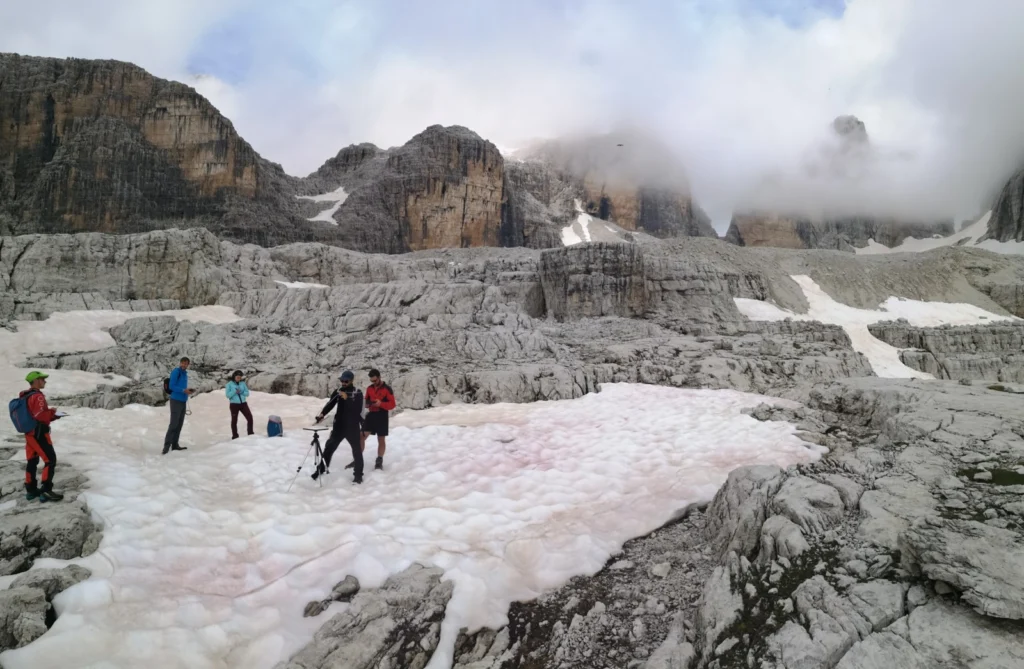
Next generations will not only see impacts of climate change first-hand, but they will also deal with the associated societal implications. Implementing climate solutions and orienting themselves in a growing, green job market need cutting-edge knowledge, which is often hard to get through the ordinary, high-school syllabus. As early-career cryo-scientists (Federica is a PhD student …[Read More]

GD
Geodynamics

Curious case of convex upwards topography in accretionary wedges

Curious case of convex upwards topography in accretionary wedges

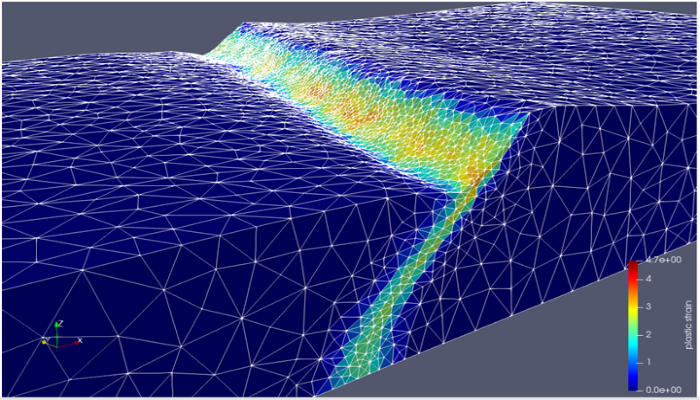
Accretionary prisms are wedge-shaped bodies of crustal rocks that are commonly known to have formed by accommodating the component of convergence along subduction margins. These prisms, primarily wedge shaped with lateral variations in topographic height from hinterland to foreland are commonly characterised by a gentle and uniform slope towards the frontal margin (for instance, the …[Read More]

NH
Natural Hazards

The road to successful scientific writing for early-career scientists

The road to successful scientific writing for early-career scientists

The world of research is highly competitive, and early career scientists face many challenges while trying to carve out a successful career path. Writing scientific articles is one of those challenges. Prof. Paolo Tarolli (University of Padova) shared his personal experience on “How to write a scientific article” with 130 attendees last 7th September, during …[Read More]

TS
Tectonics and Structural Geology

TS Must-Read – England and Molnar (1990) Surface uplift, uplift of rocks, and exhumation of rocks

TS Must-Read – England and Molnar (1990) Surface uplift, uplift of rocks, and exhumation of rocks

With this paper, England and Molnar (1990) shed light on the recurrent confusion in the uses of terms ‘uplift’ and ‘exhumation’. The main focus is to clarify the difference between surface uplift, uplift of rocks, and exhumation by explaining the differences and the relations between these processes (Fig. 1). The manuscript also illustrates how other …[Read More]

GD
Geodynamics

The Sassy Scientist – Postdoc Purgatory

The Sassy Scientist – Postdoc Purgatory

Postdoc appointments: the forgotten terrace of Purgatory. Where researchers are sentenced to linger till either a position opens in the Heaven of permanent contracts, or they realise that, after all, they are not interested anymore. This terrace is composed of different levels of various length. Nobody knows how many levels there are and how long …[Read More]

GD
Geodynamics

Getting to the core of The Core

Getting to the core of The Core

Imagine my surprise when I found out that one of the regular attendees of our virtual institute coffee in Leeds actually worked on the movie ‘The Core’. Yes, you read that correctly: The Core, maybe the best bad science movie out there! (Although Menno had some great other suggestions last week!) So, in between many …[Read More]

TS
Tectonics and Structural Geology

TS Must-Read – Dahlen (1990) Critical Taper Model Of Fold-and-thrust Belts And Accretionary Wedges

TS Must-Read – Dahlen (1990) Critical Taper Model Of Fold-and-thrust Belts And Accretionary Wedges

Dahlen 1990‘s paper presents a synthesis of all theoretical work on accretionary wedges that had begun more than a decade earlier, with the fold and thrust belts research of Elliott (1976), Chapple (1978), and model by Davis et al., (1983). Dahlen expanded previous views with a more sophisticated treatment of pore-fluid pressure using volume-averaged Stokes-equations …[Read More]