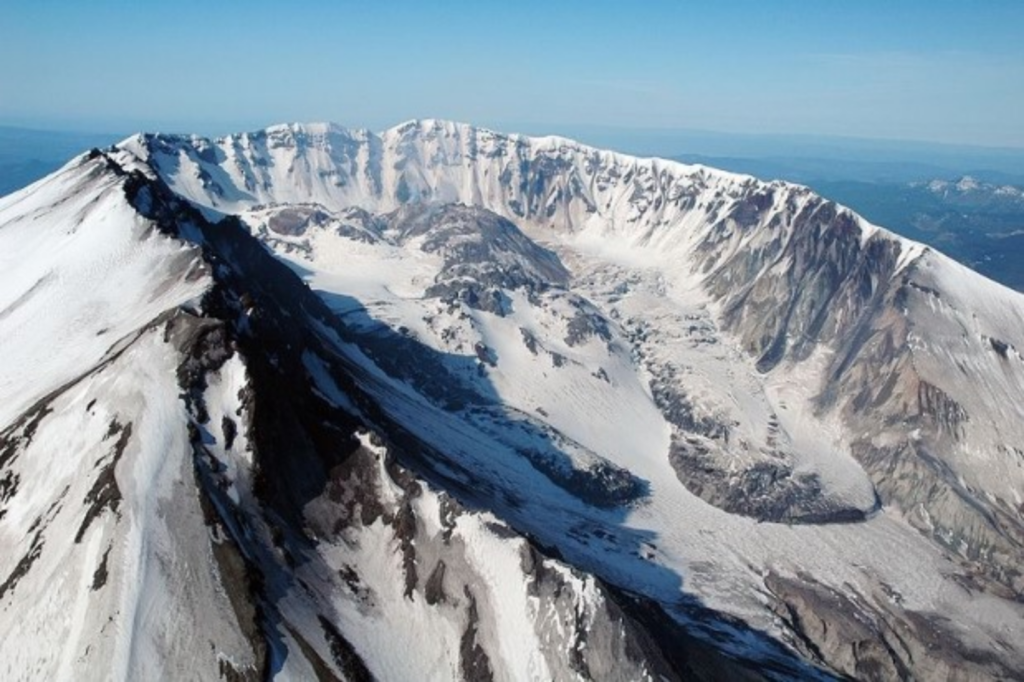
Crater Glacier, located on Mount St. Helens, Washington State, U.S., tells a tale of renewal. The catastrophic and deadly May 18th, 1980 eruption of the volcano created, among other things, a deep horseshoe-shaped, north-facing crater and obliterated most of the glaciers that resided on the volcano’s slopes. By a decade and a half later, it …[Read More]
Division blogs
The Sassy Scientist – The Doctor Is In
There are no stupid questions. How many times have we heard that from colleagues and in classrooms? Obviously an exceedingly sizeable chunk of our community does not receive stupid questions often enough. Even silly questions have their merits though, and obviously they deserve an answer, at least to avoid them being asked in the future. …[Read More]
GMPV Outside Academia: a Panel Discussion of EGU Campfires – March 16 @ 13:00 CET
The Early Career Scientists (ECS) Committee of the GMPV Division is excited to present the new Campfires’ session ‘GMPV Outside Academia’! Join us at lunchtime for a virtual panel discussion with four amazing panellists! The panel discussion will be held on Wednesday 16th March at 13pm CET on Zoom. Our four panellists are: Rebecca Paisley – Exploration …[Read More]
The strangest rock you’ve probably never heard of
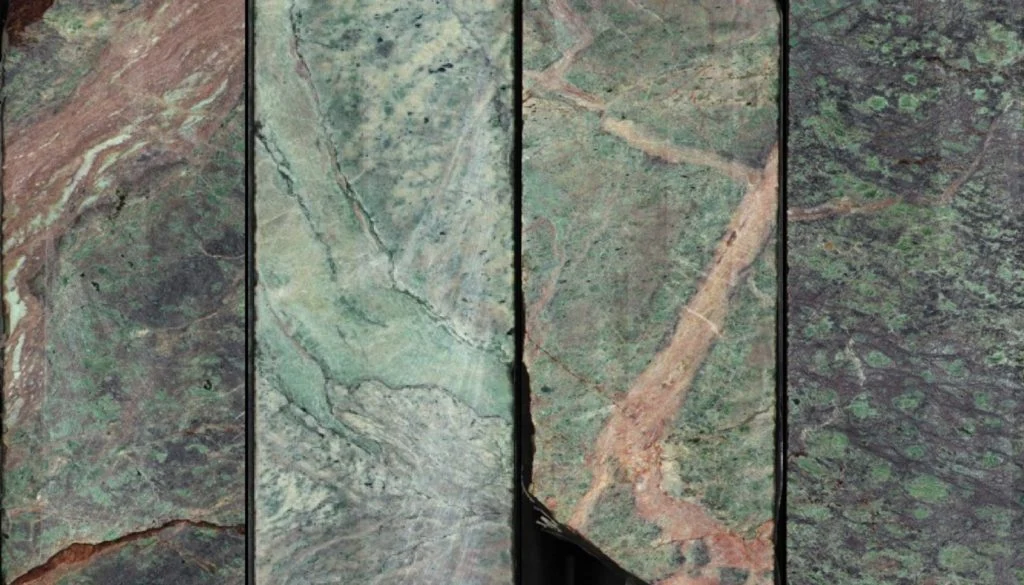
In this blog I’m going to talk a bit about one of my favourite rocks – the strangest rock you’ve probably never heard of – listvenite. Listvenite (sometimes spelt listwanite or listwaenite) is the product of a chemical reaction between peridotite and carbon dioxide, and it is truly strange! I first came across listvenites working …[Read More]
Don’t miss out on these awesome #EGU22 activities!
Dear climate enthusiasts, EGU lovers, and early/senior climate scientists, With #EGU22 approaching, we wanted to give you a quick overview of the great short courses and great debates that are planned for this years’ General Assembly! If you want to learn more about the scientific sessions offered, please have a look at our Seasonal love …[Read More]
Why do some slabs stagnate?
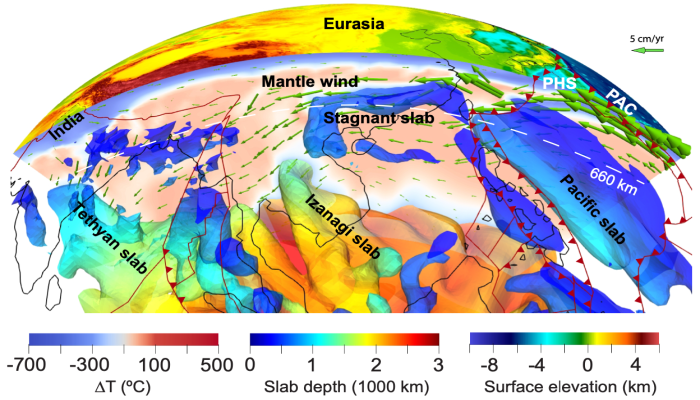
Mechanisms for stab stagnation are essential for understanding the mantle circulation patterns. This week, Diandian Peng, a graduate student from University of Illinois explores how dynamic pressure gradients can pull the slabs sideways stagnating them at the Mantle Transition Zone. Seismic imaging provides critical constraints on the structure and evolution of subducted slabs. Numerous tomographic …[Read More]
EGU Campfire Geodesy – Share Your Research – Fifth Edition
We all welcome you around our fifth EGU Geodesy Campfire to listen to two exciting talks by Eva Börgens and Sandro Krauss. The Geodesy EGU Campfire Events “Share Your Research” will give (early career) researchers the chance to talk about their work. Below you can find detailed descriptions about their talks. We will have …[Read More]
What more can we do as climate scientists to address climate change?
Fig 1 — Artist impression of Earth (source: Unsplash, Elena Mozhvilo) The much anticipated COP26 — even more so because of its postponement — is now already a few months behind us. There has been a lot of attention in the media, including on the BG blog. We have seen mixed reactions following the …[Read More]
The Sassy Scientist – Chill Pill Refill
Angela is one to stress out just a wee bit every time a conference is right around the corner. It’s almost like she consistently doesn’t prepare in time. Ever so slightly concerned, her office mate asks: How last minute is too last minute when preparing for a conference? Dear Angela, Just take a breather and …[Read More]
You left us too early: a eulogy to permafrost
Most problems faced in research are complex and require creativity and critical thinking. Thus, we need to be creative in science! Or maybe, science itself is creative and there is no such thing as non-creative science. Anyhow, in today’s world, where TED-talks, science slams and elevator pitches, not to mention tweets, are ubiquitous, it is …[Read More]