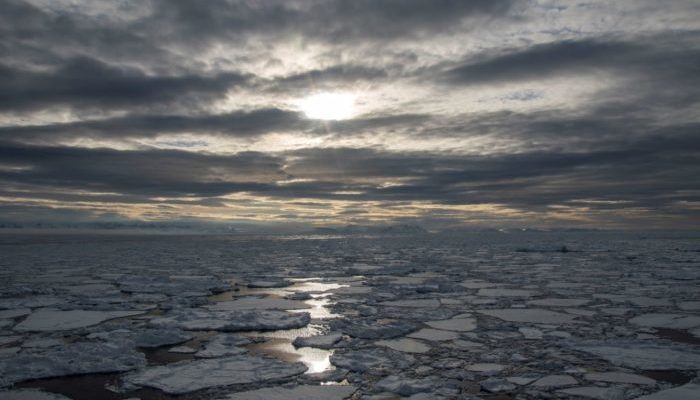
Today (8th June) marks World Ocean Day, celebrated annually since 1992 World Ocean Day is a chance to celebrate the 71% of our planet covered by the Ocean and reflect on the actions we need to take to preserve this vital part of our Earth System. Each year, World Ocean Day has a different theme, this year the focus is on Life and Livelihoods, seeking to represent the interconnections between the O ...[Read More]
Geodesy
Meet the new Geodesy Division Deputy President
It’s time to introduce a new member of the Geodesy Division Team: Roelof Rietbroek. You might remember Roelof from some years ago when he was the Geodesy ECS Representative and then later also became the Union ECS Representative. Now he has started to take over a new role as the deputy president within the Geodesy Division. We asked him a few questions so you can get to know him better. &nbs ...[Read More]
Climate: Past, Present & Future
Life of a Climate Scientist presents Venugopal (Venu) Reddy Thandlam
About the blog series: Life of a Climate scientist Life of a Climate Scientist is a new blog series started by the EGU Climate Division. The main focus of this series is to provide a platform for climate scientists to tell their stories of life in research. We will be covering a wide-range of subjects, from their scientific endeavors and maintaining work-life balance to challenges they have faced ...[Read More]
Tectonics and Structural Geology
TS Must-Read – Molnar and Lyon-Caen (1988): Some simple physical aspects of the support, structure and evolution of mountain belts
In 1988 Peter Molnar and Hélène Lyon-Caen published their “Must-Read” paper on the support, structure and evolution of mountain belts. It is an article that touches on some core issues of plate tectonics by looking at two types of forces that resist mountain building, using key observations from Asian and American mountain chains. They name the first force “mechanical strength”, and to approximate ...[Read More]
Seismology
Narcissistic abuse in academia
Let’s talk about narcissistic abuse in academia. Many of us have become scientists out of passion and curiosity. Such mental resources are crucial in research, where working hours can get long, experiments can fail, career prospects and funding are scarce. However, even the most passionate may not withstand all of the possible difficulties thrown their way — especially workplace abuse, which may t ...[Read More]
Natural Hazards
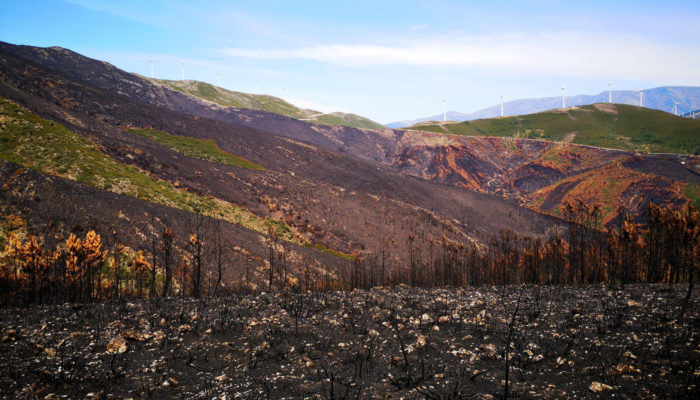
Mitigating Soil Erosion After Wildfires
Wildfires are a natural element in many ecosystems and play a central role in their dynamics. For example, they clear forest floors and liberate nutrients that can replenish the soil. However, changes in fire regimes induced by anthropogenic factors (such as climate change and land uses) have resulted in fire patterns that harm ecosystems [1]. Let’s see together the issues and the mitigation solut ...[Read More]
Ocean Sciences
OceanTalk with Richard J. Greatbatch
Richard J. Greatbatch has been awarded the 2020 Fridtjof Nansen Medal for his distinguished research in oceanography. At vEGU21 he gave his medal lecture titled ‘From the North Atlantic Oscillation to the Tropics and back’. Richard, was becoming a scientist your career plan when you were a mathematician student? Yes, I always wanted to be a scientist and, in particular, to work on some ...[Read More]
Geodesy
Starting a PhD during a pandemic
Have you ever wondered what it means to start a PhD during the pandemic? Below you can get more insights. Hi! I’m Öykü, a PhD student at Politecnico di Milano in Italy. I’m originally from Turkey and did my MSc at Istanbul Technical University. My research focus is static and time-variable gravity field recovery from satellite data and local gravity field modelling. Currently, ...[Read More]
Seismology
Seismology Job Portal
On this page, we regularly update open positions in Seismology for early-career scientists. Do you have a job on offer? Contact us at ecs-sm@egu.eu Please, note that other available research positions are displayed on the EGU Jobs Portal. Special Thanks to Eric Löberich for researching job postings for the ECS.
Nonlinear Processes in Geosciences
When carbon emissions break nature: icebergs and their feedback to climate change
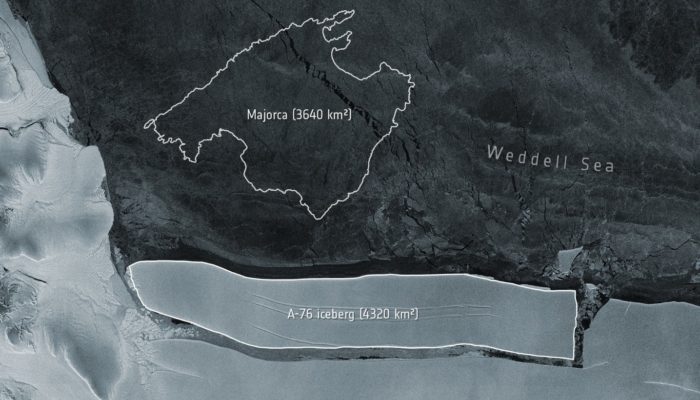
The largest iceberg in the world, named A-76, about 170 km long and 25 km wide, is drifting away from the Ronne pack ice in Antarctica. A76, originally spotted by the British Antarctic Survey (BAS), a British polar research organization with a base nearby, will wander and melt in the Weddell Sea, according to a statement released Wednesday, May 20, by the European Space Agency. Several studies are ...[Read More]